

Open Frame TFT Displays: Technical Insights and Practical Applications in Modern Industries
Open frame TFT (Thin-Film Transistor) displays have become a cornerstone in diverse industrial and commercial sectors, driven by their versatile design, high performance, and adaptability in embedded systems. As a professional LED display engineer with extensive experience in display manufacturing, this article delves into the technical specifications, advantages, and key applications of open frame TFT technology, offering a comprehensive understanding tailored for engineers, integrators, and industry professionals worldwide.
Understanding Open Frame TFT Displays
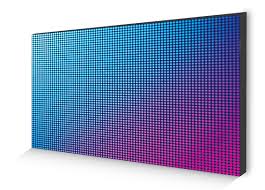
An open frame TFT display is a type of LCD panel mounted without an outer enclosure or bezel, enabling flexible integration within custom enclosures or machinery. Unlike enclosed or fully assembled modules, open frame designs provide a bare board with mounting holes and connector interfaces, simplifying installation in constrained or non-standard environments.
Technically, TFT LCDs operate by controlling individual liquid crystal pixels through thin-film transistors, resulting in sharp image rendering with high contrast ratios and quick response times. This active matrix technology improves upon passive matrix designs by allowing rapid pixel switching, essential for dynamic graphical interfaces.
Key Technical Parameters
1. Display Diagonal Size: Typically ranges from 5 inches to 23 inches or more, allowing use in everything from handheld devices to industrial control panels. Popular sizes like 10.1”, 12.1”, and 15” are widely adopted due to optimal balance between visibility and compactness.
2. Resolution: Depending on application, resolutions can vary from WVGA (800x480) to Full HD (1920x1080). Higher resolutions enhance clarity, essential for detailed graphical user interfaces (GUIs) and video content.
3. Brightness: Industrial-grade open frame TFTs usually feature brightness levels from 400 cd/m² up to 1000 cd/m² or higher, accommodating use in ambient light conditions typical of factory floors or public kiosks.
4. Viewing Angle: Advanced models leverage IPS (In-Plane Switching) or PLS (Plane-to-Line Switching) technology, offering wide viewing angles (up to 178° horizontally and vertically), which is critical in collaborative environments or public displays.
5. Touchscreen Integration: Many open frame TFTs support projected capacitive (PCAP) or resistive touchscreens directly integrated into the display stack, augmenting interactivity without increasing thickness or complexity.
6. Interface Compatibility: Common interfaces include LVDS (Low-Voltage Differential Signaling), eDP (Embedded DisplayPort), and HDMI, ensuring flexible connectivity to various controller boards and embedded systems.
7. Operating Temperature Range: Industrial open frame TFTs are designed for wide temperature ranges, commonly from -20°C to 70°C, enabling reliable performance in harsh environmental conditions.
Manufacturing and Quality Considerations
Open frame TFT displays demand rigorous quality control protocols, complying with industry standards such as ISO 9001 for manufacturing quality and RoHS (Restriction of Hazardous Substances) compliance for environmental safety. Typical manufacturing involves precision assembly of TFT panels, bonding with backlights (often LED-based for lower power consumption and longer lifetime), and optical bonding to reduce reflectivity and enhance contrast.
Leading manufacturers utilize strict pixel defect standards defined by ISO 13406-2 or JIS C 7021, often guaranteeing minimal dead or stuck pixels. Additionally, rugged designs may incorporate anti-glare coatings, anti-fingerprint layers, and enhanced moisture resistance to extend operational lifespan in demanding applications.
Practical Applications
Open frame TFT displays have found broad adoption in:
- Medical Devices: Utilized in diagnostic monitors and handheld medical instruments where cleanability, compactness, and precision are paramount.
- Industrial Automation: Integrated into Human-Machine Interfaces (HMI) for factory equipment monitoring and control, capitalizing on robustness and wide operating temperature.
- Retail and Kiosks: Enabling interactive self-service terminals with high-resolution displays and touch capability, enhancing customer engagement.
- Transportation: Installed in vehicle dashboards, infotainment systems, and control panels due to their durability and brightness suited for varying light conditions.
- Gaming and Simulators: Providing vivid visuals with quick refresh rates for immersive user experiences.
Future Trends and Innovations
The evolution of open frame TFT technology continues with advancements such as higher refresh rates above 60Hz for smoother animation, incorporation of OLED hybrid panels for better contrast and thinner profiles, and enhanced flexibility towards curved or flexible displays. Manufacturers are also integrating smart diagnostics and firmware updates to simplify maintenance and extend display lifespan.
Moreover, driven by Industry 4.0 and IoT integration, open frame TFT displays increasingly interface with cloud-based systems for real-time monitoring, predictive maintenance, and advanced data visualization.
Conclusion
Open frame TFT displays represent a pivotal technology in modern display manufacturing, offering unmatched customization and performance for a multitude of industrial applications. Their technical versatility—from high brightness and wide viewing angles to touchscreen integration—coupled with robust manufacturing standards, ensures reliable service in even the most challenging environments.
For engineers and product designers seeking high-quality display solutions, open frame TFTs provide an optimal platform balancing flexibility, durability, and excellent visual performance. Staying informed on the latest technical advancements and industry standards is essential for leveraging the full benefits of this technology.
References:
- ISO 13406-2, “Ergonomic requirements for work with visual displays based on flat panels – Part 2: Pixel defects”, International Organization for Standardization, 2001.
- RoHS Directive 2011/65/EU, European Parliament and Council, 2011.
- Sharp Corporation, Technical Guide for TFT LCD Modules, 2022.
- VESA (Video Electronics Standards Association), “Embedded DisplayPort Standard”, 2019.













