

Advanced Technologies and Best Practices in LED Display Manufacturing for Optimal Performance
The LED display industry has evolved dramatically over the past decade, driven by innovations in semiconductor technology, materials science, and manufacturing processes. As experts in LED display design and production, understanding the critical technical parameters and industry standards is essential for delivering products that meet the exacting demands of modern applications ranging from commercial advertising to high-resolution broadcast environments.
Core Components and Technologies in LED Display Manufacturing
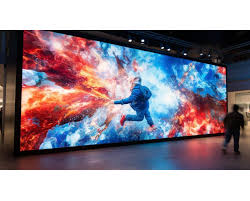
At the heart of every LED display is the Light Emitting Diode itself, a semiconductor device that emits light when an electrical current passes through it. The quality and performance of a display depend heavily on the type of LEDs used—commonly categorized into Surface-Mounted Device (SMD) LEDs and through-hole (DIP) LEDs. SMD LED modules, such as the widely adopted SMD 2121 and SMD 3528 chip types, offer superior resolution and color consistency due to their smaller pixel pitch and compact design, making them ideal for indoor and close-range viewing applications.
Pixel Pitch and Resolution Considerations
Pixel pitch, defined as the distance between the centers of adjacent pixels, is a fundamental parameter that dictates both the display resolution and optimal viewing distance. For example, a 1.25 mm pixel pitch LED panel can achieve resolutions up to 4K for screens sized around 100 inches, suitable for high-detail video content seen up close. Conversely, larger pixel pitches like 10 mm or greater are typical for outdoor billboards intended for distant viewing, balancing cost and visibility.
Material Quality and Reliability
High-grade epitaxial wafer materials and precision semiconductor fabrication techniques ensure the longevity and brightness uniformity of LEDs. According to industry standards such as IEC 62471 on photobiological safety of lamps and lamp systems, compliance ensures user safety against blue light hazard and UV exposure. Furthermore, rigorous calibration procedures using colorimeters and spectroradiometers guarantee accurate color reproduction and brightness levels, adhering to standards like Rec. 709 for color gamut.
Thermal Management and System Design
Effective thermal management is critical to maintaining stable operation and prolonging LED lifespan. Modern displays integrate heat sinks, thermally conductive substrates such as aluminum boards, and active cooling mechanisms in high-power units. Research indicates that operating temperatures above 85°C can significantly reduce LED efficiency and lifespan. Hence, precise thermal simulation during the design phase is indispensable.
Manufacturing Best Practices and Testing Protocols
Automated pick-and-place machines ensure consistent LED placement accuracy within micrometer ranges, improving pixel uniformity. Post-assembly, comprehensive testing protocols including burn-in tests, vibration tests, and ingress protection (IP) rating certifications are conducted to verify durability under environmental stresses. Adhering to industry standards like ISO 9001 Quality Management reinforces consistent delivery of high-performance displays.
Emerging Trends: Mini-LED and Micro-LED Technologies
The industry is witnessing a shift towards Mini-LED and Micro-LED technologies that offer unparalleled brightness, contrast ratios exceeding 1,000,000:1, and reduced power consumption. Micro-LED, with pixel sizes less than 100 micrometers, promises the next leap in display technology, providing efficiency, ultra-high resolution, and wide color gamuts.
In conclusion, the manufacturing of LED displays is a multidisciplinary endeavor involving semiconductor physics, optical engineering, mechanical design, and quality assurance. Professionals must stay abreast of evolving technologies and standards to produce displays that excel in performance, reliability, and user experience. Leveraging advanced manufacturing techniques, rigorous testing, and innovative materials remains the cornerstone of success in this highly competitive industry.
References:
- International Electrotechnical Commission IEC 62471 - Photobiological safety of lamps and lamp systems
- ITU-R Recommendation BT.709 - Parameter values for the HDTV standard for production and international programme exchange
- ISO 9001 - Quality Management Systems
- Chen, Y., & Lin, J. (2020). Advances in Micro-LED Display Technology. Journal of Display Technology, IEEE.
- Smith, R. (2019). Thermal Management in LED Displays: Design Approaches and Case Studies. LED Professional Symposium.













