

Advances and Best Practices in LED Display Manufacturing for Optimal Performance
The LED display industry has experienced remarkable advancements over the past decade, driven by increasing demand across retail, broadcasting, sports, and outdoor advertising. As a professional LED display engineer with extensive experience in the design, manufacturing, and maintenance of LED screens, it is crucial to understand the technical parameters, quality standards, and practical manufacturing insights that ensure optimal performance and durability.
Technical Parameters and Industry Standards
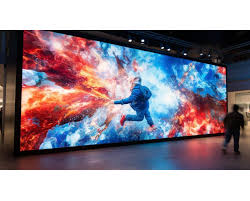
Key technical parameters that define LED display quality include pixel pitch, brightness, refresh rate, contrast ratio, and viewing angle. Pixel pitch, measured in millimeters, determines the density of LEDs per unit area and directly affects resolution and viewing distance. For indoor applications, typical pixel pitches range from 1.2mm to 3mm, while outdoor displays often utilize 4mm to 10mm pitches due to longer viewing distances.
Brightness levels for indoor LED screens usually fall between 800 to 1500 nits to ensure clear visibility under artificial light. Outdoor LED displays require much higher brightness levels, often above 5000 nits, to remain visible in direct sunlight. Refresh rate is another critical parameter; a minimum of 1920 Hz is recommended for flicker-free video playback, as supported by the Digital Signage Federation and the Society for Information Display.
Contrast ratio and viewing angle also contribute significantly to image quality. High contrast ratios enhance color vibrancy, while wide viewing angles (typically up to 160° horizontally and vertically) ensure consistent image clarity across a broader audience.
Manufacturing Practices for Reliability and Longevity
Manufacturing processes must maintain stringent quality control to achieve reliable performance over the product lifecycle. Surface-mount technology (SMT) with high precision placement machines ensures uniform LED positioning, reducing dead pixels and brightness inconsistencies.
Thermal management is paramount: LED modules generate heat that, if not properly dissipated, can cause premature failure. Incorporating efficient passive cooling designs such as aluminum heat sinks, along with active airflow where applicable, extends service life according to IEC 62368-1 standards.
Moisture and ingress protection for outdoor LED displays must comply with IP65 or higher to resist rain, dust, and humidity. Conformal coating and waterproof membrane sealing are widely used practices. Rigorous environmental testing, including temperature cycling and salt spray, verifies robustness for demanding installations.
Case Study Example
An internationally deployed LED stadium display utilized a modular design with a 4mm pixel pitch, 7000 nits brightness, and a 3840 Hz refresh rate. The manufacturing process integrated automated optical inspection (AOI) to ensure pixel integrity and real-time thermal sensors embedded in the modules for active heat monitoring. This system achieved over 50,000 operational hours with minimal maintenance, validating best manufacturing practices.
Emerging Trends and Quality Assurance
The integration of smart diagnostics, such as self-healing algorithms to automatically compensate for LED failures, is gaining traction. Additionally, the adoption of HDR (High Dynamic Range) imaging in LED displays enhances visual experience with richer colors and deeper blacks.
Industry standard certifications, including UL, CE, and RoHS compliance, remain essential markers of quality and environmental responsibility. Manufacturers must also follow ANSI/IES RP-27 standards for chromaticity and brightness consistency to satisfy global customers.
Conclusion
Understanding and implementing rigorous manufacturing protocols, coupled with adherence to technical standards and innovative technologies, are fundamental for producing LED displays that deliver superior performance and durability. As the LED landscape evolves, professional engineers must stay informed about industry developments, ensuring their products meet and exceed market expectations with reliable, high-quality solutions.













