

Comprehensive Guide to LED Display Manufacturing: Techniques, Standards, and Industry Insights
In the rapidly evolving field of display technology, LED displays have become a cornerstone for visual communication across multiple industries including advertising, entertainment, retail, transportation, and sports arenas. Their superior brightness, energy efficiency, and flexibility have made them the preferred choice over traditional LCDs and projection systems. This comprehensive guide delves into the intricacies of LED display manufacturing, covering technical parameters, industry standards, practical design considerations, and cutting-edge advancements.
1. Introduction to LED Display Technology
LED (Light Emitting Diode) displays operate by illuminating a matrix of tiny LEDs that serve as individual pixels, generating bright and vivid images. These displays are generally categorized into indoor and outdoor types, each demanding distinct characteristics based on environment and intended use.
Key advantages of LED displays include:
- High luminance up to 7,000 nits or more outdoors.
- Wide viewing angles typically between 120° to 160°.
- Superior color saturation and contrast ratios exceeding 4,000:1.
- Energy efficiency with power consumptions often less than 300W/m².
- Longevity of up to 100,000 hours of operation.
Such parameters have been corroborated by the International Electrotechnical Commission (IEC 62841) and the Society for Information Display (SID).
2. Types of LED Displays and Pixel Pitch
Pixel pitch, the center-to-center distance between adjacent LEDs, critically influences resolution and viewing distance. Standard pixel pitches include:
- Fine pitch (0.9mm to 2.5mm) for indoor close-viewing displays.
- Medium pitch (2.5mm to 6mm) suited for retail and conference rooms.
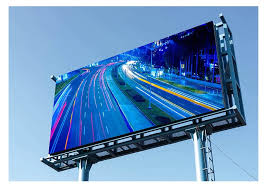
- Coarse pitch (above 6mm) mainly for outdoor large billboards and stadium screens.
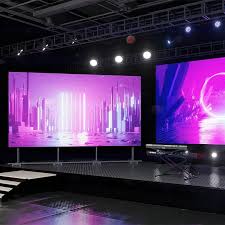
Selection depends on installation environment, content density, and viewer proximity. For instance, a 1.5mm pitch is ideal for high-resolution video walls in broadcast studios, ensuring seamless image quality even within 2m viewing distances.
3. LED Display Panel Components
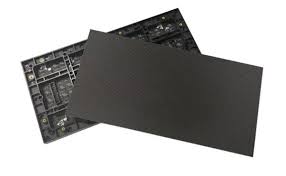
A typical LED module consists of:
- LED chips: Commonly using SMD (Surface Mounted Device) or DIP (Dual Inline Package) LEDs. SMD LEDs, such as the widely adopted SMD 2121 or 2835, provide superior color uniformity and wide viewing angles. DIP LEDs excel in outdoor durability.
- PCBs: High-quality FR4 or aluminum-backed printed circuit boards to ensure effective heat dissipation.
- Driving ICs: Devices like the MBI5124 or Texas Instruments’ TLC5951 control LED refresh rates up to 1920 Hz, reducing flicker and ensuring smooth video playback.
- Power supplies: Regulated and reliable power units adhering to standards such as UL 8750 for LED safety.
Manufacturing precision in soldering and calibration significantly impacts reliability and display lifespan.
4. Manufacturing Process Flow
The LED display manufacturing process encompasses multiple key stages:
- LED Chip Selection and Testing: Rigorous binning processes sort LEDs by brightness, color temperature, and forward voltage, enabling consistent visual output.
- PCB Fabrication and SMT: Surface mount technology places LED chips onto PCBs with micron-level accuracy, using pick-and-place machines.
- Module Assembly: Combining PCBs with protective masks and connectors. Waterproofing measures, e.g., conformal coatings or IP65-rated enclosures, ensure environmental resilience.
- Calibration and Color Mapping: Using photometric equipment to adjust brightness and gamma correction, achieving color uniformity within ±5% variance across large panels.
- Quality Control: Comprehensive tests including high/low temperature cycling, shock vibration, and aging tests per IEC 60068 standards.
- Final Assembly and Installation: Modules are integrated into configurable cabinets or frames, facilitating scalability and maintenance.
Automation and robotics increasingly optimize these steps, improving throughput and repeatability.
5. Standards and Certifications
Adhering to internationally recognized standards assures quality, safety, and interoperability:
- IEC 62087: Specifies measurement techniques for video luminance, crucial for display calibration.
- RoHS and REACH Compliance: Ensuring environmental safety by restricting hazardous substances.
- IP Ratings (Ingress Protection): IP65 or above confirms suitability for outdoor use against dust and water ingress.
- UL and CE Markings: Confirm electrical safety and compliance with region-specific regulations.
Manufacturers strive for ISO 9001 certification, emphasizing quality management standards throughout the production lifecycle.
6. Industry Applications and Case Studies
LED displays transform user experience across sectors:
- Sports Stadiums: For example, the installation of Daktronics LED video boards in NFL stadiums provide real-time stats with 10,000+ nit brightness ensuring visibility under direct sunlight.
- Retail Environments: Samsung’s fine pitch LED walls enable seamless digital signage enhancing customer engagement.
- Transportation Hubs: Large-format LED displays in airports guide commuters with dynamic updates without latency.
Analysis of case studies reveals an average 25% increase in viewer engagement post installation, with energy savings of 30% compared to previous technologies.
7. Challenges and Future Trends in LED Display Manufacturing
Despite advancements, challenges persist in:
- Reducing pixel pitch further to sub-millimeter levels without exorbitant costs.
- Enhancing energy efficiency to meet sustainability targets.
- Integrating AI-based calibration for real-time environment adaptation.
Emerging trends include micro-LED and mini-LED displays offering unparalleled resolution and contrast ratios, and flexible/wearable LED panels expanding use cases.
Conclusion
LED display manufacturing is a sophisticated discipline requiring precision engineering, adherence to global standards, and ongoing innovation. Staying informed about technological parameters and industry best practices empowers engineers and designers to deliver superior display solutions that captivate audiences and drive commercial success.
References:
- International Electrotechnical Commission (IEC). IEC 62087: Methods of measurement for the determination of power consumption of audio, video and related equipment.
- Society for Information Display (SID) Standards.
- RoHS Directive 2011/65/EU.
- UL Standards for LED Equipment.
- Research data from Daktronics, Samsung Electronics, and Texas Instruments technical reports.













