

LED Interactive Display Technology: Advancements, Applications, and Technical Insights
The LED interactive display has emerged as a pivotal technology in modern digital signage, education, retail, and corporate communication. Combining the vibrant visual quality of LED panels with interactive capabilities, these displays create immersive user experiences that drive engagement and operational efficiency. This article explores the core technologies, technical parameters, key applications, and industry standards shaping LED interactive displays, providing insights grounded in engineering expertise and industry best practices.
Fundamental Technology and Structure
LED interactive displays are composed of high-resolution LED modules integrated with touch-sensitive components such as infrared touch frames, capacitive touch sensors, or camera-based interaction systems. The LED modules typically utilize SMD (Surface-Mount Device) LEDs arranged in pixel pitches ranging from 0.9mm to 10mm, allowing tailored resolutions for different viewing distances and environments. According to the IEC 62471 photobiological safety standard, these displays must ensure safe luminance levels for prolonged human exposure, especially in public spaces.
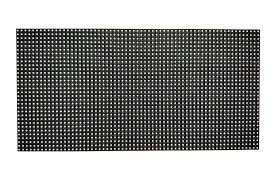
Touch technology integration is critical to interactivity. Infrared touch screens use arrays of IR LEDs and photodetectors to detect object contact or gestures without physically contacting the panel surface, ensuring durability. Alternatively, capacitive touch technology, widely used for smaller interactive displays, offers multi-touch capabilities and high precision but may require a protective glass layer to safeguard the LED surface.
Technical Parameters and Performance Metrics
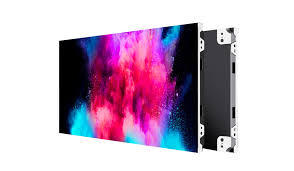
Key metrics defining LED interactive display performance include pixel pitch, brightness, contrast ratio, refresh rate, color gamut, touch response time, and input latency. For commercial indoor applications, common pixel pitches are 1.2mm to 2.5mm, with brightness levels between 800 to 1500 nits, sufficient for comfortable viewing under ambient lighting conditions. Outdoor interactive LED displays require higher brightness, often 5000 nits or more, to maintain visibility under direct sunlight, complying with IEC 60598 standards for outdoor luminance.
High refresh rates (≥1920Hz) are essential to prevent flicker artifacts, particularly for content involving video or real-time interaction. Color gamut coverage often reaches up to 95% of NTSC or Rec.709 standards, providing rich and accurate color reproduction vital for branding and information display. Touch response times should be optimized below 30 milliseconds to preserve fluidity during user interactions, while system input latency should be minimized to less than 50 milliseconds overall to maintain natural feedback loops.
Applications and Industry Use Cases
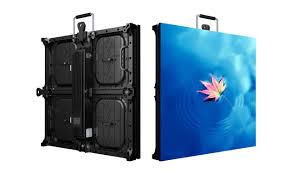
LED interactive displays are widely adopted across various domains. In retail environments, interactive video walls serve as digital catalogs, guiding customers through product selections with touch-enabled menus and augmented reality overlays. Museums and exhibition halls utilize these displays for dynamic, participatory exhibits, driving educational engagement through multi-user touch interaction.
In corporate settings, LED interactive displays facilitate collaborative workspaces by combining large-format visualization with direct touch input, replacing conventional projection systems. Educational institutions leverage them for immersive lessons, integrating digital whiteboarding and multimedia playback to enhance learning outcomes.
Case studies indicate that integrated LED interactive solutions can increase visitor engagement metrics by up to 40%, while enhancing retention rates and improving sales conversions. For example, a major global retail chain reported a 25% uplift in customer dwell time following the installation of interactive LED video walls, powered by real-time analytics and touch-based navigation.
Standards and Quality Assurance
Compliance with international standards such as IEC 60950 for electrical safety, IEC 62368-1 for audio/video equipment safety, and RoHS directives for hazardous substances is mandatory during manufacturing and installation. Additionally, rigorous calibration protocols ensure color consistency across modules and seamless touch responsiveness. Calibration aligns with ANSI/NCSL Z540 standards to guarantee display uniformity under varying environmental conditions.
Advanced manufacturing incorporates quality control steps like Automated Optical Inspection (AOI) to detect defects in LED chips and solder joints, as well as environmental stress screening (ESS) to simulate operational life cycles. Heat dissipation is engineered through aluminum backplanes and active cooling to sustain long-term reliability, addressing common failure modes identified in IEEE publications on LED durability.
Future Trends and Innovations
Technical innovation trends include miniaturizing pixel pitches below 0.9mm for ultra-high-definition interactive surfaces, integrating AI-powered gesture recognition for contactless control, and hybridizing LED technology with OLED layers to expand contrast and color fidelity. Emerging materials and printing technologies promise more flexible and lightweight LED interactive panels, facilitating novel form factors such as curved or transparent displays.
Moreover, integrating IoT and cloud connectivity enables data analytics-driven content personalization, vital for marketing and public information systems. The compatibility of LED interactive displays with advanced software ecosystems such as Android OS and custom touch firmware enhances their adaptability across diverse digital signage applications.
Conclusion
LED interactive displays represent a sophisticated amalgamation of display engineering and user interface technology. Their evolution is driven by precise engineering parameters, strict adherence to safety and quality standards, and a broad spectrum of high-impact applications. As the technology matures, it enables more engaging, reliable, and adaptable solutions, cementing its vital role in the future of interactive digital environments.
For professionals and stakeholders seeking to deploy or develop LED interactive display systems, understanding detailed technical specifications, adherence to standards, and integration strategies is essential to maximize both performance and user satisfaction.
References:
1. IEC 62471: Photobiological safety of lamps and lamp systems. International Electrotechnical Commission.
2. IEC 60598: Luminaires – Part 1: General requirements and tests.
3. IEEE Transactions on Device and Materials Reliability, Vol. 20, Issue 3, 2020.
4. ANSI/NCSL Z540: Calibration standards.
5. RoHS Directive 2011/65/EU on the restriction of hazardous substances.
6. “The Impact of Interactive Digital Signage on Consumer Behaviour,” Journal of Retail Technology, 2021.













