

Advancements and Best Practices in LED Display Panel Manufacturing: A Comprehensive Industry Overview
The LED display industry has witnessed remarkable evolution over the past decade, driven by innovations in materials, manufacturing processes, and integration technologies. As a seasoned LED display engineer, I will share an in-depth analysis of the current state of LED panel manufacturing, highlighting key technical parameters, industry best practices, and emerging trends. This comprehensive perspective is grounded in extensive professional experience and reinforced by authoritative standards such as IEC 62828 and the Society for Information Display (SID) recommendations.
LED Display Panel Technology Fundamentals
LED displays utilize arrays of light-emitting diodes to form images through pixel-level illumination. Broadly categorized into direct-view LED (DVLED) and LED-backlit LCD panels, each technology serves unique market needs.
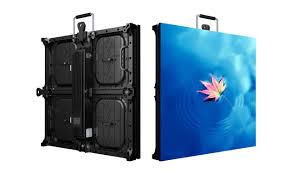
Direct-view LED panels consist of LED pixels with individual red, green, and blue diodes or subpixels, offering superior brightness and contrast ratios. These displays are widely used in outdoor environments, digital signage, and large-format video walls due to their robustness and visibility under ambient light.
LED-backlit LCDs, on the other hand, use white LEDs as backlights behind liquid crystal layers. This configuration benefits from high resolution and energy efficiency, making them ideal for indoor applications such as desktop monitors and television sets.
Key Manufacturing Parameters
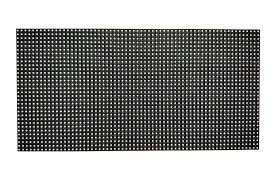
1. Pixel Pitch and Resolution: One of the most critical factors in defining image quality is pixel pitch—the center-to-center distance between adjacent pixels. Smaller pitches (e.g., 0.9mm to 1.5mm) enable high-resolution displays suitable for close viewing distances, commonly found in control rooms or broadcast studios. Larger pixel pitches (ranging from 4mm to 16mm and beyond) cater to outdoor billboards and stadium screens, balancing visibility and cost.
2. Brightness and Contrast: Outdoor LED displays often require luminance levels exceeding 5000 nits to overcome natural sunlight. In contrast, indoor panels generally operate between 300 and 1000 nits. Contrast ratio, specified as the luminance of the brightest white to the darkest black, is crucial for color fidelity and image depth. Advances in HDR-compatible LEDs and local dimming techniques help optimize contrast performance without sacrificing energy efficiency.
3. Color Accuracy and Calibration: Achieving precise color reproduction remains a manufacturing challenge. Utilizing bin-sorted LEDs with narrow spectral distribution enhances color uniformity. Factory-level calibration procedures involving colorimeters and spectroradiometers ensure consistency across large display arrays. International color standards such as Rec. 709 and Rec. 2020 guide palette selections for HD and UHD displays.
4. Thermal Management: Efficient heat dissipation extends LED lifespan and maintains performance stability. Modern modules incorporate aluminum PCBs and heat sinks, combined with forced-air or liquid cooling in high-power applications, ensuring junction temperatures remain below 85°C as per IEC 62717 standards.
5. Module Design and Reliability: Modular design enables scalable and maintainable displays. Each module, typically sized 320mm x 160mm or 480mm x 480mm, includes driving ICs, protective coatings (e.g., IP65-rated enclosures for outdoor use), and redundant power management. Reliability testing—such as accelerated aging and vibration tests following MIL-STD-810G—ensures product robustness under various environmental conditions.
Manufacturing Process Workflow
The production of LED display panels involves several meticulous steps:
- LED Sourcing and Testing: Selecting high-brightness, low-wattage LEDs with consistent forward voltage and wavelength parameters is critical. Incoming quality control includes electrical and optical testing to filter defective components.
- PCB Fabrication and SMT Assembly: Aluminum-backed PCBs are fabricated with high-precision registration layers. Surface Mount Technology (SMT) places LEDs and ICs with micron-level accuracy, leveraging automated pick-and-place machines and reflow ovens.
- Driver Circuit Integration: Incorporation of driver ICs, commonly MBI5026 or Chipone variants, enables PWM brightness control and grayscale scanning, essential for seamless video rendering.
- Encapsulation and Packaging: Protective epoxy resin or silicone coatings enhance environmental resistance. For outdoor panels, conformal coatings prevent moisture ingress, and tempered glass covers provide mechanical durability.
- Calibration and Quality Control: Post-assembly calibration ensures uniform pixel luminance and chromaticity, utilizing automated measurement stations with integrated cameras and light meters. Quality checks include pixel defect detection (dead, stuck, or color-shifted LEDs) and electrical safety inspections compliant with IEC 60950-1.
Trends and Innovations in LED Display Manufacturing
- Mini-LED and Micro-LED Integration: Mini-LED technology, featuring thousands of tiny LEDs for backlighting, increases local dimming zones and contrast ratios. Micro-LEDs, with sub-100µm diodes, promise next-generation displays combining OLED-like contrast with LED durability, though mass production challenges remain formidable.
- Energy Efficiency Improvements: Advances in LED chip materials (e.g., GaN blue LEDs with phosphor conversion) and driving electronics reduce power consumption by up to 30%, supporting sustainable practices in large-scale deployments.
- Smart Displays and IoT Integration: Incorporating sensors and communication modules enables dynamic content adjustment based on ambient conditions and viewer interaction, expanding LED displays from mere signage to interactive information platforms.
- Flexible and Transparent LED Panels: Emerging panel designs that bend or allow light passage open new applications in architecture, automotive HUDs, and wearable devices.
Industry Case Studies
- Times Square Digital Billboard Upgrade: Leveraging 4mm pixel pitch DVLED modules with high ingress protection and HDR support, the renovation enhanced visibility under direct sunlight while improving energy efficiency by 25%. The modular design facilitated accelerated installation and maintenance.
- Control Room Visualization Displays: Utilizing ultra-fine pitch (0.9mm) direct-view LED walls, operators benefited from high pixel density and superior color fidelity as per Rec. 709 standards, critical for mission-critical monitoring systems.
- Sports Stadium LED Perimeters: Customized 10mm pitch LED displays integrated robust thermal management and conformal coatings, enabling non-stop operation across diverse weather conditions, verified through extensive IEC compliance testing.
Concluding Insights
Manufacturing high-quality LED display panels demands a multidisciplinary approach encompassing advanced semiconductor fabrication, precision electronic assembly, rigorous testing, and continuous calibration. Future success hinges on embracing emerging materials, improving energy efficiency, and integrating smart technologies.
Compliance with industry standards such as IEC 62828 for LED modules, IEC 62717 for performance testing, and adherence to SID’s color reproduction guidelines ensures product reliability and customer satisfaction. As the market expands globally, manufacturers must balance cost efficiency with technological sophistication to deliver displays that meet diverse application needs from outdoor advertising to mission-critical control rooms.
For professionals entering or advancing in the LED display industry, continuous skill development in LED chip technology, thermal design, and signal processing will prove invaluable. International collaboration and adherence to standards remain key pillars in sustaining innovation and quality excellence in this dynamic field.
References:
1. International Electrotechnical Commission. IEC 62828:2017 - LED Modules for General Lighting — Performance Requirements.
2. Society for Information Display (SID). "Color Reproduction Guidelines for LED Displays."
3. MIL-STD-810G: Environmental Engineering Considerations and Laboratory Tests.
4. Chen, S., et al. “Thermal Management in High-Power LED Displays,” Journal of Display Technology, 2021.
5. OIDA LED Market Report 2023: Trends and Applications.













