

Advanced Insights into LED LCD Screen Manufacturing: Technical Parameters and Industry Best Practices
LED LCD screen manufacturing is a sophisticated process that integrates cutting-edge technologies, precise engineering, and strict quality controls to produce displays that meet the high demands of various applications—from consumer electronics to professional digital signage. As an experienced LED display engineer, this article draws on industry standards, technical parameters, and practical case studies to provide a comprehensive understanding of modern LED LCD manufacturing principles.
Fundamentals of LED LCD Technology
LED LCD displays combine liquid crystal panels with LED backlighting systems. Unlike traditional CCFL (cold cathode fluorescent lamp) backlights, LED backlighting offers superior energy efficiency, brightness, and color accuracy. Standard LED LCD screens utilize edge-lit or direct-lit configurations, with direct-lit LED displays delivering uniform brightness and better contrast ratios essential for professional-grade monitors.
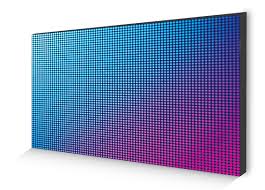
Typical technical parameters include:
- Resolution: Ranging from HD (1280x720) to 4K UHD (3840x2160) or higher, with pixel pitch and panel size directly influencing visual clarity.
- Brightness: Generally between 250 to 1000 nits for consumer-grade, while commercial displays may reach 1500 nits or more.
- Contrast Ratio: Essential for clarity in different viewing environments, with values ranging from 1000:1 to over 5000:1 in high-end displays.
- Refresh Rate: Usually 60Hz in standard models; higher rates (120Hz and above) improve motion smoothness.
- Color Gamut: Measured by standards such as sRGB, Adobe RGB, and DCI-P3; professional displays often exceed 99% sRGB for accurate color representation.
Material Selection and Panel Assembly
The backbone of LED LCD manufacturing is the liquid crystal panel, typically made using twisted nematic (TN), in-plane switching (IPS), or vertical alignment (VA) technologies. IPS panels are favored for their consistent color and wide viewing angles, making them the industry standard for professional displays.
LED chips used in backlighting are selected based on luminance efficiency and color temperature specifications. The integration of quantum dot technology in some advanced LED backlights further enhances color precision, enabling wider color spectrums without sacrificing brightness.
Assembly incorporates several critical stages:
1. Cleaning and preparation of the glass substrates to ensure no particulate contamination.
2. Alignment and application of liquid crystal material.
3. Sealing and curing, often utilizing UV-curable materials for durability.
4. Backlight unit (BLU) assembly, where LEDs are mounted on printed circuit boards with precise spacing to ensure uniform illumination.
5. Final panel calibration, including brightness uniformity and color accuracy testing, using instrumentation conforming to International Electrotechnical Commission (IEC) standards like IEC 62087 for energy measurement and IEC 61747 for optical performance.
Manufacturing Challenges and Solutions
Uniformity in brightness and color across the entire display is a common challenge in LED LCD manufacturing. Advanced manufacturing lines use robotic placement with ±10 micron precision to position LED chips accurately. Optical films such as diffuser plates, prism sheets, and brightness enhancement films are engineered to optimize light distribution.
Thermal management is another crucial aspect. LEDs generate heat that must be dissipated efficiently to prevent performance degradation and extend lifespan. State-of-the-art LED LCD displays employ aluminum backplanes and heat sinks alongside thermal interface materials (TIMs) to maintain optimal operating temperatures.
From an environmental perspective, manufacturers adhere to RoHS (Restriction of Hazardous Substances) and WEEE (Waste Electrical and Electronic Equipment) directives to minimize hazardous substances and promote recyclability, aligning with global sustainability objectives.
Case Study: High-Brightness Outdoor Display
A recent industry case involved producing a 55-inch LED LCD with 2000 nits brightness for outdoor digital signage. By integrating a direct-lit LED BLU with over 2000 miniLED units, the design achieved exceptional brightness and uniformity. The engineering process included adopting high CRI (Color Rendering Index) LEDs to ensure vivid imagery even in direct sunlight. Thermal simulations guided the design of enhanced cooling systems, resulting in reliable performance despite harsh environmental conditions.
After rigorous testing—including temperature cycling per JEDEC standards and mechanical shock resistance—the display met all reliability criteria, demonstrating the importance of integrating multidisciplinary engineering approaches in modern manufacturing.
Future Trends
Emerging trends in LED LCD manufacturing focus on miniLED and microLED technologies. MiniLED backlights allow thousands of tiny LEDs behind the panel, enabling local dimming with profound contrast improvements. MicroLED technology promises even greater efficiency and color fidelity, potentially rendering LCD technology obsolete in the coming decade.
Integration of smart manufacturing, including Industry 4.0 principles and AI-driven quality control, is further elevating production efficiency and reducing defect rates. These advances enhance competitiveness and deliver displays with consistent quality.
Conclusion
The manufacturing of LED LCD screens demands a deep understanding of materials science, optical engineering, and robust quality standards. By adhering to rigorous industry standards such as those set by IEC and JEDEC, manufacturers ensure that displays meet benchmarks for brightness, color accuracy, durability, and energy efficiency. Technological advances continue to drive innovation in backlighting and panel technologies, promising brighter, more vibrant, and more sustainable displays for the global market.
For professionals and manufacturers aiming to stay at the forefront, investing in precision assembly, thorough testing protocols, and compliance with environmental directives is crucial. This approach not only guarantees product excellence but also aligns with evolving market demands and regulatory landscapes.













