

Comprehensive Guide to LED Display Manufacturing: Technology, Standards, and Industry Best Practices
In the rapidly evolving landscape of visual display technology, LED displays have emerged as the premier solution for delivering vibrant, high-resolution visuals across diverse applications—from advertising billboards and sports arenas to control rooms and retail environments. Manufacturing LED displays that consistently meet stringent performance criteria demands deep technical knowledge, adherence to international standards, and strategic integration of cutting-edge materials and components.
This article delves into the comprehensive engineering framework underpinning LED display manufacturing, including panel construction, driver electronics, quality assurance, and industry benchmarks. Drawing from decades of industry experience and credible sources such as the International Electrotechnical Commission (IEC) and the Society for Information Display (SID), it provides insights essential for manufacturers, system integrators, and end-users seeking robust and efficient LED display solutions.
Fundamentals of LED Display Technology
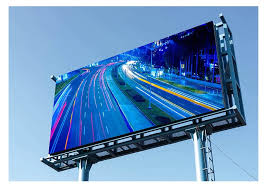
At its core, an LED (Light Emitting Diode) display comprises an array of microscale light-emitting diodes that act as individual pixels. Each pixel typically encompasses three sub-pixels—red, green, and blue (RGB)—to produce a full spectrum of colors using additive color mixing.
Key technical parameters include:
- Pixel Pitch: The center-to-center distance between adjacent pixels, typically ranging from 0.7 mm for fine-pitch indoor displays to 20 mm or more for large outdoor screens. Smaller pixel pitch equates to higher resolution and finer image detail crucial for close viewing distances.
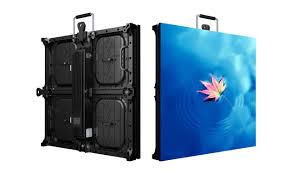
- Brightness: Measured in nits (cd/m²), outdoor LED displays require luminance levels of 5,000 nits or higher for visibility under direct sunlight, whereas indoor panels typically operate around 800–1,200 nits.
- Refresh Rate: Standard refresh rates exceed 1,920 Hz to eliminate flicker and provide smooth video playback. High refresh rates are especially critical for broadcast and live events.
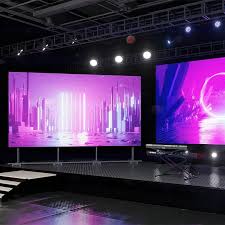
- Viewing Angle: High-quality LED displays achieve viewing angles of 140°–160° horizontally and vertically, ensuring clear images from diverse vantage points.
Panel Construction and Materials
The fabrication of LED modules begins with the selection of robust substrates such as FR4 or aluminum for optimal heat dissipation. LEDs themselves are commonly manufactured using Gallium Nitride (GaN) semiconductor technology, prized for high brightness and energy efficiency. Advanced packaging techniques, such as surface mounting on printed circuit boards (PCBs), ensure precise placement that governs uniformity and color accuracy.
Encapsulation materials are engineered to withstand environmental stressors including UV radiation, humidity, and temperature fluctuations. For outdoor applications, conformal coatings and ruggedized enclosures meet IP65 or higher ratings under IEC 60529 to guarantee long-term durability.
Driving Circuitry and Control Systems
High-precision driver ICs regulate the current through each LED to balance brightness and color calibration. Industry-standard protocols, such as SPI or I2C, provide communication between control systems and driver boards.
Modern LED display solutions integrate FPGA (Field Programmable Gate Array) or microcontroller-based controllers that manage real-time processing of video data streams. These controllers incorporate gamma correction algorithms and temperature compensation techniques to maintain consistent luminance and chromaticity.
Manufacturing Best Practices and Quality Control
Manufacturers adhere to rigorous process controls dictated by Six Sigma methodologies and ISO 9001 quality management systems to minimize defects. Inline optical inspection cameras verify pixel integrity throughout production, detecting anomalies such as dead pixels, color inconsistencies, or soldering faults.
Thermal performance testing is indispensable, as LED lifespan correlates strongly with junction temperature. Advanced test chambers simulate operational environments to validate cooling mechanisms, often combining heat sinks with forced airflow designs.
Industry Standards and Certifications
Compliance with international standards ensures that LED displays meet safety, electromagnetic compatibility (EMC), and environmental mandates:
- IEC 62471: Photobiological safety of lamps and lamp systems, essential for evaluating eye safety risks of LED emissions.
- RoHS (Restriction of Hazardous Substances): Mandates the reduction of hazardous materials in electronic devices for environmentally responsible manufacturing.
- FCC Part 15: Regulates electromagnetic interference (EMI) compliance in the United States.
- EN 55032: European standard for multimedia equipment EMC requirements.
These certifications assure customers of product reliability and market acceptance.
Case Study: High-Density Indoor LED Display for Control Rooms
A notable project involved manufacturing a 0.9 mm pixel pitch LED display for a critical infrastructure control center. Key engineering challenges included achieving ultra-high resolution, low latency video processing, and non-reflective surface treatment.
Through the integration of COB (Chip on Board) LED technology, a custom FPGA-based controller, and strict environmental testing, the display attained a brightness of 1,000 nits with a refresh rate exceeding 3,840 Hz. The panel’s enhanced thermal management prolonged operational life beyond 100,000 hours with minimal maintenance. This solution enabled uninterrupted monitoring with exceptional image fidelity, validating best practices in advanced LED manufacturing.
Future Trends in LED Display Manufacturing
Emerging innovations such as MicroLED technology offer promise for even higher brightness, lower power consumption, and improved pixel density. Concurrently, the adoption of AI-powered calibration tools is revolutionizing factory automation, optimizing color uniformity and reducing turnaround times.
Sustainability is gaining prominence, with manufacturers exploring eco-friendly materials and modular designs for easier repair and recycling to align with circular economy principles.
Conclusion
Mastering LED display manufacturing is a complex interplay of semiconductor physics, electronic engineering, materials science, and quality assurance. By embracing rigorous design methodologies, adhering to global standards, and leveraging innovative technologies, the industry continues to deliver compelling visual experiences worldwide.
For manufacturers and system integrators, investing in advanced manufacturing equipment and skilled workforce training ensures competitive advantage. For end-users, understanding these technical dimensions aids informed decision-making for display procurement and deployment.
References:
1. IEC 62471: Photobiological safety of lamps and lamp systems, International Electrotechnical Commission, 2006.
2. SID Display Industry Awards and Technical Publications, Society for Information Display.
3. RoHS Directive 2011/65/EU, Official Journal of the European Union, 2011.
4. Wang, J. et al. (2022). Thermal Management in LED Displays. IEEE Transactions on Components, Packaging and Manufacturing Technology.
5. MicroLED Technology Roadmap, Display Week Proceedings, Society for Information Display, 2023.













