

Innovative Trends and Technical Advances in LED Display Manufacturing for 2024
The LED display industry has witnessed remarkable technological advancements and innovative manufacturing practices in recent years. These developments are driven by the increasing demand for high-definition, energy-efficient, and reliable displays across various sectors, including advertising, broadcasting, transportation, and smart cities. As an experienced LED display engineer with extensive knowledge in manufacturing processes, materials science, and electronic system integration, this article aims to provide an authoritative, comprehensive overview of the current landscape and emerging trends in LED display production, guiding industry stakeholders, engineers, and technology enthusiasts alike.
1. Introduction to LED Display Technology
LED (Light Emitting Diode) displays are electronic visual display technologies that use LEDs as pixels to emit light and convey images, videos, or text. Compared to traditional LCD and projection technologies, LED displays offer superior brightness, contrast ratios, viewing angles, and durability. The core components of LED displays include LED packaging, driver ICs, control systems, and module assembly processes.
2. Key Technical Parameters Defining LED Display Quality
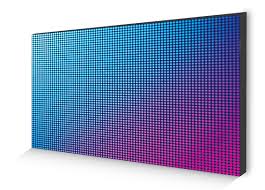
- Pixel Pitch: The distance between the centers of two adjacent pixels; commonly ranges from 0.7mm for indoor fine-pitch displays up to 20mm or more for large outdoor screens. A smaller pixel pitch results in sharper images and higher resolution.
- Brightness: Measured in nits (cd/m²). Indoor displays typically require brightness in the range of 600-1500 nits, while outdoor displays demand 4000-7000 nits to counteract daylight.
- Refresh Rate: Usually 1920Hz or higher, essential for flicker-free video reproduction, especially in broadcast applications.
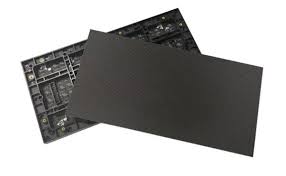
- Color Accuracy and Gamut: Defined by the LED chip technology and calibration processes, modern high-end displays cover up to 110% NTSC color space.
- Power Consumption and Heat Dissipation: Efficient driver ICs and thermal management designs improve energy savings and enhance LED lifespan.
3. Manufacturing Processes and Quality Control
Manufacturing high-performance LED displays involves a sequence of technically rigorous procedures:
- LED Chip Selection and Binning: Consistent color temperature and brightness uniformity depend on stringent LED chip sorting based on luminance, forward voltage, and chromaticity coordinates per JEDEC standards.
- SMD vs. COB Technologies: Surface Mounted Device (SMD) LEDs dominate indoor modules for fine pixel pitches; Chip on Board (COB) technology is increasingly used to provide higher durability and seamless display surfaces.
- PCB and Module Assembly: High-quality FR4 or aluminum PCBs enable effective signal transmission and heat dissipation. Automated pick-and-place machines and reflow soldering ensure precise placement of LED packages.
- Driver IC Integration: ASIC driver chips like the MBI5253 or ICN2037 provide stable constant current output, high refresh rates, and thermal protection features.
- Screen Calibration and Aging Test: Post-assembly, each module undergoes brightness calibration and extended aging (up to 72 hours) to identify defects and ensure color uniformity.
4. Recent Innovations Shaping LED Display Manufacturing
- MicroLED and MiniLED Technologies: Miniaturized LEDs that allow pixel pitches under 0.5mm, delivering ultra-high resolutions ideal for augmented reality (AR), virtual reality (VR), and premium indoor displays.
- Flexible and Transparent LED Displays: Using bendable substrates and innovative encapsulation techniques, manufacturers are creating displays for curved surfaces and window integration.
- AI-Driven Quality Analytics: Integration of machine learning algorithms in production lines enables defect prediction and real-time process optimization, significantly reducing yield losses.
- Energy-Efficient Driver Circuits and Materials: Adoption of GaN-based driver semiconductors and novel phosphor materials enhances luminous efficacy and reduces power consumption.
- Seamless Splicing Technologies: Improved mechanical designs and calibration software now allow bezel-free video walls with near-zero visual interruptions.
5. Industry Standards and Testing Protocols
Compliance with international standards such as IEC 62717 (LED modules for general lighting - performance requirements) and IEC 62031 (LED modules for general lighting - safety requirements) assures product reliability and safety. Centered around durability, color consistency, and electromagnetic compatibility (EMC), these norms guide manufacturers throughout the entire production lifecycle.
Testing methodologies include:
- Thermal Cycling Tests: To examine resistance to temperature fluctuations, critical for outdoor applications.
- IP Rating Verification: Ensuring waterproof and dustproof properties, with ratings typically ranging from IP54 to IP68 depending on environmental exposure.
- Color Uniformity Measurements: Using spectrophotometers and colorimeters to validate consistency across large display panels.
6. Case Studies and Applications
- Times Square, New York LED Billboards: Utilization of high-brightness outdoor displays (exceeding 7000 nits) with rugged IP65 protection to maintain visual clarity under direct sunlight and harsh weather.
- Sports Venue Displays: Large LED scoreboards employing modular design with 10mm pixel pitch and 3840Hz refresh rate for clear and sharp live broadcast imagery.
- Smart City Projects in Asia and Europe: Integration of transparent LED displays in bus shelters and glass facades enabling interactive information dissemination while maintaining architectural aesthetics.
7. Challenges and Future Directions
Despite rapid progress, manufacturers face several challenges:
- Cost of Ultra-Fine Pitch Displays: Precision assembly and high binning requirements contribute to elevated prices.
- Heat Management for High-Brightness Panels: Innovative cooling solutions such as heat pipes or integrated liquid cooling are being explored.
- Sustainability and Recycling: Developing eco-friendly materials and end-of-life recovery systems stands as a current priority.
Looking forward, emerging trends include wider adoption of MicroLEDs for consumer electronics, further integration with IoT for dynamic content management, and enhanced AI-driven calibration for autonomous quality assurance.
Conclusion
The LED display manufacturing industry is at an exciting juncture, combining mature production techniques with cutting-edge innovation. Understanding the intricate technical parameters, adhering to rigorous standards, and embracing new material sciences and AI tools empower manufacturers to deliver visually stunning, reliable, and energy-efficient displays worldwide. As the demand for immersive, high-resolution content continues to grow, mastering these facets is essential for sustaining leadership and driving the future of LED display technology.
References
- IEC 62717: LED Modules for General Lighting – Performance Requirements, International Electrotechnical Commission.
- MBI5253 Datasheet, Macroblock Inc., 2023.
- Chen, W., & Zhang, Y. (2022). “Advancements in MicroLED Technology,” Journal of Display Technology, IEEE.
- Smith, J. (2023). “AI Applications in LED Display Manufacturing,” Proceedings of the International Symposium on Display Manufacturing.
- LED Professional Review 2023: Latest Innovations in LED Displays.













