

Advances and Best Practices in LED Display Manufacturing: A Professional Engineer's Perspective
The LED display industry has witnessed remarkable growth and technological advancements over the past decade, driven by increasing demand for high-resolution, energy-efficient, and versatile screens in various sectors such as advertising, transportation, sports venues, and control rooms. As a professional LED display engineer with extensive experience in manufacturing, design, and quality assurance, I aim to provide an authoritative overview of LED display manufacturing, emphasizing critical technical parameters, industry standards, and practical insights to guide manufacturers, designers, and end-users alike.
Introduction
LED (Light Emitting Diode) displays have revolutionized visual communication by offering vibrant colors, high brightness, and superior durability compared to traditional LCD and projection technologies. Manufacturing these displays involves intricate processes that combine semiconductor technology, precision assembly, and rigorous testing. Understanding these complexities is essential for producing reliable, high-performance LED displays that meet global standards such as IEC 61347 and UL 8750, ensuring safety and longevity in diverse environments.
Main Body
1. Core Components and Technical Parameters
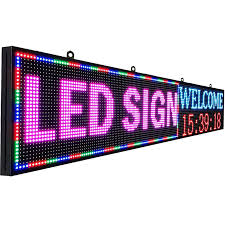
At the heart of any LED display lies the LED module, typically fabricated using surface-mount device (SMD) technology. The resolution is defined by the pixel pitch—the distance between the centers of adjacent pixels—which directly affects image clarity. For example, a pixel pitch of 1.5mm or below is considered fine pitch, suitable for indoor applications requiring close viewing distances, while outdoor displays commonly utilize pitches ranging from 4mm to 20mm to optimize visibility under direct sunlight.
Key parameters to consider include:
- Brightness: Measured in nits (candela per square meter), indoor LED displays typically operate at 600–1,200 nits, whereas outdoor displays require 4,000–8,000 nits to combat ambient light. According to the Illuminating Engineering Society (IES) standards, ensuring the correct luminance is vital to maintaining visibility and energy efficiency.
- Color Accuracy: Utilizing the CIE 1931 color space and Delta E values below 2 ensures color fidelity, essential for applications like digital signage in retail and broadcasting.
- Refresh Rate: Modern displays leverage refresh rates above 1,920 Hz to prevent flickering and ensure smooth video playback, adhering to broadcast standards.
- Viewing Angle: Typical LED displays provide horizontal and vertical viewing angles of 140° or more, critical for venues to offer uniform viewing experiences.
2. Manufacturing Processes and Quality Assurance
Effective LED display manufacturing involves several stages: substrate preparation, LED mounting, soldering, encapsulation, and module assembly. Precision in these steps affects reliability and performance. For instance, automated pick-and-place machines ensure consistent LED placement to minimize dead pixels and misalignment, while reflow soldering ovens guarantee robust electrical connections.
Conformal coating and encapsulation techniques protect against moisture and dust ingress, vital for extending lifespan, especially in outdoor environments exposed to harsh weather.
Quality inspections leverage methods such as:
- In-Circuit Testing (ICT): To verify electrical connectivity and component integrity.
- Photometric Testing: To assess brightness and color uniformity across modules.
- Thermal Imaging: To detect hotspot areas which may indicate poor heat dissipation.
These quality control steps conform to standards such as IPC-A-610 for electronic assemblies and ISO 9001 for general quality management, underscoring the importance of systematic evaluation.
3. Industry Trends and Innovations
The LED display industry is embracing innovations like Micro-LED technology, which offers ultra-high resolution with reduced power consumption. Flexible LED panels, made possible by advancements in substrate materials and encapsulation, enable novel applications including curved displays and wearables.
Additionally, energy-efficient drivers and smart sensors integrated into displays optimize brightness dynamically, reducing power draw and prolonging component life.
4. Environmental and Sustainability Considerations
Manufacturers increasingly prioritize eco-friendly materials and processes per RoHS (Restriction of Hazardous Substances) directives to reduce environmental impact. Designing for serviceability and recyclability answers growing demands for sustainable production cycles.
Conclusion
Manufacturing high-quality LED displays requires a deep understanding of semiconductor technology, precise assembly processes, and compliance with rigorous industry standards. Emerging technologies such as Micro-LED and flexible displays present exciting opportunities, but foundational manufacturing excellence remains the cornerstone of dependable, high-performance LED solutions.
By focusing on critical parameters—brightness, resolution, color accuracy, and viewing angle—and implementing stringent quality control measures aligned with global standards, manufacturers can deliver displays that meet the demanding needs of diverse markets. The continual evolution of LED technology promises not only enhanced visual experiences but also increased sustainability and efficiency, solidifying the LED display’s role as a dominant visual communication medium worldwide.













