

Advancements and Technical Insights into Commercial LED Display Screens
In the rapidly evolving field of digital signage, commercial LED display screens have emerged as a cornerstone technology transforming advertising, retail, transportation hubs, and event venues worldwide. These displays offer unparalleled brightness, color accuracy, and durability, making them an ideal choice for both indoor and outdoor applications. As professional LED display engineers, understanding the technological intricacies, manufacturing parameters, and industry standards behind these solutions is critical to optimizing performance and longevity.
Technical Parameters and Specifications
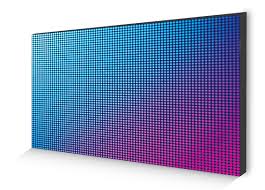
Commercial LED display screens typically feature pixel pitches ranging from 1.2 mm to 10 mm, with smaller pitches used primarily for high-resolution indoor screens, and larger pitches suited for outdoor visibility. For instance, an LED panel with a pixel pitch of 1.5 mm can achieve a resolution density exceeding 400,000 pixels per square meter, enabling crisp, vibrant imagery ideal for retail environments or control rooms.
Brightness is another essential parameter—commercial outdoor LED displays must achieve luminance levels exceeding 5,000 nits to remain visible under direct sunlight, as specified by standards such as the IEC 62471 for photobiological safety of lamps. Indoor LED displays, conversely, generally operate within 800 to 1,200 nits, balancing energy efficiency and viewer comfort. Contrast ratio and refresh rate are additional critical factors: a high contrast ratio enhances image depth, while refresh rates above 3,000 Hz ensure flicker-free output compatible with high-speed cameras used in live broadcasts or filming.
Manufacturing and Quality Assurance
The manufacturing process of commercial LED displays demands precision, from LED chip placement to soldering and optical calibration. Surface-Mount Device (SMD) technology is the predominant method, where red, green, and blue LEDs are packaged together within individual pixels. This enables uniform color rendering and facilitates seamless panel integration. Furthermore, adherence to IPC-A-610 Class 2 or Class 3 standards during assembly guarantees the durability and performance consistency necessary for commercial applications.
Thermal management is another pivotal consideration; advanced heat dissipation techniques—such as integrated aluminum substrates and active cooling fans—prolong LED lifespan, often exceeding 100,000 operational hours under optimal conditions. Additionally, IP65 or higher ingress protection ratings are standard for outdoor cabinets, safeguarding electronic components from dust and moisture.
Applications and Industry Trends
Commercial LED display screens have penetrated diverse sectors. In retail, dynamic signage and video walls enhance customer engagement through personalized content. Transportation hubs utilize large-format LED displays for real-time information dissemination, optimizing passenger flow and safety. In stadiums and event venues, modular LED panels offer scalability and ultra-high-definition visuals to captivate audiences.
The industry is witnessing a trend towards transparent LED displays and ultra-thin form factors, enabling installations on glass surfaces without obstructing ambient light. These innovation pathways expand architectural integration possibilities, blending digital content with existing environments seamlessly.
Moreover, integration with IoT and cloud-based content management systems allows for remote real-time updates, analytics, and personalization, maximizing operational efficiency and return on investment.
Standards and Certification
Adherence to stringent international standards underpins the reliability of commercial LED display screens. Compliance with RoHS (Restriction of Hazardous Substances) directives ensures environmental safety during production and disposal. The IEC 60598 standard governs luminaires’ safety, while CE and FCC certifications validate electrical safety and electromagnetic compatibility in various markets globally.
Ensure any product or installation follows manufacturer guidelines for electrical parameters, including voltage ranges (commonly 110-240V AC) and power consumption metrics (measured in watts per square meter), to maintain safety and efficiency.
Conclusion
Commercial LED display screens represent a fusion of advanced engineering, meticulous manufacturing, and evolving technology trends uniquely tailored for diverse commercial environments. Understanding critical parameters such as pixel pitch, brightness, refresh rate, and thermal management, along with compliance to international standards, is essential for engineers and end-users alike to harness the full potential of this transformative technology. As demand for dynamic, high-impact digital displays grows globally, continued innovation in LED technology promises increasingly sophisticated solutions for the modern commercial landscape.













