

Advanced Technologies and Best Practices in LED LCD Screen Manufacturing
The LED LCD screen manufacturing industry has witnessed remarkable advancements over the past decade, driven by evolving consumer demands for higher brightness, better color accuracy, thinner form factors, and enhanced energy efficiency. As a professional LED display engineer with extensive experience in this field, this article explores the critical technologies, manufacturing processes, and quality standards that define modern LED LCD screen production, providing a comprehensive guide for industry practitioners and technology enthusiasts alike.
Overview of LED LCD Technology
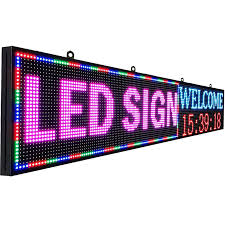
LED LCD screens combine Liquid Crystal Display (LCD) technology with Light Emitting Diode (LED) backlighting, offering superior brightness and contrast compared to traditional Cold Cathode Fluorescent Lamp (CCFL) backlights. This hybrid approach allows for precise local dimming and improved energy efficiency. The widespread adoption of LED backlighting has become the industry standard, with approximately over 90% of commercial LCD displays employing LED technology per the Society for Information Display (SID) market research reports.
Core Components and Technical Parameters
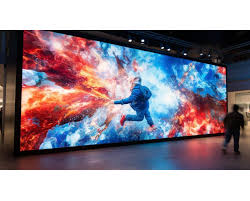
Manufacturing an LED LCD screen involves meticulous integration of several components:
- Liquid Crystal Panel: Typically incorporating In-Plane Switching (IPS) or Twisted Nematic (TN) technology, with IPS widely favored for its wide viewing angles and color consistency. Panel resolution options range from Full HD (1920x1080) to 8K (7680x4320) for premium displays.
- LED Backlight Module: This includes arrays of multiple white LEDs (e.g., SMD 2835 or 5050 types) arranged either along the screen edges (edge-lit) or directly behind the LCD panel (direct-lit). High-end models feature local dimming zones that dynamically adjust luminance for enhanced contrast ratios.
- Driver ICs and Printed Circuit Boards: Custom driver ICs manage both the liquid crystal pixel addressing and the LED backlight control, adhering to JEDEC standards to ensure reliability and signal integrity.
- Optical Films: A stack of brightness enhancement films (BEFs), diffusers, and polarizers optimize light uniformity and reduce reflection, balancing brightness with energy consumption.
Manufacturing Process and Industry Best Practices
Achieving high yield and quality in LED LCD screen production requires careful control throughout these steps:
1. Substrate Preparation: Glass substrates for the LCD panel undergo ultraclean processing, with precise deposition of Indium Tin Oxide (ITO) electrodes patterned through photolithography.
2. Liquid Crystal Injection and Sealing: The liquid crystal material, often high-birefringence nematic mixtures, is injected inside the substrate gap under vacuum to avoid air bubbles, sealed reliably to prevent contamination over the product lifecycle.
3. Backlight Assembly: LEDs are binned by luminance and chromaticity to ensure uniformity, with automated pick-and-place systems arranging the LEDs on the PCB for consistent performance. Thermal management is critical here, with metal-core PCBs and heat sinks used to dissipate heat efficiently, maintaining LED lifespan well beyond 50,000 hours as per the Illuminating Engineering Society standards.
4. Optical Film Lamination: Multiple optical films are laminated under cleanroom conditions to eliminate dust particles and ensure maximum transmittance, typically aimed at 85-90% light efficiency.
5. Display Module Assembly and Testing: Final assembly involves bonding the liquid crystal panel with the backlight unit, inspection under automated optical inspection (AOI) systems, and rigorous testing including contrast ratio checks, color gamut measurement using spectroradiometers, and uniformity tests.
Quality Control and Industry Standards
To maintain product reliability, manufacturers rely on international standards such as IEC 62368 for safety and ISO 9241 for ergonomic considerations. Additionally, environmental compliance is guided by directives like RoHS and WEEE, ensuring minimal hazardous substances usage and promoting recyclability.
Long-term reliability testing includes:
- Burn-in Tests: Displays are subjected to continuous operation for 168 hours to detect early-life failures.
- Temperature Cycling: Screens are exposed to varying temperatures (-20°C to 70°C) to evaluate durability.
- Moisture Resistance: The assembly must sustain 85% relative humidity at elevated temperatures without degradation.
These tests align with JEITA standards ensuring displays meet global market requirements.
Emerging Trends and Innovation Drivers
Advanced LED LCD screens increasingly adopt mini-LED and micro-LED backlight technologies. Mini-LEDs, measuring less than 200 microns, allow thousands of dimming zones, achieving contrast ratios exceeding 1,000,000:1, rivaling OLED displays, while retaining LCD longevity.
Furthermore, quantum dot enhancement films (QDEF) are integrated to broaden color gamut beyond Rec. 2020 standards, reaching NTSC coverage of >90%. This development is critical for professional-grade monitors used in color-critical environments like medical imaging and film production.
Flexible and transparent LED LCD displays are also entering niche markets, requiring novel manufacturing techniques including flexible glass substrates and precision encapsulation to maintain durability.
Environmental and Energy Efficiency Considerations
Manufacturers must optimize energy consumption, adhering to Energy Star certification requirements for displays that mandate luminance efficacy standards, low power standby modes, and mercury-free LED components. Implementing advanced PWM dimming techniques reduces flicker, improving eye comfort – an important ergonomic factor.
Case Study: Successful Large-Scale Manufacturing Deployment
A prominent South Korean manufacturer applied a lean manufacturing approach combined with Six Sigma quality control methods during their implementation of edge-lit LED LCD TV production lines. By incorporating real-time yield analytics and automated inline inspection systems, defect rates were reduced by 30%, while throughput increased by 25%. These improvements enhanced their position in the competitive global market, demonstrating how integrating engineering expertise with process excellence drives success.
Conclusion
Manufacturing LED LCD screens is a complex, multidisciplinary endeavor that balances optics, electronics, materials science, and quality engineering. By adhering to technical best practices, complying with rigorous industry standards, and embracing innovation, manufacturers can produce displays that deliver outstanding visual performance, long-term reliability, and sustainability.
For display engineers and manufacturers aiming to stay at the forefront, investing in advanced backlighting technologies like mini-LED, employing precision assembly techniques, and maintaining stringent quality control protocols is paramount. The continuous evolution of LED LCD technology promises exciting opportunities in various sectors including consumer electronics, professional visualization, automotive displays, and digital signage worldwide.
References:
- Society for Information Display (SID) Market Reports, 2023
- IEC 62368 Safety Standard for Audio/Video Products
- JEDEC JESD47 Reliability Qualification of Microelectronic Devices
- Illuminating Engineering Society (IES) Lighting Handbook, 10th Edition
- Energy Star Program Requirements for Displays, EPA 2023
- ISO 9241-307 Ergonomics of Human-System Interaction













