

Advanced Technologies and Best Practices in LED Display Manufacturing
The LED display industry has witnessed substantial growth over the past decade, driven by advancements in technology and increasing demand across various sectors including advertising, sports arenas, transportation, and public information systems. As a professional LED display engineer, it is imperative to understand the key technologies, manufacturing processes, and quality parameters that define a high-performance LED display. This article delves into the intricacies of LED display manufacturing, highlighting essential technical parameters, industry standards, and best practices to ensure product reliability and superior visual performance.
Introduction
LED (Light Emitting Diode) displays have become ubiquitous due to their outstanding brightness, energy efficiency, and durability. However, producing a high-quality LED display requires a combination of advanced technological processes, precise assembly, and rigorous quality control. In this article, we analyze core manufacturing technologies, the benefits of various LED types, and critical assembly standards that guide the production of displays tailored to different applications.
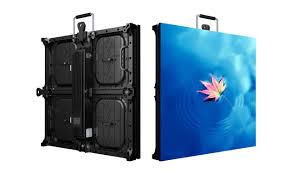
Main Body
1. Types of LED Technologies and Their Applications
Manufacturing begins with selecting the appropriate LED technology. The two predominant types used in display manufacturing are Surface-Mounted Device (SMD) LEDs and Light Emitting Diode (DIP) LEDs.
- SMD LEDs integrate RGB elements within a single chip package and are favored for indoor LED displays due to their finer pixel pitch (down to 0.9 mm) and superior color consistency. The compact size allows for ultra-high-definition displays with a thickness of only a few millimeters.
- DIP LEDs consist of individual red, green, and blue diodes encapsulated in a resin package. While they offer higher brightness levels (over 10,000 nits), DIP LEDs typically have larger pixel pitches (usually above 6 mm), making them suitable for outdoor displays meant to be viewed from long distances.
2. Key Technical Parameters in LED Display Manufacturing
Several core parameters influence the final display’s performance:
- Pixel Pitch: Defined as the distance between adjacent pixel centers, pixel pitch directly affects resolution. For instance, a 1.5 mm pixel pitch is typical for high-resolution indoor displays, while a 10 mm pitch suits large outdoor billboards.
- Brightness and Contrast: Outdoor LED displays require luminance greater than 8,000 nits to ensure readability under direct sunlight, while indoor applications can operate between 500 to 1,000 nits. High contrast ratios (over 3,000:1) ensure vivid image reproduction.
- Refresh Rate: Modern LED displays must exceed a refresh rate of 3,840 Hz to prevent flicker, especially critical in video broadcasting and live sports events. High refresh rates are achieved through advanced driver ICs and microcontroller units (MCUs).
- Viewing Angle: Ensuring wide horizontal and vertical viewing angles (typically >120° horizontal and >90° vertical) enhances visibility from various perspectives, critical for public information displays.
3. Manufacturing Processes and Quality Assurance
- LED Chip Selection and Binning: High-quality LED chips undergo binning to classify them by wavelength (color), brightness, and forward voltage. This step ensures uniformity across the display, preventing color shifts and brightness inconsistencies.
- Automated Pick-and-Place Assembly: Surface-mount technology (SMT) machines place thousands of LEDs per square meter with micron-level accuracy. Maintaining automated assembly line calibration is vital to avoid defects and ensure uniform pixel alignment.
- Soldering and Encapsulation: Precise reflow soldering is employed to secure LED components onto printed circuit boards (PCBs). Post-soldering, LEDs are often coated with silicone or epoxy encapsulation to enhance durability and weather resistance.
- Module Testing and Calibration: After assembly, each LED module undergoes comprehensive testing for electrical integrity, brightness, color accuracy, and pixel functionality. Calibration software corrects any variance by adjusting driving current on a per-pixel basis.
- Conformal Coating and Waterproofing: Outdoor displays require conformal coatings like polyurethane or silicone to protect against moisture, dust, and temperature fluctuations, meeting standards such as IP65 or higher.
4. Industry Standards and Certifications
LED display manufacturers must comply with international standards to assure safety and quality:
- IEC 62368-1 addresses electrical safety for information technology equipment.
- RoHS (Restriction of Hazardous Substances) ensures environmental compliance by limiting hazardous materials.
- ISO 9001 Quality Management certification enforces process standardization and continuous quality improvements.
- Brightness and Color Standards: Adhering to guidelines from the International Commission on Illumination (CIE) guarantees accurate color reproduction and standardized brightness metrics.
5. Case Studies: Implementation of Leading Practices
An industry-leading manufacturer implemented an automated binning and calibration system that reduced color deviation below 1.5 delta E, a significant improvement over the industry average of 3. This resulted in more uniform image quality across large video walls used in concert venues and sports arenas. Additionally, combining high-refresh-rate driver ICs with optimized thermal management systems doubled the lifespan of their products, extending operational stability beyond 100,000 hours.
Conclusion
Successful LED display manufacturing is a complex integration of advanced material sciences, precision engineering, and stringent quality management methodologies. Selecting the proper LED technology, controlling key performance parameters, and adhering to recognized standards underpin the production of displays that deliver unmatched brightness, clarity, and durability. As the demand for higher resolution and smarter displays grows, manufacturers must continuously innovate while maintaining rigorous production protocols. Professionals in the field must remain abreast of technological advancements and best practices to guarantee LED displays meet the evolving requirements of global markets.
References
- International Electrotechnical Commission (IEC). IEC 62368-1: Audio/video, information and communication technology equipment – Safety requirements.
- International Commission on Illumination (CIE). CIE 1931 Color Space and Colorimetry standards.
- RoHS Directive 2011/65/EU on hazardous substances in electronic equipment.
- ISO 9001:2015 Quality management systems – Requirements.
- Z. Liu et al., “Advances in LED Display Technologies,” Journal of Display Technology, vol. 16, no. 6, pp. 321–335, 2020.













