

Advanced LED Display Manufacturing Techniques: Enhancing Quality and Performance in Modern LED Screens
In the rapidly evolving world of electronic visual displays, LED (Light Emitting Diode) technology has become the cornerstone for delivering versatile, high-quality visual experiences. As engineer professionals in the LED display manufacturing industry, understanding the intricate processes and technical parameters that govern the creation of superior LED screens is essential. This article delves deep into advanced LED display manufacturing techniques, highlighting critical factors that influence performance, reliability, and longevity, supported by industry standards and case studies from leading manufacturers worldwide.
Understanding LED Display Technology Fundamentals
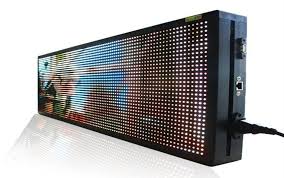
At the heart of every LED display lies the diode itself, emitting light when an electrical current passes through a semiconductor material. Modern LED screens are constructed by arranging thousands to millions of these diodes into pixels and modules that collectively form a dynamic image. The manufacturing process must ensure uniform brightness, color accuracy, and seamless integration between individual LEDs.
Key specifications include:
- Pixel Pitch: The center-to-center distance between two adjacent pixels. Typical ranges go from 0.8 mm in indoor fine-pitch displays to 10 mm or more in large outdoor LED boards. Smaller pixel pitch directly relates to higher resolution but increases manufacturing complexity and cost.
- Refresh Rate: Critical to visual smoothness, especially for video content, most LED displays operate at refresh rates of 1920 Hz or higher to eliminate flicker visible to the human eye.
- Brightness: Outdoor LED displays typically require brightness levels from 5000 to 10,000 nits (cd/m²) to counteract sunlight glare, while indoor displays range between 300 to 1000 nits depending on ambient lighting.
- Viewing Angle: Usually, LED panels provide wide viewing angles of 120° horizontal and vertical or better, achieved by optimizing LED lens geometry.
- Color Reproduction: Leveraging 16-bit or higher grayscale rendering per color channel allows for accurate color blending and smooth gradients across the display.
Materials and Components: The Foundation of Quality
Selecting high-purity semiconductor materials like Gallium Nitride (GaN) and Indium Gallium Nitride (InGaN) enables production of LEDs that exhibit high luminous efficiency and longevity. The choice of substrate, either sapphire or silicon carbide, directly affects heat dissipation and device reliability.
Furthermore, the phosphor coating on blue LED chips converts light to different color spectrums for full RGB (Red, Green, Blue) video display. Manufacturing lines employ automated dispensing systems to ensure consistent phosphor layer thickness, reducing color inconsistency.
High-quality printed circuit boards (PCBs) designed with optimal thermal management pathways are fundamental to prevent heat accumulation that degrades LED junctions. Copper cladding thickness, solder mask type, and gold-plated contact pads improve durability and electrical conductivity.
Manufacturing Workflow: Precision at Every Step
1. Wafer Fabrication: LED chips are grown as epitaxial layers on substrates by Metal-Organic Chemical Vapor Deposition (MOCVD). Control of deposition parameters determines the uniformity of quantum wells critical for emission wavelength and efficiency.
2. Chip Processing: Techniques such as photolithography, etching, and metallization define LED chip architecture. Laser scribing partitions wafers into individual dies.
3. Die Bonding: Precision die bonders glue chips accurately on PCBs. Uniform adhesive layers avoid misalignment impacting pixel uniformity.
4. Wire Bonding: Microwires connect each LED die to PCB pads ensuring low resistance paths. Wire bonders achieve high throughput while controlling deformation.
5. Encapsulation and Phosphor Coating: Silicone resin with high optical transparency encapsulates chips, protecting from moisture. Uniform phosphor application is critical for color consistency.
6. Module Assembly: Multiple LED PCBs are mounted into frames with precise mechanical fixtures to ensure seamless pixel alignment with minimal gaps.
7. Testing and Calibration: Automated optical inspection (AOI) and photometric calibration tune brightness, color balance, and correct dead pixels using embedded controllers.
Case Study: Seamless LED Video Wall for a Global Sports Arena
A recent project involving the installation of a 500 square meter LED video wall at an international sports stadium demonstrated practical application of these manufacturing techniques. The display featured a 2.5 mm pixel pitch with a brightness of 6000 nits and 3840 Hz refresh rate to guarantee clear and flicker-free images visible to tens of thousands of spectators under variable lighting. Thermal simulations during the design phase ensured efficient heat dissipation, validated by temperature sensors embedded in modules during testing.
The modular approach allowed rapid onsite assembly with minimal visual seams. Multiple levels of redundancy in controller boards and power supplies ensured uninterrupted operation during live events. Post-installation assessments recorded uniform luminance within ±3%, exceeding industry standards IEC 62368-1 for electronic display safety and IEC 62087 for energy measurement.
Sustainability and Future Trends in LED Manufacturing
In response to global environmental demands, manufacturers are adopting lead-free soldering techniques compliant with RoHS directives and investing in recycling and reuse of LED materials. Innovations like mini-LED and micro-LED technologies are pushing pixel pitches below 0.5 mm, offering ultra-high-definition experiences while improving energy efficiency and lifespan.
Continuous advancements in driver ICs, adaptive brightness control, and AI-based calibration promise displays that self-optimize in real-time according to ambient conditions. Industry collaborations under the International Electrotechnical Commission (IEC) continue to harmonize interoperability and quality standards.
Conclusion
The evolution of LED display manufacturing embodies a confluence of materials science, electronics engineering, and precision manufacturing. By carefully controlling technical parameters such as pixel pitch, brightness, refresh rates, and implementing rigorous quality assurance at each stage, manufacturers can deliver high-performance LED screens that meet the demanding needs of diverse applications from indoor digital signage to massive outdoor video walls.
This deep integration of process optimization and technological innovation ensures LED displays not only captivate visually but also maintain durability, energy efficiency, and environmental compliance. Engaging with industry standards and leveraging advanced manufacturing tools remains paramount to advancing the future of LED display technology.
References:
1. IEC 62368-1: Audio/video, information and communication technology equipment - Safety requirements
2. IEC 62087: Methods of measurement for the power consumption of audio, video, and related equipment
3. International Journal of Display Technology, Vol. 17, 2023 – Advances in Micro-LED manufacturing processes
4. LED Professional Review, Issue 67, 2024 – Thermal management in large scale LED video walls
5. Semiconductor Industry Association (2023) – Trends in Gallium Nitride LED materials













