

Advanced LED Display Technologies in Modern Screen Manufacturing
The evolution of LED display technology has significantly transformed the visual communication landscape, with modern manufacturing processes emphasizing precision, durability, and superior image quality. As an experienced LED display engineer, I will elucidate the core aspects of LED screen fabrication, highlighting critical technical parameters, material selection, and industry standards that influence performance and longevity.
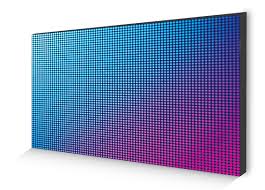
LED displays primarily consist of Light Emitting Diodes arranged in pixel matrices, capable of producing vibrant colors with high brightness and contrast ratios. The manufacturing process begins with substrate preparation—most commonly, high-grade printed circuit boards (PCBs) designed to accommodate precise LED placement and efficient heat dissipation. Quality PCBs are crucial to minimizing electrical resistance and ensuring uniform current flow, affecting overall brightness and reliability.
Component selection is pivotal. LEDs are categorized by chip type (SMD, DIP, COB), with Surface-Mounted Devices (SMD) dominating indoor and high-resolution applications due to their small size and superior color uniformity. DIP LEDs, while host to higher brightness, cater predominantly to outdoor displays where durability against harsh environments is paramount. The integration of Chip-On-Board (COB) technology, in recent years, has introduced improved heat handling and seamless visual uniformity, reducing pixel gaps and enhancing viewing experience.
Critical technical parameters in LED displays include pixel pitch, brightness (measured in nits or cd/m²), refresh rate, and viewing angle. Pixel pitch—distance from the center of one pixel to the next—is fundamental to defining display resolution. For example, indoor commercial displays target pixel pitches between 1.2 mm and 4 mm to achieve highly detailed images suitable for close viewing, whereas outdoor billboards may use pitches exceeding 10 mm, balancing visibility at greater distances with cost-effectiveness.
Brightness standards vary according to application environments, with outdoor LED displays exceeding 5,000 nits to ensure legibility under direct sunlight, and indoor units ranging between 800 to 1,200 nits for optimal visual comfort. Refresh rates, typically above 1,920 Hz in high-quality screens, prevent flickering which can cause viewer discomfort and reduce image smoothness. Conforming to certification standards like IEC 62471 for photobiological safety underscores manufacturer commitments to user safety.
Thermal management constitutes another cornerstone of effective LED manufacturing. LEDs produce heat that, if unmanaged, can shorten lifespan and degrade color stability. Incorporating heat sinks, thermally conductive adhesives, and optimized airflow in cabinet designs helps maintain operating temperatures within recommended thresholds—typically below 85°C junction temperature—to preserve device integrity over time.
Additionally, rigorous quality control protocols align with ISO 9001 standards to detect manufacturing defects, ensure calibration accuracy, and verify compliance with RoHS directives restricting hazardous substances. Testing phases involve spectral analysis, luminance uniformity checks, and environmental stress simulations to assess display resilience across varying temperature and humidity ranges.
From a manufacturing perspective, automation and precision robotics facilitate high throughput and consistency in LED placement and soldering, reducing human error. Integrating advanced software for real-time diagnostics during assembly enhances yield rates and expedites maintenance.
Case studies from global events like the Summer Olympics or major international expos exemplify the deployment of cutting-edge LED screens that showcase the culmination of manufacturing excellence—offering ultra-high-definition visuals with unparalleled reliability and energy efficiency. These projects employ modular designs enabling scalability and rapid installation, critical for event-driven applications.
In conclusion, modern LED display manufacturing synthesizes material science, electronic engineering, and process automation to produce screens that meet exacting performance metrics and industry standards. By maintaining stringent controls on pixel definition, brightness capability, refresh rates, thermal regulation, and safety compliance, manufacturers can deliver visually compelling and durable LED screens adaptable to diverse environments and purposes.













