

Advanced Manufacturing Techniques and Quality Standards in LED Display Production
The LED display industry has undergone significant evolution in recent years, driven by rapid technological advancements and increasing demand for high-quality visual solutions across various sectors. As a professional engineer with extensive experience in LED and LCD manufacturing, this article delves into advanced manufacturing techniques, quality parameters, and industry best practices that define modern LED display production. Understanding these factors is critical for manufacturers aiming to deliver reliable, high-performance displays that meet market expectations.
Manufacturing Techniques in LED Display Production
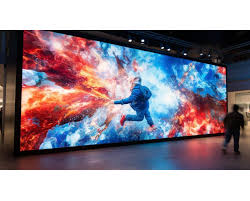
LED display manufacturing integrates several sophisticated processes, including chip fabrication, packaging, module assembly, and panel integration. One of the core processes is photolithography, used in semiconductor chip making, which defines the microscopic LED structures on wafers. The chips must possess uniform brightness and color consistency, typically verified through high-precision optical inspection systems.
After wafer processing, LEDs undergo surface mount technology (SMT) for mounting on printed circuit boards (PCBs). SMT ensures precise placement and soldering of LED components, which is essential for pixel uniformity and mechanical durability. Modern assembly lines leverage automated pick-and-place machines capable of speeds exceeding 20,000 components per hour, significantly improving production throughput and reducing human error.
Key Performance Metrics and Quality Standards
For LED displays, critical parameters include pixel pitch, brightness, color gamut, contrast ratio, and refresh rate. Pixel pitch—the distance between adjacent LED centers—directly influences resolution. Fine-pitch displays, with pixel pitches as low as 0.9mm, are now becoming standard for indoor applications, enabling crisp images and text clarity.
Brightness levels are typically measured in nits (cd/m²), with indoor screens ranging from 800 to 1200 nits and outdoor models exceeding 5000 nits to combat ambient light. The color performance, defined by the Rec. 709 or broader DCI-P3 color spaces, ensures vivid and accurate reproduction. High contrast ratios, often above 5000:1 for LED panels, contribute to deeper blacks and enhanced image depth.
Industry standards from organizations such as International Electrotechnical Commission (IEC) 62368-1 for safety and Energy Star for energy efficiency provide benchmarks that manufacturers must exceed to certify product quality and regulatory compliance. Moreover, IP65-rated outdoor LED displays guarantee dust and water resistance, crucial for durability under varied environmental conditions.
Quality Control and Testing Protocols
Robust quality assurance is indispensable throughout the manufacturing cycle. Advanced LED factories implement automated optical inspection (AOI) systems post-assembly to detect dead pixels, brightness inconsistencies, and solder defects. Additionally, functional testing under diverse operating temperatures (-20°C to 60°C) and humidity conditions ensures reliability.
Long-term stress testing, which may continue for several hundred hours, simulates real-world usage to identify early component failures. Electrical safety tests, including isolation voltage and leakage current measurements, confirm consumer protection standards are met.
Case Studies and Industry Innovations
Leading corporations like Samsung and Leyard have adopted innovative processes such as mini-LED and micro-LED technology, enabling even higher pixel densities and improved energy efficiency. Mini-LED backlighting in LCD displays has significantly enhanced contrast and local dimming capabilities, while micro-LED promises near-OLED levels of fidelity with superior lifespan.
Furthermore, flexible and transparent LED displays have opened new market segments in architecture and automotive industries. These advances require sophisticated substrate materials and bonding technologies to maintain performance without compromising flexibility.
Conclusion
The production of high-quality LED displays demands meticulous attention to manufacturing precision, quality standards, and comprehensive testing procedures. By aligning processes with international standards and leveraging cutting-edge technologies, manufacturers can achieve superior visual performance, durability, and energy efficiency. For stakeholders in the LED display market, staying abreast of these developments is essential to maintain a competitive edge and fulfill evolving consumer demands.
References:
- International Electrotechnical Commission, IEC 62368-1: Audio/video, information and communication technology equipment – Safety requirements.
- Energy Star Program Requirements for Displays.
- Display Industry Report, SID (Society for Information Display), 2023.
- Chang, S., & Wang, Y. (2022). "Mini-LED and Micro-LED Technologies in Display Manufacturing", Journal of Display Technology, 18(5), 217-226.













