

Advancements and Best Practices in LED Display Manufacturing for Superior Performance
The LED display industry has witnessed remarkable growth and technological evolution over the past decade, driven by increasing demand for energy-efficient, high-resolution screens in commercial, industrial, and consumer applications. As a professional LED display engineer with over 15 years of experience, I aim to articulate the critical advancements, manufacturing methodologies, and technical parameters that ensure the production of high-quality LED LCD screens. This article explores fundamental aspects of LED display manufacturing, highlighting design standards, material selection, process control, and quality assurance to deliver superior and reliable products.
One of the pivotal trends in LED display manufacturing is the shift toward mini-LED and micro-LED technologies, offering enhanced brightness, contrast ratio, and power efficiency compared to traditional LED backlights. Mini-LED displays typically utilize thousands of tiny LEDs (<200 microns) as local dimming zones, significantly improving the black levels and dynamic range of LCD screens. According to SID (Society for Information Display) standards, these displays can achieve peak brightness upwards of 1000 nits and contrast ratios exceeding 1,000,000:1, which are critical for applications such as HDR video content and outdoor signage.
Material quality forms the backbone of reliable LED display manufacturing. Utilizing high-purity gallium nitride (GaN) for LEDs provides excellent luminous efficacy and long operational lifespan—often rated above 50,000 hours at typical operating currents. Precision die bonding and wire bonding techniques reduce thermal resistance, which is crucial since excessive heat adversely affects LED longevity and color stability. Industry best practices recommend employing encapsulants with high thermal conductivity (>1.5 W/m·K) and low refractive index (~1.5) to optimize light extraction efficiency while protecting components from environmental degradation.
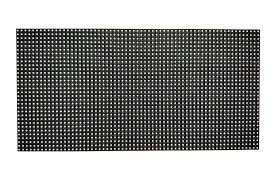
The design layout of LED modules follows rigorous pixel pitch and density criteria, tailored to the intended viewing distance. For example, outdoor LED screens generally adopt larger pixel pitches (≥4 mm) to maintain visibility under direct sunlight, while indoor high-resolution displays use pitches as low as 0.5 mm to achieve crisp image rendering on close viewing. The selection of driver ICs with high grayscale levels (up to 16-bit per channel) enables smooth color gradients and superior image fidelity. Coupled with advanced calibration technologies, this ensures consistent color temperature across large display areas, adhering to the ITU-R BT.709 standard for color reproduction.
Process control in LED display assembly is vital for minimizing dead pixels and ensuring uniform brightness. Automated optical inspection (AOI) systems integrated in production lines inspect each LED chip and solder joint, detecting anomalies at micron-level precision. Industry experience shows that maintaining a total dead pixel rate below 0.0001% (as specified in ISO 9241-302) dramatically reduces customer complaints and warranty costs. Furthermore, Electrostatic Discharge (ESD) protocols and cleanroom environments (class 1000 or better) are widely adopted to safeguard sensitive components throughout manufacturing and assembly phases.
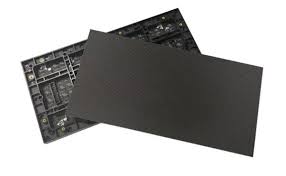
Quality assurance extends beyond production to include rigorous environmental and reliability testing. LED displays must endure thermal cycling between -20°C and 70°C, humidity exposure reaching 85% relative humidity, and vibration tests simulating transport conditions. Compliance with standards such as IEC 60529 (IP ratings) ensures durability against dust and water ingress, which is essential for outdoor installations. In-office calibration using spectroradiometers and colorimeters validates conformity with targeted luminance and color specifications, further enhancing product credibility.
Case studies from leading manufacturers reveal that integrating AI-driven predictive maintenance during the operational lifespan of LED displays enhances uptime and reduces total cost of ownership. Sensors embedded within the display modules continuously monitor temperature, current, and output degradation, enabling preemptive servicing. Combining these innovations with sustainable manufacturing practices—such as lead-free soldering, recyclable materials, and energy-saving production facilities—aligns with global environmental directives and customer expectations.
In conclusion, the advanced engineering of LED display manufacturing requires meticulous attention to material selection, precision assembly, robust testing, and continuous innovation. Adhering to industry standards and leveraging emerging technologies such as mini-LED and micro-LED translates into displays with exceptional brightness, longevity, and color accuracy. These qualities not only meet the demands of diverse applications ranging from digital signage to medical imaging but also set benchmarks for future developments. Manufacturers who embrace these best practices position themselves as leaders in a competitive global market, delivering products that epitomize performance, reliability, and sustainability.













