

Comprehensive Guide to LED Display Screen Manufacturing: Technology, Standards, and Industry Insights
The LED display industry has witnessed tremendous evolution over the past few decades, fueled by rapid advancements in semiconductor technology and demand for high-quality visualization solutions across diverse sectors. As an integrated professional with extensive experience in LED display engineering and manufacturing, this article offers an authoritative, in-depth overview of LED display screen manufacturing, highlighting critical technical parameters, manufacturing standards, and industry best practices. The aim is to provide international readers—manufacturers, technical engineers, project managers, and end-users—with a valuable reference to deepen understanding and optimize deployment of LED display technologies.
Introduction to LED Display Technology
An LED (Light Emitting Diode) display consists of an array of light-emitting diodes arranged in a matrix to produce images and videos. These displays are widely used in advertising media, stadium screens, transportation hubs, and indoor/outdoor signage due to their high brightness, energy efficiency, and durability. There are two primary LED display types in manufacturing – Indoor LED displays and Outdoor LED displays, differentiated by brightness, pixel pitch, and ruggedness.
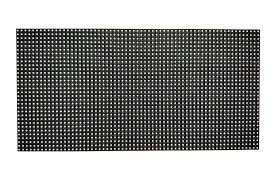
- Pixel pitch: The distance between the centers of two adjacent pixels, crucial for resolution and viewing distance. Typical indoor pixel pitches range from 0.9 mm to 4 mm; outdoor pixel pitches range from 4 mm upwards to 20 mm or more.
- Brightness: Indoor LED displays feature brightness levels between 800 to 1500 nits, while outdoor LED displays require 5000 to 10,000 nits to overcome sunlight interference.
- Refresh rate: Modern LED displays achieve refresh rates of above 1920 Hz to ensure flicker-free videos and image stability.
- Viewing angle: Displays typically have horizontal viewing angles of 120° to 160°, and vertical viewing angles of 60° to 140°, varying by design and use scenario.
Key Components of LED Displays
1. LED Modules
Each LED module consists of several LEDs mounted on a PCB, enclosed in a casing. Modules’ quality dictates color consistency, lifespan, and maintenance ease. LEDs utilized can be SMD (Surface Mounted Devices) or DIP (Dual In-line Package), with SMD modules offering better color uniformity and finer pixel pitches.
2. Driving IC and Control Systems
LED driving ICs regulate current flow and color rendering. Advanced drivers from manufacturers such as MBI, Texas Instruments, or NovaStar guarantee stable electro-optical performance. Control systems manage data transmission and synchronization, with common protocols including HUB75 and HUB12.
3. Cabinet and Structural Designs
Cabinets house LED modules, power supplies, and control boards. They are engineered from materials such as aluminum alloy for lightweight and heat dissipation. Precision in cabinet fabrication ensures seamless module alignment, critical for image uniformity.
4. Power Supplies and Cooling Systems
Industrial-grade power supplies ensure stable voltage and current, often complying with international standards such as UL, CE, and IEC60950. Cooling solutions—passive heat sinks or active fans—maintain operational temperature within safe parameters (typically below 60°C), prolonging LED lifespan.
Manufacturing Process of LED Display Screens
- Design and Simulation: Using CAD software, designers simulate viewing distances, pixel arrangements, and airflow for optimal performance. Color calibration profiles are established to meet target standards such as Rec. 709 or DCI-P3.
- PCB Manufacturing: High-quality copper PCBs with precise etching guarantee electrical integrity. Multi-layer PCBs improve signal stability for high refresh rates.
- LED Sorting and Binning: LEDs undergo binning based on forward voltage, color wavelength, and luminous intensity to ensure uniformity within the display.
- Module Assembly: Automated pick-and-place machines solder LEDs onto PCBs, followed by encapsulation to protect LEDs from moisture and UV exposure.
- Testing and Calibration: Each module undergoes aging tests (operating 168 hours continuously) and color calibration to identify and rectify dead pixels or brightness inconsistencies.
- Cabinet Fabrication and Integration: Precision-milled cabinets receive assembled modules. Rigorous tolerance checks ensure minimal seams for pixel gaps, critical in high-resolution displays.
- Final Testing and Quality Assurance: Complete displays undergo environment tests, including temperature/humidity cycling, ingress protection (IP rating 65 or higher for outdoor use), EMI testing, and flicker detection.
Industry Standards and Certifications
LED display manufacturing must comply with international standards to assure safety, performance, and interoperability. These include:
- IEC 62031: Safety requirements for LED modules.
- ISO 9001: Quality management systems to ensure manufacturing consistency.
- RoHS: Restriction on hazardous substances compliance for environmental protection.
- FCC Part 15, CE: Electromagnetic compatibility standards.
- IP67/IP65: Ingress protection for outdoor displays against dust and water.
Compliance with these standards ensures reliability and makes displays market-ready for global deployment.
Advancements and Innovations
In recent years, technologies such as Micro-LED and Mini-LED have emerged, offering pixel pitches under 0.5 mm and unprecedented contrast ratios, rivaling OLED displays. Smart LED displays integrate AI-driven content optimization, automatic brightness adjustment, and networked remote management for streamlined operation.
Challenges and Solutions in Manufacturing
One crucial challenge is thermal management; overheating can degrade LED efficiency and lifespan. Employing lightweight aluminum cabinets with efficient airflow channels alongside thermal interface materials facilitates heat dissipation. Another challenge is the color uniformity across large display dimensions — resolved through stringent LED binning and multi-point color calibration.
Case Study: Stadium-Scale LED Display Implementation
A recent project involved installing a 500 square meter outdoor LED scoreboard with a 10 mm pixel pitch at a sports stadium. Challenges included ensuring daylight visibility with 7000 nits brightness, weatherproofing for rain/wind, and minimal downtime. The project leveraged aluminum cabinets with IP68 sealing, high-drive power supplies compliant with IEC standards, and cloud-based control for content updates.
Conclusion
Manufacturing LED display screens is a complex interplay of advanced electronic engineering, materials science, and precision manufacturing. Understanding critical parameters such as pixel pitch, brightness, refresh rates, and adhering to global standards guarantees the delivery of reliable, high-performance displays. Continuous innovations promise even more vibrant and efficient LED solutions, solidifying LEDs as the backbone of dynamic digital display technology worldwide.
By combining technical rigor with practical experience and authoritative standards, this comprehensive guide serves as a valuable resource for professionals seeking to excel in LED display manufacturing and deployment.













