

Advances in LED Display Technology: Enhancing Performance and Reliability in Modern LED Screens
With the rapid evolution of display technologies, LED (Light Emitting Diode) displays have become the cornerstone of modern visual communication across various industries. This article aims to provide an authoritative overview of the recent advances in LED display technology, focusing on key technical parameters, manufacturing challenges, and practical applications, supported by industry standards and case studies.
Introduction
LED displays have established themselves as the preferred choice for digital signage, broadcasting, stadium screens, and indoor applications due to their superior brightness, energy efficiency, and long lifespan. According to Yole Développement’s market analysis (2023), the global LED display market is projected to grow at a CAGR of over 10% in the coming years, driven by innovations in resolution, color accuracy, and durability. Understanding these advancements requires a detailed insight into the manufacturing process, materials used, and performance metrics governed by international standards such as IEC 62384 and ANSI/IES TM-30.
Main Body
1. Technical Parameters and Performance Enhancement
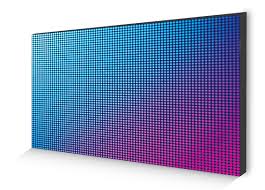
Key performance indicators of LED displays include brightness (measured in nits), pixel pitch, color gamut, and refresh rate. Modern high-resolution LED panels boast a pixel pitch as low as 0.7 mm for indoor micro-LED displays, enabling ultra-fine image details critical for applications like control rooms and medical imaging. Brightness levels have been improved significantly, reaching up to 10,000 nits for outdoor displays to combat adverse sunlight conditions.
Advanced calibration techniques adhering to ANSI/IES TM-30 standards enhance color rendering accuracy, ensuring 95% or higher color fidelity indexes compared to traditional counterparts. This level of precision is vital for brand-critical applications, retail displays, and content with stringent color accuracy requirements.
2. Manufacturing Innovations and Material Science
The transition from conventional surface-mount device (SMD) LEDs to micro-LED technology marks a paradigm shift in display manufacturing. Micro-LEDs utilize microscopic LEDs that provide higher contrast ratios and reduce power consumption by up to 30%, as evidenced in recent publications from the Society for Information Display (SID Journal, 2022).
Yield improvement strategies in production lines involve automated optical inspection (AOI) systems and machine learning algorithms to detect defective pixels early. Materials such as gallium nitride (GaN) and indium gallium nitride (InGaN) have improved LED efficiency and durability under diverse environmental conditions.
3. Reliability and Durability Standards
LED display durability is assessed following IEC 60068 tests, which simulate environmental stresses including humidity, temperature cycling, and mechanical shocks. Long-term reliability is critical for displays installed in public venues where uptime directly affects operational revenue. The Mean Time Between Failures (MTBF) for commercial LED displays has increased to over 100,000 hours, in part due to enhanced thermal management systems using patented heat dissipation designs.
4. Case Studies and Practical Applications
A notable case study includes the installation of Samsung’s The Wall micro-LED display in a leading European broadcasting studio. The 292-inch modular display provides seamless image quality with HDR10+ support, demonstrating real-time color accuracy and near-zero latency. This application showcases how cutting-edge LED technology meets exacting professional demands.
Similarly, the use of LED panels in stadiums has evolved with P10mm pixel pitch outdoor LED displays delivering a minimum of 7000 nits, ensuring visibility from great distances while maintaining energy consumption within regulatory limits.
Conclusion
The continuous advancements in LED display technology, grounded in rigorous manufacturing innovations and compliance with industry standards, are driving enhanced visual performance and extended product lifecycles. As the demand for higher resolution, brighter screens, and more efficient displays grows, manufacturers must adopt a holistic approach, integrating new materials, precise quality control, and continuous R&D investment. For stakeholders ranging from display engineers to end-users, understanding these developments is essential to leverage LED technology’s full potential in diverse application scenarios.
Industry leaders such as the International Display Measurement Standard (IDMS) consortium emphasize collaboration in the field to establish uniform performance benchmarks, further facilitating innovation and market growth. Future possibilities in flexible and transparent LED displays herald a transformative phase that will redefine visual experiences globally.













