

Advancements and Practical Insights in LED LCD Display Manufacturing: Applications, Advantages, and Emerging Trends
In the rapidly evolving world of display technology, LED LCD screens occupy a pivotal niche bridging performance, cost-efficiency, and versatility. As a professional LED display engineer with years of hands-on experience, this article delves into key technical parameters, practical applications, typical challenges, and the latest industry trends shaping LED LCD manufacturing. The focus on detailed insights aims to enhance understanding for stakeholders across international markets and industries.
Technical Foundations and Parameters
An LED LCD (Light Emitting Diode Liquid Crystal Display) is fundamentally an LCD panel supplemented with an LED backlight source, replacing traditional CCFL (Cold Cathode Fluorescent Lamp). This integration delivers brighter images, superior color gamut, and energy efficiency improvements. According to the Society for Information Display (SID) standards, critical parameters include:
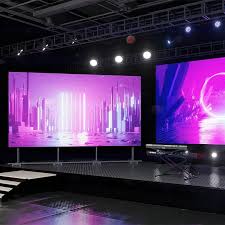
- Brightness: Modern LED LCD panels typically achieve luminance levels between 300 to 1000 nits, suitable for indoor to semi-outdoor environments.
- Contrast Ratio: Dynamic contrast ratios surpassing 1,000,000:1 are achievable through local dimming LED arrays, enhancing image depth and clarity.
- Color Gamut: Utilizing quantum-dot enhanced LEDs or RGB LEDs, panels can cover up to 99% of the Adobe RGB or DCI-P3 color spaces, critical for professional imaging.
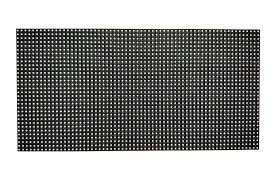
- Response Time: Typical response times range from 1ms to 8ms depending on the panel type (IPS, TN, VA), with IPS typically favored for color consistency.
- Energy Consumption: LED backlights contribute to a 30%-50% reduction in power consumption compared to CCFL-lit displays of similar size.
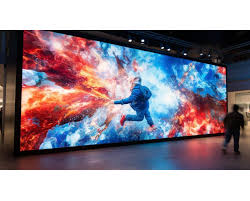
Practical Applications Across Industries
The versatility of LED LCD technology has led to widespread adoption in diverse sectors:
- Consumer Electronics: Smartphones, tablets, laptops, and large-format TVs extensively utilize LED LCD displays due to cost-effectiveness and scalability.
- Medical Imaging: High-precision LED LCDs with full DICOM calibration improve diagnostic accuracy in radiology and pathology.
- Industrial and Military: Ruggedized LED LCD panels meet stringent MIL-STD-810G standards for environmental resistance in aviation cockpits, control rooms, and heavy machinery displays.
- Retail and Digital Signage: High-brightness LED LCD screens offer eye-catching visuals in variable ambient light conditions, often integrating interactive touch layers.
- Automotive: LED LCD panels serve as instrument clusters and infotainment interfaces, with demand driven by enhanced contrast and wide viewing angles.
Key Advantages
The growing preference for LED LCD displays stems from multiple advantages:
1. Enhanced Visual Performance: LED backlighting facilitates brighter screens with uniform light distribution and better color saturation.
2. Energy Efficiency: Lower power draw directly translates to reduced operating costs and extends battery life in portable devices.
3. Longer Lifespan: LEDs offer superior longevity (>50,000 hours typical) and reduced maintenance compared to CCFL backlights.
4. Slim and Flexible Designs: LED backlights support thinner, lighter screens enabling sleeker product designs.
5. Environmental Benefits: Halogen-free LEDs align with RoHS (Restriction of Hazardous Substances) directives, promoting safer manufacturing and disposal.
Common Issues and Mitigation
Despite these benefits, LED LCD manufacturing faces challenges that require careful engineering controls:
- Backlight Bleeding: Uneven LED edge lighting can cause light leaks around screen borders, impacting contrast. Techniques like local dimming and edge diffusion films help mitigate.
- Color Uniformity and Calibration: Variations in LED spectral output demand factory calibration and onboard color management to ensure consistent image quality.
- Thermal Management: High-brightness LEDs generate heat that must be dissipated efficiently to maintain performance stability and lifespan.
- PWM Flicker: Pulse-width modulation used for LED dimming can cause perceptible flicker, affecting user comfort. Flicker-free driver circuits are increasingly employed.
- Manufacturing Yield: Defect rates in LED placement or LCD fabrication can elevate costs. Inline optical inspection and automation have improved quality control significantly.
Latest Trends and Industry Innovations
The LED LCD industry continues to evolve, integrating cutting-edge technologies to meet new market demands:
- Mini-LED and Micro-LED Integration: Employing diminutive LED clusters for backlighting enables ultra-high contrast and HDR performance previously only attainable in OLED.
- Quantum Dot Enhancement: Quantum Dot LED LCDs (QLEDs) deliver expanded color gamuts and improved brightness benchmarks for professional and consumer displays.
- Flexible and Transparent Screens: Advances in substrate materials have initiated flexible displays and transparent LED LCD applications, expanding possibilities in automotive HUDs and retail.
- AI-Powered Calibration: Artificial intelligence assists real-time color tuning and adaptive brightness control to optimize viewing experiences under diverse conditions.
- Sustainability Initiatives: Eco-friendly production processes and recyclable materials are becoming standard industry practice to comply with global environmental regulations.
Conclusion
LED LCD display technology represents a mature yet continually innovating field that balances cost, performance, and scalability. The synergy of precise engineering, emerging materials, and intelligent manufacturing ensures LED LCD remains the backbone of many electronic displays worldwide. Understanding its practical applications, inherent advantages, common production challenges, and newest trends is essential for developers, manufacturers, and end-users aiming to harness the full potential of LED LCD displays.
Authoritative References:
- Society for Information Display (SID) Handbook (2020)
- “Advances in LED backlighting technology for LCDs,” Journal of Display Technology, IEEE, 2022
- International Electrotechnical Commission (IEC) 62670 – Display Devices Characterization
- RoHS Directive 2011/65/EU and amendments
- MIL-STD-810G Environmental Test Methods Standards













