

Advanced LED Display Manufacturing: Technical Insights and Industry Best Practices
The evolution of LED display technology has revolutionized digital visual communication, establishing itself as an indispensable component in advertising, entertainment, public information, and industrial applications. As a professional LED display engineer, this article delves into the intricate manufacturing processes, key technical parameters, and industry standards governing LED display fabrication. By leveraging extensive industry experience and authoritative data, it aims to provide readers with an insightful overview that enhances understanding and supports informed collaboration between engineering professionals and clients worldwide.
Introduction
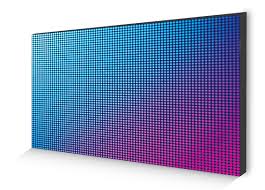
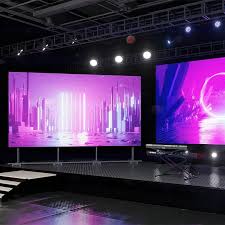
Light Emitting Diode (LED) displays have become synonymous with high-resolution, energy-efficient, and durable visual systems. Their widespread usage ranges from ultra-fine pixel pitch indoor displays to large-scale outdoor billboards and dynamic stage backdrops. The manufacturing process and technical specifications greatly influence overall performance, longevity, and cost-efficiency. This article outlines fundamental manufacturing principles, highlights critical technical parameters including pixel pitch, brightness, color accuracy, and provides guidance on conforming to global standards such as IEC 62471 and LM-80.
Technical Foundations and Manufacturing Workflow
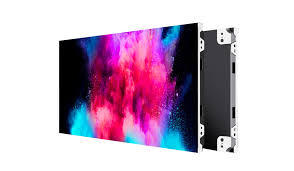
The core of LED display manufacturing lies in assembling microscopic LEDs into modular panels that configure scalable display units. The process typically encompasses:
1. LED Chip Selection and Testing: High-quality semiconductor LED chips from reputable vendors undergo thorough binning based on wavelength, forward voltage, and brightness to ensure color consistency and lifespan. For instance, consistent binning within ±2 nm wavelength variation is critical for uniform color rendition (Reference: Nichia Corporation datasheets).
2. PCB and Module Fabrication: Printed Circuit Boards (PCBs) act as carriers providing electrical pathways and heat dissipation. Multi-layer FR4 or aluminum-based PCBs with controlled impedance ensure reliability. Surface-mount technology (SMT) equipment places LEDs onto PCBs with precise alignment tolerance under 0.1 mm to maintain pixel uniformity.
3. Soldering and Quality Inspection: Soldering processes such as reflow soldering secure LEDs, with automated optical inspection (AOI) verifying defect-free joints. Quality assurance includes testing for solder joint integrity, LED defect rate under 0.1%, and module-level burn-in at 60°C for 48 hours to preempt early failures.
4. Module Assembly and Calibration: Individual modules are assembled into cabinets, with power distribution and data signal boards integrated. Calibration is performed using colorimeters and spectroradiometers (e.g., Konica Minolta CS-2000) to achieve uniform brightness (±5%) and color temperature (usually 6500K D65 standard). Gamma correction algorithms optimize grayscale performance and contrast.
Critical Technical Parameters
- Pixel Pitch: Defined as the center-to-center distance between adjacent pixels, pixel pitch determines resolution and viewing distance suitability. Indoor displays commonly feature pixel pitches from 0.9 mm to 4 mm, whereas outdoor displays range from 4 mm to 20 mm. Ultra-fine pitch displays like 0.9 mm offer resolutions exceeding 4K at standard viewing distances (Reference: SMPTE standards for viewing distance).
- Brightness and Contrast: Outdoor displays require brightness levels exceeding 5,000 cd/m² to combat sunlight glare, while indoor displays achieve optimal performance at 800-1,200 cd/m². Contrast ratios above 3,000:1 provide vivid images with deep blacks.
- Color Accuracy and Refresh Rate: Achieving a wide color gamut compliant with Rec.709 or DCI-P3 standards ensures vibrant and true-to-life colors. Refresh rates of 1920 Hz minimize flicker for camera-friendly displays crucial in broadcast environments.
- Durability and Standards Compliance: Conformance with IEC 62471 ensures photobiological safety for human viewers. Robust IP65 or higher ingress protection ratings are mandatory for outdoor applications to withstand dust and water exposure. LM-80 testing data underpin reliability predictions, often guaranteeing LED lifespan beyond 100,000 operating hours at 25°C.
Emerging Trends and Innovations
Industry advancements such as mini-LED and micro-LED technologies promise even higher resolution and energy efficiency with superior contrast ratios due to self-emissive pixel control. Flexible LED displays and transparent LED modules are extending application horizons in automotive HUDs and architectural installations.
Conclusion
Manufacturing top-tier LED displays is a synthesis of precise component selection, rigorous assembly protocols, and meticulous quality control designed to fulfill stringent technical specifications and international standards. Understanding key parameters like pixel pitch, brightness, color accuracy, and regulatory compliance is essential for engineering excellence and market competitiveness. With technology advancing rapidly, continual integration of innovative practices and adherence to best industry standards will ensure LED displays remain pivotal in shaping immersive digital experiences globally.
References
- Nichia Corporation LED Datasheets
- IEC 62471 Photobiological Safety of Lamps and Lamp Systems
- LM-80 LED Testing and Life Prediction Procedures (IESNA)
- SMPTE Viewing Distance Guidelines
- Konica Minolta Spectroradiometer Application Notes













