

Advanced Manufacturing Techniques and Quality Parameters in LED LCD Screen Production
The LED LCD screen industry stands as a cornerstone in modern display technology, underpinning devices ranging from smartphones to large-scale digital signage. As a professional LED display engineer, my experience across multiple decades has underscored the critical importance of integrating advanced manufacturing techniques coupled with stringent quality control metrics. This article explores key manufacturing parameters, industry standards, and practical engineering insights crucial for producing high-performance, durable, and visually superior LED LCD screens.
Manufacturing Process Overview
LED LCD screens combine the backlighting benefits of LEDs with the versatile matrix technology of liquid crystal displays (LCD). The integration involves several stages: substrate preparation, thin-film transistor (TFT) array fabrication, color filter (CF) application, liquid crystal injection, LED backlight assembly, and final module encapsulation.
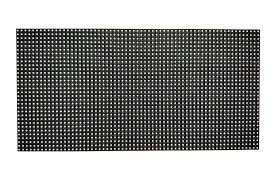
TFT arrays use amorphous or low-temperature polysilicon (LTPS) silicon layers deposited over glass substrates — a process demanding cleanroom environments with ISO 5 or better classifications to prevent particulate contamination. TFT uniformity directly controls pixel-level luminance modulation and response times. In practice, TFT transistors require mobility of 0.5 to 150 cm²/V·s depending on the technology platform, affecting refresh rate and input latency critically.
Key Technical Parameters for Quality Assurance
1. Resolution and Pixel Density:
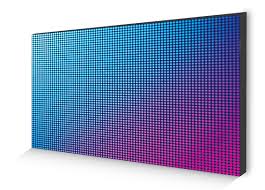
The unit pixel pitch directly influences image sharpness. High-definition screens typically exhibit pixel densities exceeding 300 PPI (pixels per inch), suitable for mobile and monitor applications. Precision photolithography steps ensure sub-10-micron accuracy in electrode patterning.
2. Brightness and Contrast Ratios:
LED backlights produce luminance ranges from 300 to 1500 nits on commercial panels. Contrast ratio, defined per ISO 13406-2 standards, ideally exceeds 1000:1 in typical indoor conditions for vibrant color reproduction. Engineers optimize LED placement and diffuser layers to ensure uniform brightness distribution, minimizing “hot spots.”
3. Color Gamut and Accuracy:
Modern LED LCDs leverage quantum dot films or advanced RGB LED backlights to expand color gamut beyond sRGB to DCI-P3 or Adobe RGB standards. Color accuracy is validated via spectroradiometers, ensuring Delta E values less than 2 for professional-grade displays, indicating negligible perceptible color deviation.
4. Response Time and Refresh Rate:
Switching speeds for LCD liquid crystals vary by chemical composition; advanced nematic or IPS technologies can achieve response times under 5 ms, essential for gaming and real-time applications. Refresh rates range from 60 Hz to 240 Hz, regulated by interface electronics and driver IC performance.
Reliability and Durability Considerations
LED LCD modules face environmental challenges such as thermal cycling, humidity exposure, and mechanical stress. The industry complies with MIL-STD-810G for ruggedness and IEC 60068 for environmental testing. Engineers employ robust edge sealing techniques and moisture barrier films, achieving module lifespans of over 50,000 hours without significant luminance decay.
Lean Manufacturing and Automation Integration
Lean manufacturing principles have revolutionized LED LCD production lines by minimizing waste and optimizing throughput. Automated optical inspection (AOI) systems, equipped with machine vision cameras and AI algorithms, detect pixel defects, mura effects, and assembly misalignments with high precision rates exceeding 99%. Furthermore, surface-mount technology (SMT) and laser direct imaging (LDI) streamline circuit integration and reduce errors.
Future Trends and Innovations
The push towards flexible and curved LED LCD displays is driving research into new substrates like polyimide films and transparent conductive oxides such as indium tin oxide (ITO) alternatives. Emerging MicroLED backlighting technologies promise to enhance brightness and energy efficiency, meeting increasing consumer demand for vivid, lightweight, and energy-conservative screens.
In conclusion, mastering LED LCD screen manufacturing demands a holistic approach blending advanced materials science, meticulous process control, and extensive reliability testing. This multifaceted expertise ensures production of displays that meet escalating performance expectations and diverse application requirements globally.
References:
- International Electrotechnical Commission (IEC) Standards, IEC 60068 Environmental Testing
- ISO 13406-2 Ergonomic Requirements for Pixel Defect Limits in LCD Screens
- MIL-STD-810G Environmental Engineering Considerations and Laboratory Tests
- "Liquid Crystal Displays: Addressing Techniques and Applications", S. T. Wu and D. K. Yang
- Society for Information Display (SID) Technical Digest Archives













