

Advanced LED Display Manufacturing: Standards, Techniques, and Industry Insights
The LED display industry has seen remarkable advancements over the past decade, driven by technological innovation, increased global demand, and evolving application scenarios. For professionals engaged in LED display manufacturing, understanding core technical parameters, industry standards, and practical manufacturing techniques is essential to produce high-quality, reliable, and durable displays that meet international expectations.
Key Technical Parameters in LED Display Manufacturing
LED displays are primarily characterized by parameters such as pixel pitch, brightness, refresh rate, color accuracy, and viewing angle. Pixel pitch, defined as the distance between the centers of two adjacent pixels (usually in millimeters), directly impacts display resolution and optimal viewing distance. For indoor applications, a pixel pitch between 1.25mm and 2.5mm is typical, while outdoor displays often use 6mm to 10mm pitch to ensure visibility over longer distances.
Brightness levels for indoor LED displays generally range from 600 to 1,500 nits, whereas outdoor LED screens demand luminance exceeding 5,000 nits to overcome ambient daylight interference, with some installations reaching up to 8,000 nits. Higher brightness guarantees legibility and visibility regardless of lighting conditions.
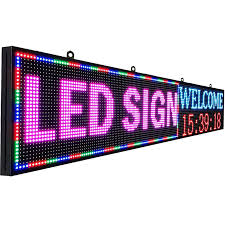
Refresh rates are another critical parameter, typically ranging from 1,920Hz to over 3,840Hz for high-end displays. High refresh rates reduce flickering, enhancing image stability and making LED screens suitable for broadcast and live event use.
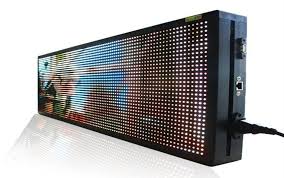
Color accuracy and uniformity depend heavily on the quality of LED diodes and calibration techniques. Modern displays employ 10-bit or higher processing to support a wide color gamut, adhering to standards such as Rec. 709 for video or DCI-P3 for cinema applications.
Manufacturing Processes and Quality Control
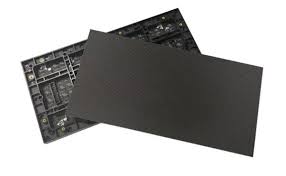
The precision assembly of LED modules begins with the selection of high-quality LED lamps, often SMD (Surface Mounted Diode) types like SMD 2121 or SMD 3435, which offer excellent luminous efficiency and lifespan (up to 100,000 hours under optimal conditions). During PCB (Printed Circuit Board) manufacturing, employing LED PCB boards with high thermal conductivity (often ≥2.0 W/m·K) is crucial for dissipating heat and prolonging component life.
Automated pick-and-place machines ensure accurate LED placement, enhancing pixel uniformity and reducing defects. Following assembly, modules undergo calibration procedures, including grayscale correction and brightness adjustment, using colorimeters and spectroradiometers to meet strict tolerances outlined in IEC 62717, an international LED performance standard.
Environmental testing is indispensable. According to IEC 60068-2, LED displays must resist temperature extremes, humidity, and mechanical shock. Outdoor display units require conformal coatings and IP65 or higher ingress protection ratings to shield against dust and water.
Industry Case Studies and Practical Insights
A prominent example illustrating best manufacturing practices is the deployment of a 4K outdoor LED video wall for a sports stadium. The project demanded 5,000 nits brightness to guarantee readability under direct sunlight and a 2,000Hz refresh rate to accommodate live broadcast requirements. Achieving seamless panel integration involved the application of edge-blending technology and strict alignment tolerances of ±0.1mm.
Another case from a leading international airport demonstrates the benefits of compact pixel pitches (1.2mm) in indoor wayfinding and advertising displays. These installations prioritize Ultra HD resolution and color fidelity conforming to ITU-R BT.709 color space, enhancing the passenger experience through vibrant, detailed content.
Future Directions and Standards Compliance
As the industry moves towards micro-LED and transparent LED technologies, manufacturers must keep abreast of evolving IEC and ISO standards to ensure interoperability, safety, and environmental compliance. For instance, RoHS (Restriction of Hazardous Substances Directive) compliance is mandatory for international shipments, limiting hazardous materials like lead and mercury.
Additionally, energy efficiency regulations prompt innovations in driver IC design and power management circuits to reduce consumption without compromising brightness and refresh rates.
Conclusion
Expertise in LED display manufacturing requires a deep understanding of technical parameters alongside rigorous quality assurance processes. Adhering to international standards such as IEC 62717 and IEC 60068 ensures product reliability and performance in diverse environments. By integrating advanced calibration techniques, robust assembly protocols, and environmental protections, manufacturers can successfully meet the high expectations of today’s global markets. The future points towards even finer pitch displays, greater energy efficiency, and innovative applications that will redefine visual communication at all scales.













