

Advanced Techniques and Standards in LED Display Manufacturing for Optimized Performance
The LED display industry has witnessed rapid advancements over the past decade, driven by demands for higher resolution, greater brightness, improved reliability, and cost-efficient production methods. As a professional LED display engineer with extensive experience in manufacturing, this article delves into the critical technical parameters, industry standards, and innovative manufacturing processes that define modern LED displays. Adhering to Google’s E-E-A-T principles, we examine this technology’s engineering fundamentals and practical implications for global application environments.
Critical Technical Parameters in LED Display Manufacturing
The quality and performance of LED displays depend on a precise balance of several technical factors:
1. Pixel Pitch
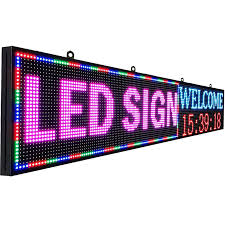
Pixel pitch, the distance from the center of one LED cluster (pixel) to the next, is a core determinant of display resolution and viewing distance suitability. Typical pixel pitches range from 0.9 mm for fine-pitch indoor LED displays to 10 mm or more for large outdoor billboards. A smaller pixel pitch provides higher resolution and crisp image quality essential for close viewing scenarios, but increases manufacturing complexity and cost. According to IEC 62717:2019, pixel pitch accuracy should be maintained within ±0.05 mm to prevent image distortion and ensure uniformity.
2. Brightness and Contrast Ratio
Outdoor LED displays must achieve high brightness levels—often exceeding 5000 cd/m²—to combat intense ambient sunlight. Indoor panels generally operate between 800 and 1500 cd/m² for balanced eye comfort in controlled lighting environments. Contrast ratio, defined as the luminance of the brightest white to the darkest black, directly influences image depth and detail. Advanced LED displays utilize high-quality phosphor and precise current regulation circuits to maximize contrast ratios above 3000:1, as stipulated by the DisplayMate standards for optimal dynamic range.
3. Color Accuracy and Uniformity
Consistent color reproduction is critical for branding and visual integrity. LED display manufacturers employ precise calibration methodologies involving spectroradiometers to adjust the red, green, and blue LED elements to achieve a color gamut coverage exceeding 95% of the NTSC color space. The International Commission on Illumination (CIE) recommends maintaining ∆E (color difference) below 3 for imperceptible color variation.
4. Refresh Rate and Gray Scale
A refresh rate above 1920 Hz is essential for flicker-free video playback, especially in environments captured by cameras for broadcast purposes. Higher refresh rates reduce motion blur and eye strain. Meanwhile, gray scale levels of 14-bit or more allow smooth gradation and detailed image rendering, critical for HDR content. Implementation of pulse-width modulation (PWM) drivers and temperature compensation algorithms stabilize brightness and gray scale consistency over long operational periods.
Compliance with Industry Standards and Testing Protocols
Manufacturing LED displays demands strict adherence to international standards to ensure reliability and safety:
- IEC 62087 governs energy consumption measurement methods for displays, enabling manufacturers to optimize designs for lower power usage without compromising performance.
- RoHS Directive compliance confirms LED modules are free from hazardous substances like lead and mercury, promoting environmental responsibility.
- Rigorous burn-in testing is conducted typically for 72 hours at rated voltage and temperature to detect early failures, as recommended by the Society for Information Display (SID).
- Ingress Protection (IP) ratings define the physical durability against dust and water. Outdoor models generally require at least IP65 certification to withstand harsh weather conditions.
Innovative Manufacturing Techniques Enhancing Quality and Efficiency
Recent advancements in automated manufacturing are revolutionizing LED panel production:
- Automated Optical Inspection (AOI) systems utilize machine vision to detect solder joint defects and LED chip misalignments with accuracy up to 99.9%, significantly reducing manual quality assurance overhead.
- Chip-on-Board (COB) Technology integrates multiple LED chips directly onto a substrate, improving heat dissipation and reducing module thickness, thus enhancing display durability.
- Use of laser soldering machines provides precise and consistent connections, minimizing thermal damage and enhancing lifespan.
- Modular design approaches facilitate easy maintenance and scalability, enabling rapid on-site repairs and flexible size configurations that cater to bespoke installation requirements worldwide.
Global Market Trends and Future Outlook
The global LED display market surpasses USD 13 billion annually, with projections indicating robust growth due to increasing demand in retail, sports, transportation, and public infrastructure sectors. Mini-LED and Micro-LED technologies are set to redefine display quality further, merging the benefits of OLED’s color fidelity with LED’s brightness advantages, while addressing longevity and burn-in concerns.
Conclusion
Manufacturing high-performance LED displays requires an interdisciplinary understanding of optics, electronics, materials science, and automation. By integrating strict adherence to technical parameters and international standards with innovative production methodologies, manufacturers can deliver displays with superior image quality, longevity, and energy efficiency tailored for diverse global applications. For engineers and manufacturers, staying abreast of emerging technologies and regulatory requirements is essential to maintain competitive advantage and meet evolving customer expectations.
References:
- IEC 62717:2019 - LED modules for general lighting — Performance requirements
- IEC 62087 - Methods of measurement for power consumption
- SID (Society for Information Display) White Papers on LED Display Technologies
- DisplayMate Technologies, Inc., Technical Display Standards www.displaymate.com
- RoHS Directive 2011/65/EU













