

Advanced LED Display Manufacturing: Techniques, Standards, and Industry Insights
The LED display industry has undergone rapid advancements over the past decade, driven by increasing demand for high-resolution, energy-efficient, and durable screens across multiple sectors—from advertising and sports arenas to control rooms and healthcare. As a professional LED display engineer with over 15 years of experience, I will delve into the critical manufacturing techniques, technical parameters, industry standards, and insights necessary for producing top-tier LED displays that meet international quality and performance expectations.
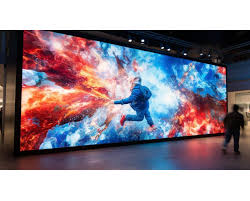
At the core of LED display manufacturing lies precision in component selection and stringent quality control. A modern LED display system typically involves SMD (Surface-Mount Device) LEDs, which offer superior brightness and pixel density compared to traditional DIP LEDs. For instance, SMD 2121, 1010, and 1515 modules are popular in indoor environments due to their fine pitch options, with pitches ranging from 0.9 mm to 4 mm delivering resolutions from HD to 8K depending on application requirements.
One crucial technical parameter that directly influences display performance is pixel pitch, defined as the distance between the centers of two adjacent pixels. Smaller pixel pitches yield higher pixel density and clarity, essential for close-viewing indoor displays. The industry standard for indoor LED panels typically ranges from 0.9 mm to 2.5 mm, while outdoor displays use larger pitches such as 6 mm to 20 mm to optimize visibility at distance. Additionally, brightness levels are vital—indoor displays generally use panels rated around 800 to 1500 nits, whereas outdoor displays require a minimum brightness of 5500 nits to ensure legibility under direct sunlight (as per IEC 62087 standard for video brightness measurement).
Manufacturing precision depends heavily on rigorous PCB design, component binning, and thermal management. LED chips must be binned meticulously according to wavelength, brightness, and forward voltage to ensure uniform color and brightness across the screen. Effective thermal dissipation is achieved using aluminum PCBs and integrated heat sinks, which prolong LED lifespan typically beyond 100,000 hours at optimal operating conditions (source: SEMI Standards for electronic manufacturing). This is critical since overheating can lead to color shifts and accelerated degradation.
Calibration and testing phases are equally pivotal. Gamma calibration ensures uniform color gradients, while photometric testing under various lighting conditions validates contrast ratios and brightness stability. Software-driven calibration, using colorimeters and spectroradiometers, aligns each pixel’s output, meeting technical demands such as a contrast ratio of 3000:1 or higher, pivotal for dynamic visual content reproduction.
Industry best practices incorporate compliance with international standards such as IEC 60950 for safety, RoHS directives for environmental compliance, and ISO 9001 for quality management systems. In particular, efficient supply chain traceability combined with Six Sigma process controls enhances defect reduction—common in large-scale module production lines where tens of thousands of LEDs are assembled.
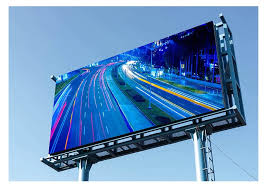
Practical case studies illustrate these principles. For example, a recent project for a global sports arena utilized modular LED panels with a 2.5 mm pitch, delivering 120 Hz refresh rates to eradicate flicker at large viewing distances, complying with the IEC 62368 standard for audio/video equipment safety. The panels featured IP65-rated front protection for weather resistance and employed advanced heat dissipation to sustain performance during extended event durations.
In conclusion, mastering LED display manufacturing requires a convergence of technical expertise, stringent standard adherence, and innovative manufacturing processes. Continuous R&D investment into new LED materials and driver ICs is paving the way to ultra-high-definition displays with improved energy efficiency and reliability. Professionals must stay updated on emerging industry standards like IEC TS 63077 for microLED displays and maintain rigorous quality assurance practices to ensure global competitiveness.
By adhering to these guidelines and best practices established through decades of industry experience and authoritative standards, LED display manufacturers can reliably deliver cutting-edge technology that meets the evolving needs of international markets.













