

Advanced Insights into LED LCD Screen Manufacturing: Technical Parameters and Industry Practices
In the rapidly evolving display technology landscape, LED LCD screens remain at the forefront of visual innovation, merging the advantages of liquid crystal displays (LCD) with light-emitting diode (LED) backlighting. As a seasoned LED display engineer with extensive experience, this article provides an authoritative, detailed exploration of LED LCD screen manufacturing processes, technical parameters, and practical considerations supported by industry standards and case studies. The aim is to deliver an insightful and comprehensive overview suitable for international professionals, engineers, and decision-makers.
Understanding LED LCD Technology
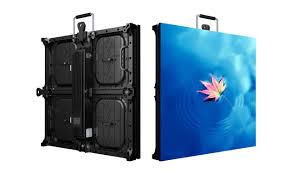
LED LCD screens use LEDs as a backlighting source to illuminate the liquid crystal matrix, enhancing brightness, contrast, and power efficiency compared to traditional CCFL (Cold Cathode Fluorescent Lamp) backlighting. The LED backlight system can be arranged as edge-lit or direct-lit (full-array), affecting performance parameters such as uniformity, local dimming capabilities, and display thickness.
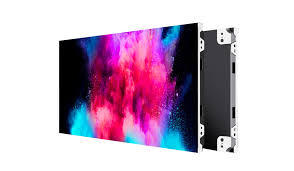
Manufacturing Process Overview
1. Panel Fabrication
LCD panels begin with glass substrates coated with thin-film transistors (TFTs) arranged in a matrix. The alignment layer, liquid crystals, and polarizers are applied with high precision. Manufacturing tolerances typically control panel thickness to ±0.1 mm to ensure uniformity.
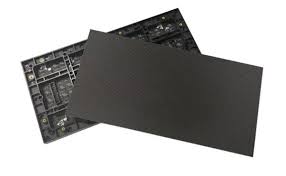
2. Backlight Module Assembly
The LED backlight module integrates LED arrays, light guides, diffusers, and reflective sheets. For edge-lit designs, LEDs positioned at panel edges channel light through a light guide plate (LGP), whereas direct-lit designs distribute LEDs across the entire back of the panel. Direct-lit modules facilitate higher dynamic contrast ratios due to local dimming zones.
3. Integration and Testing
Post backlight integration, the display module undergoes calibration for color accuracy and brightness uniformity. Industry standards such as ISO 9241-307 for color measurement and IEC 62341 for LED performance guide quality control. Automated optical test systems measure luminance (nits), color gamut (% NTSC), and uniformity.
Key Technical Parameters
- Brightness: Typical LED LCD displays range from 250 to 1000 nits; outdoor displays require up to 2000 nits for sunlight readability.
- Contrast Ratio: Modern LED LCDs achieve nominal ratios of 1000:1 to 4000:1, with full-array local dimming screens exceeding 10,000:1.
- Color Gamut: Panels conforming to Adobe RGB or DCI-P3 color spaces are increasingly standard for professional applications.
- Response Time: 5ms or better is typical for consumer displays, while specialized gaming models achieve 1ms using advanced overdrive technologies.
- Viewing Angle: In-plane switching (IPS) technology offers wide viewing angles (>178 degrees), minimizing color shift.
Challenges and Solutions
- Thermal Management: LED arrays generate heat that affects luminance and longevity. To mitigate this, manufacturers employ heat sinks and thermally conductive materials. Thermal simulation tools optimize component layout in early design phases.
- Uniformity Control: Achieving brightness and color uniformity is vital, especially for edge-lit displays. The use of advanced diffuser films and precise LED binning ensures consistent output.
- Blue Light Emission: To reduce eye strain, blue light reduction coatings and flicker-free backlight modulation are incorporated, adhering to IEC TR 62778 photobiological safety standards.
Industry Case Study
A notable example involves a 65-inch direct-lit LED LCD made for commercial digital signage with a 1500-nit brightness, 12 local dimming zones, and a contrast ratio of 12,000:1. By integrating high CRI LEDs and advanced optical films, the product achieved superior color accuracy (99% DCI-P3) and efficient energy consumption, validated through rigorous lab testing per ANSI/CTA-2077 standards.
Future Trends
The integration of mini-LEDs and micro-LED technology into LCD assemblies promises enhanced brightness, contrast, and energy efficiency. Hybrid solutions combining quantum dot enhancement layers (QDEF) further expand color reproduction capabilities, approaching OLED performance with greater durability.
Conclusion
Manufacturing LED LCD screens demands a harmonious balance of electronic engineering, optical design, and material science to deliver displays meeting stringent performance and reliability standards globally. Through adherence to industry protocols, continuous innovation in backlight technology, and meticulous quality control, LED LCD displays continue to be pivotal in applications ranging from consumer electronics to professional visualization.
Professional engineers and manufacturers must stay abreast of emerging materials and design methodologies to optimize production yields and future-proof products in a competitive market.













