

Advanced Manufacturing Techniques and Quality Control in LED Display Production
The LED display industry has witnessed rapid advancements over the past decade, driven by evolving technologies and increasing market demands. As a professional LED display engineer with extensive experience in manufacturing LED and LCD screens, I aim to provide a comprehensive overview of cutting-edge production methodologies, quality control processes, and critical technical parameters that define modern LED display manufacturing. This article caters to international readers seeking authoritative insight into the practical, technical, and quality aspects that ensure high-performance LED display products.
Introduction
LED displays have become indispensable in various sectors such as advertising, sports arenas, transportation hubs, and retail environments due to their vivid colors, energy efficiency, and versatility. Producing these display panels involves a complex interplay of precision engineering, material science, and rigorous quality control protocols. Understanding the underlying manufacturing procedures and standards is crucial for manufacturers aiming to deliver reliable, durable, and visually impressive LED screens.
Main Body
1. Advanced Manufacturing Techniques
The production of LED display modules begins with component selection. High-quality semiconductor chips (usually gallium nitride LEDs) with well-defined chromaticity coordinates ensure consistent color purity and brightness, measured in nits (candela per square meter). Typical indoor LED displays achieve brightness levels of 800-1500 nits, while outdoor displays usually exceed 5000 nits to maintain visibility under direct sunlight.
Next, the Surface Mount Technology (SMT) process positions LED dies on Printed Circuit Boards (PCBs) with micron-level accuracy. Advanced pick-and-place machines incorporate real-time optical inspection to minimize placement errors. This precision is critical: a pixel failure rate below 0.0001% (1 defective pixel per 10,000) is the industry benchmark for high-quality displays.
Phosphor coating, particularly for white LEDs, employs automated spraying techniques to ensure uniform phosphor layer thickness, which directly affects color temperature and luminous efficiency. The standard correlated color temperature (CCT) for most LED displays ranges from 6000K to 7500K to balance brightness and color fidelity.
2. Pixel Pitch and Resolution
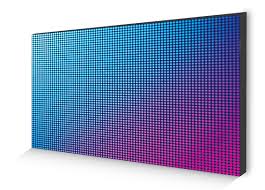
A defining parameter in LED display manufacturing is the pixel pitch—the distance from the center of one LED cluster to the next. Pixel pitch determines resolution and viewing distance. For example, fine-pitch displays ranging from 0.9 mm to 2.5 mm serve indoor applications requiring close-up clear images, such as conference rooms or control centers. Larger pixel pitches (3 mm and above) are suited to outdoor displays viewed from distances exceeding 10 meters.
Achieving a tight pixel pitch involves the development of smaller LEDs and enhanced PCB design. State-of-the-art manufacturing lines deploy 3D SMT and fine stacking die-attach methods to maintain pixel uniformity, crucial for high contrast ratio and minimal crosstalk.
3. Modular Design and Scalability
Modern LED displays are constructed using modular components—a practice that enhances maintainability and scalability. Standard LED modules typically measure 320mm x 160mm or 256mm x 128mm, allowing manufacturers to assemble customized screen sizes easily.
Each module integrates driver ICs compliant with standards like the MBI5153 or Texas Instruments’ TPS92512, which ensure synchronized grayscale control and low thermal dissipation. Effective thermal management, achieved through precision aluminum heat sinks and thermally conductive gels, prevents LED degradation and extends panel lifespan (commonly over 100,000 hours under rated conditions).
4. Quality Control and Testing
Ensuring superior quality involves multi-stage testing following standards such as the IEC 62471 photobiological safety regulation and MIL-STD-810 environmental durability tests. Key inspection steps encompass:
- Pixel Mapping: Automated systems detect and map faulty pixels for immediate correction or module replacement.
- Color Calibration: Spectroradiometers measure color consistency across modules, maintaining Delta E values below 3 for human visual imperceptibility.
- Brightness Uniformity Testing: Luminance is calibrated to ensure variance remains under ±5% across the entire display surface.
- Environmental Testing: Simulations of temperature cycling (-20°C to 60°C), humidity, and vibration verify robustness against real-world conditions.
5. Industry Case Studies
For instance, Samsung and Leyard adopt fully automated production lines integrating AI-powered defect inspection, achieving yield rates exceeding 97%. Similarly, Unilumin employs modular design principles combined with rigorous MIL-STD-461 electromagnetic interference testing to deliver reliable large-format LED billboards used worldwide.
Conclusion
Producing high-quality LED displays demands meticulous attention to advanced manufacturing processes, precise control of technical parameters such as pixel pitch and brightness, and rigorous quality assurance protocols. As LED display applications continue to expand globally, adhering to international standards and embracing innovative production technologies are essential to maintain competitiveness and fulfill client expectations. Ultimately, the synergy of expert engineering, state-of-the-art equipment, and comprehensive testing underpins the industry’s success in delivering vibrant, durable, and visually engaging LED display solutions.













