

Advancements and Best Practices in LED LCD Screen Manufacturing: A Comprehensive Industry Guide
In the evolving landscape of display technology, LED LCD screens have become a dominant choice across various industries due to their superior brightness, energy efficiency, and versatility. As a professional engineer specializing in LED display manufacturing, this article comprehensively explores the technical parameters, manufacturing best practices, and recent advancements critical to achieving optimal performance and reliability in LED LCD screens.
1. Introduction to LED LCD Technology
LED LCD screens combine two technologies: the liquid crystal display (LCD) for image creation and light-emitting diodes (LEDs) for backlighting. Unlike traditional cold cathode fluorescent lamp (CCFL) backlights, LED backlights offer enhanced energy efficiency, longer lifespan, and improved color uniformity.
The key structure comprises:
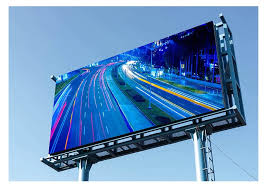
- A liquid crystal panel where pixels are controlled by electric fields to modulate light.
- An LED backlight assembly providing consistent illumination.
- Optical films and diffusers to guarantee even light distribution.
- Drivers and controllers managing both image processing and LED power.
2. Critical Technical Parameters
When designing and manufacturing LED LCD screens, precise technical considerations determine the final product's quality:
- Resolution and Pixel Density: The pixel pitch must be aligned with the intended viewing distance. For instance, 4K UHD displays typically have around 3840x2160 pixels on a 27-inch panel, achieving approximately 163 PPI (pixels per inch).
- Brightness and Contrast Ratio: LED backlighting enables high brightness levels, often exceeding 1000 nits for professional-grade displays. Contrast ratio is enhanced by the liquid crystal panel’s ability to control light passage, with ratings often between 1000:1 to 5000:1.
- Color Gamut and Accuracy: Advances in Quantum Dot-enhanced LED LCDs have pushed color coverage beyond 100% sRGB, approaching DCI-P3 standards. Color accuracy is often calibrated to Delta E values below 2 for professional displays.
- Refresh Rate and Response Time: For dynamic content such as gaming or broadcasting, refresh rates of 120 Hz or higher and response times under 5ms are standard.
- Viewing Angles: IPS (In-Plane Switching) panels are prevalent in high-end LED LCD products due to their wide viewing angles, often up to 178º vertically and horizontally.
3. Manufacturing Process Overview
The manufacturing of LED LCD screens involves several intricate steps, each influencing yield and product longevity:
- Panel Fabrication: The liquid crystal panel is fabricated in cleanroom environments, employing photolithography to create the array of thin-film transistors (TFTs) that control pixels.
- Backlight Assembly: Selection and arrangement of LEDs — often categorized into edge-lit or direct-lit backlighting architectures — require precise thermal management to prevent color shift and extend LED lifespan.
- Optical Layer Integration: Optical films such as diffusers, brightness enhancement films (BEF), and anti-reflective coatings are laminated to optimize light efficiency and reduce glare.
- Module Assembly: Integration of the panel, backlight, and driver electronics into a module with precise alignment is critical to avoid defects like mura (non-uniform brightness).
- Quality Assurance: Comprehensive testing using photometers and colorimeters assesses luminance uniformity, color accuracy, and response times. Environmental stress tests simulate extremes such as temperature cycling and humidity to certify reliability.
4. Industry Standards and Compliance
Adhering to international standards such as ISO 9241-307 for display ergonomics and IEC 62368 for safety ensures the product meets market acceptance and legal requirements. Energy certification programs like Energy Star validate the efficiency credentials of LED LCD products.
5. Recent Innovations in LED LCD Manufacturing
- Quantum Dot Enhancement: By incorporating quantum dot films, manufacturers improve color saturation and expand gamut coverage without sacrificing energy efficiency.
- Mini-LED Backlighting: Miniaturized LED arrays allow for higher local dimming zones, dramatically improving contrast ratios up to 1,000,000:1.
- Advanced Drivers and AI Optimization: Intelligent backlight control algorithms adjust luminance dynamically to content, reducing power consumption and enhancing perceived image quality.
- Flexible and Transparent Displays: Emerging manufacturing techniques enable flexible substrates and optically transparent LED LCD screens, expanding application horizons.
6. Challenges and Solutions in Manufacturing
- Thermal Management: LEDs generate heat that can degrade panel components. Employing materials with high thermal conductivity and advanced heat sinks mitigates this risk.
- Uniformity and Mura Reduction: Precision in LED placement and advanced compensation algorithms reduce spatial luminance disparities.
- Supply Chain Management: Sourcing high-purity materials and components, especially amid global semiconductor constraints, demands strategic partnerships and quality controls.
7. Case Study: High-End Professional Display Manufacturing
A leading global manufacturer’s experience demonstrated that integrating automated optical inspection (AOI) during module assembly reduced defect rates by 35%. Additionally, a calibrated factory environment coupled with inline photometric sensors ensured color fidelity across large production batches, crucial for sectors like medical imaging and digital content creation.
8. Conclusion
The LED LCD screen manufacturing process is a confluence of advanced materials science, precision engineering, and rigorous quality control. As display demands evolve — emphasizing higher resolution, better color reproduction, and sustainable designs — manufacturers must continuously innovate and adopt best practices to maintain leadership in this competitive industry.
References
- International Electrotechnical Commission IEC 62368-1 Standard: Safety Requirements for Audio/Video Equipment
- ISO 9241-307: Ergonomics of human-system interaction — Displays
- ENERGY STAR Program Requirements for Displays
- Semiconductor Industry Association Reports on LED Advancements
- Journal of the Society for Information Display (JSID)
By adhering to these parameters and innovations, professionals in LED LCD manufacturing can deliver reliable, high-performance displays catering to diverse international markets.













