

Advanced Outdoor 3D LED Display Technology: Transforming Visual Experiences in Open-Air Environments
Outdoor 3D LED displays have revolutionized the way visual content is presented in open-air environments, combining cutting-edge technologies to provide vibrant, immersive experiences that captivate audiences worldwide. As a professional LED display engineer with extensive experience in the design and manufacturing of LED screens, this article delves deeply into the technical parameters, application scenarios, and industry standards of outdoor 3D LED displays, offering authoritative insights into their operation and advantages.
Understanding Outdoor 3D LED Displays
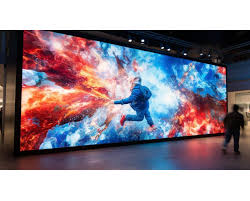
Outdoor 3D LED displays utilize specialized LED modules capable of producing stereoscopic images without the need for glasses. This technology leverages high brightness, high refresh rates, and precise pixel control to render depth and dimensionality in content displayed under varying weather and lighting conditions. Typically, these displays integrate advanced optical lenses, curved LED panels, and real-time content processing units to achieve realistic 3D visualization.
Key Technical Specifications
1. Brightness and Contrast: Outdoor environments demand LED displays with a high brightness level, usually above 7000 nits, ensuring visibility even in direct sunlight. A high contrast ratio (often exceeding 3000:1) enhances image depth by differentiating bright and dark areas effectively.
2. Pixel Pitch and Resolution: Pixel pitch—the distance between the centers of two adjacent pixels—is critical for clarity and smooth 3D rendering. Outdoor 3D LED displays generally feature a pixel pitch ranging from 3mm to 10mm, balancing resolution and visibility over long distances. For 3D effects, finer pixel pitches improve depth perception.
3. Refresh Rate and Viewing Angle: A refresh rate over 1920 Hz avoids flicker in video content under high-speed cameras and contributes to smoother 3D visuals. Wide viewing angles (≥140° horizontally and vertically) ensure the 3D effect remains consistent for various audience positions.
4. Durability and IP Rating: Outdoor installations require displays rated IP65 or higher for water and dust resistance, alongside robust, weatherproof enclosures. Thermal management systems maintain LED lifespan despite temperature fluctuations.
Applications of Outdoor 3D LED Displays
These displays are increasingly employed in advertising, entertainment, public information, and cultural exhibitions. For instance, major sporting events utilize large-scale outdoor 3D LED screens to enhance fan engagement with lifelike replays and immersive visuals. Urban landmarks integrate them to showcase dynamic 3D art installations that change public space engagement.
A notable case study involves the deployment of a 500 square meter outdoor 3D LED display in Times Square, New York, which combined curved panel technology with real-time rendering to captivate millions of viewers daily. This installation operated 24/7, demonstrating proven reliability and performance per IEC 60529 standards concerning ingress protection.
Industry Standards and Manufacturing Best Practices
Manufacturing outdoor 3D LED displays is a complex process requiring adherence to international standards such as IEC 62232 (Determination of RF field strength levels) and ISO 9001 (Quality management systems). Precision in LED binning ensures uniform color temperature and luminance, vital for seamless 3D visuals.
Engineers implement advanced calibration techniques, including grayscale correction and color gamut matching, to maintain consistency across large display areas. Modular design promotes serviceability and scalability, fundamental for outdoor conditions.
Future Trends and Innovations
Research is ongoing into micro-LED and mini-LED technologies to produce even higher brightness and efficiency with finer pixel pitches, pushing the boundaries of outdoor 3D display resolution and realism. Integration with Augmented Reality (AR) and Artificial Intelligence (AI) will enable interactive, customizable content tailored to viewer demographics and environmental factors.
In conclusion, outdoor 3D LED displays represent a fusion of optical engineering, electronic precision, and creative content delivery, transforming public visual communication. Their continued evolution promises even greater immersive experiences, unlocking new possibilities for advertising, entertainment, and information dissemination in outdoor settings worldwide.













