

Fine Pitch LED Touchscreen: Advancing Precision and Interactivity in Display Technology
In the rapidly evolving landscape of display technology, fine pitch LED touchscreens have emerged as a revolutionary innovation that combines high-definition visualization with interactive functionality. Serving diverse sectors such as consumer electronics, digital signage, medical imaging, and control rooms, these displays offer unparalleled advantages in clarity, responsiveness, and design flexibility.
Understanding Fine Pitch LED Technology
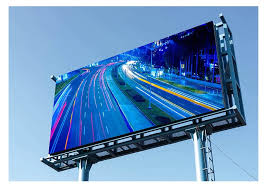
The term “fine pitch” refers to the pixel pitch—the distance between the centers of two adjacent LED pixels on a display panel. Typically measured in millimeters (mm), finer pitches indicate smaller distances, resulting in higher pixel density and superior resolution. For example, a fine pitch LED display with a pixel pitch as small as 0.9mm delivers remarkable image clarity and detail even at close viewing distances, exceeding the performance of traditional LCDs or larger pitch LEDs.
Fine pitch LED touchscreens integrate this micro pixel architecture with capacitive or infrared touch technologies, enabling smooth, accurate touch response. This combination is essential for applications demanding interactive low-latency inputs overlayed on crisp, vibrant imagery.
Key Technical Parameters
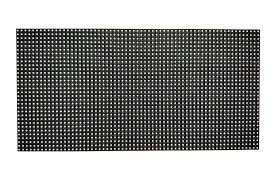
- Pixel Pitch: Common fine pitch LEDs range from 0.9mm to 2.5mm. The smaller the pitch, the better the resolution but generally higher cost and complexity.
- Brightness: Fine pitch LED displays typically deliver brightness levels of 800 to 1200 nits indoors, adjustable to ambient lighting for optimal visibility.
- Refresh Rate: Standard rates of 3840 Hz or higher reduce flickering and improve video clarity during fast motion scenarios, crucial for control rooms and live broadcasting.
- Touch Technology: Capacitive touch provides multi-touch capability and high accuracy with low latency, while infrared touch can offer durability and edge-to-edge responsiveness.
- Viewing Angle: Wide viewing angles, often 160° or more, ensure consistent image quality across diverse installations.
- Contrast Ratio: High contrast ratios (>3000:1) ensure vivid color reproduction and deep blacks, enhancing overall visual experience.
Industry Applications and Benefits
1. Control Rooms and Command Centers:
Control rooms require displays with precise grayscale and color fidelity for critical monitoring. Fine pitch LED touchscreens provide expansive, detailed visualization that operators can interact with in real time, enhancing situational awareness.
2. Medical Imaging:
Combining high resolution and responsive touch, these displays facilitate detailed diagnostics and collaborative review of patient data. Their clean, flat, and sealed surfaces meet stringent hygiene standards.
3. Retail and Digital Signage:
Offering dynamic, eye-catching content with interactive capabilities, fine pitch LED touchscreens engage consumers through immersive experiences and real-time customization, driving brand interaction and sales.
4. Corporate and Education:
In conference rooms and classrooms, these displays promote collaborative presentations and interactive learning by allowing multiple users to engage simultaneously with smooth touch inputs.
Challenges and Best Practices
Manufacturing and integrating fine pitch LED touchscreens present challenges centered primarily on ensuring uniform pixel calibration, minimizing heat dissipation, and achieving reliable touch accuracy. Industry-leading manufacturers use precision dispensing technologies and thorough quality assurance per standards such as the International Electrotechnical Commission (IEC) 62368 safety standards and ANSI/NEMA brightness guidelines.
Proper installation also demands rigorous environment control—fine pitch LEDs are highly sensitive to humidity and temperature fluctuations, which may affect lifetime and color uniformity if not managed properly. Ongoing calibration and maintenance ensure sustained performance.
Future Trends
Ongoing research into miniaturization of LED chips, advanced organic LEDs (OLED) and Micro-LED hybrid displays, as well as AI-enabled touch interaction, are poised to enhance fine pitch LED touchscreen capabilities further. Enhanced durability with flexible, curved touchscreens and integration with IoT frameworks are other promising developments set to redefine interactive display standards.
Conclusion
Fine pitch LED touchscreens represent a pivotal advancement in display technology—marrying ultra-high resolution with touch interactivity to meet the demands of today’s dynamic digital environments. By delivering unparalleled precision, responsiveness, and design versatility, these screens are defining new benchmarks across industries ranging from healthcare to enterprise collaboration, proving their indispensable role in the future of interactive visualization.
For engineers and decision-makers seeking cutting-edge display solutions, focusing on technical parameters such as pixel pitch, touch technology, brightness, and environmental resilience ensures optimized performance tailored to specific application needs.
References:
- International Electrotechnical Commission. IEC 62368-1: Audio/video, information and communication technology equipment - Safety requirements.
- NEMA Standards Publication WD 1-2018, Performance Guidelines for LED Display Brightness.
- IEEE Transactions on Display Technology, Vol. 15, Fine Pixel Pitch LED Displays: Advances and Applications, 2020.













