

LED LCD Screen Manufacturing: Innovations, Challenges, and Practical Applications
The LED LCD screen industry has experienced significant advancements over the past decade, driven by innovations in semiconductor materials, fabrication techniques, and display technologies. As a professional LED display engineer with extensive experience in LED LCD manufacturing, I have witnessed firsthand the evolution that has transformed display panels from simple, low-resolution units into dynamic, high-contrast screens that serve diverse sectors globally. This article delves into the practical applications, advantages, common challenges, and latest trends in LED LCD screen manufacturing, providing industry insights grounded in technical expertise and authoritative standards.
Practical Applications of LED LCD Screens
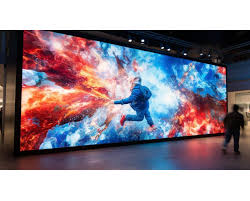
LED LCD screens combine the traditional liquid crystal display (LCD) technology with light-emitting diodes (LEDs) as the backlighting source. This hybrid approach is prevalent across multiple industries due to its versatility:
- Consumer Electronics: Televisions, monitors, laptops, tablets, and smartphones predominantly use LED LCDs for their balance of brightness, power efficiency, and cost-effectiveness.
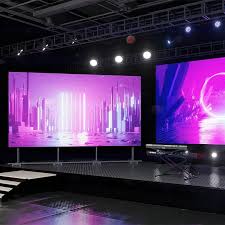
- Advertising and Digital Signage: High-brightness LED-backlit LCD displays are employed for outdoor and indoor digital signage, capable of delivering vivid images under various lighting conditions.
- Automotive Displays: Instrument clusters, infotainment systems, and heads-up displays (HUDs) utilize LED LCD screens due to their slim profiles and enhanced visibility.
- Medical Imaging: LED LCD screens are favored in medical diagnostics for their high resolution, color accuracy, and stability.
- Industrial Control Panels: These displays provide reliability and clear visuals in factory automation, aerospace, and military interfaces.
Advantages of LED LCD Technology
The substitution of conventional cold cathode fluorescent lamps (CCFL) with LEDs in LCD backlighting has unlocked several advantages:
- Improved Energy Efficiency: LEDs consume less power compared to CCFLs, reducing overall device energy consumption by up to 30%, according to data from the U.S. Department of Energy (DOE) standards.
- Enhanced Brightness and Contrast: LEDs can achieve higher luminance (>1000 nits in premium models) and better local dimming control, resulting in improved contrast ratios over 5000:1, crucial for HDR content.
- Longer Lifespan: LEDs have operational lifetimes exceeding 50,000 hours, significantly outlasting CCFLs, which typically last around 20,000 hours.
- Reduced Thickness and Weight: The compact size of LED units enables thinner and lighter screens, a key factor in portable consumer electronics and automotive applications.
- Environmentally Friendly: LEDs avoid the use of mercury, a hazardous substance found in CCFLs, aligning production with RoHS (Restriction of Hazardous Substances) directives.
Common Problems in LED LCD Manufacturing
Despite the advantages, LED LCD manufacturing encounters several challenges:
- Uniformity Issues: Achieving consistent brightness and color uniformity across large panels can be demanding, especially with edge-lit LED configurations. Techniques such as light guide plates (LGP) with microstructures and diffuser layers are extensively used to mitigate this problem.
- Heat Management: High-brightness LEDs generate heat that can degrade LCD materials and reduce performance. Manufacturers employ advanced thermal management systems, including heat sinks and thermal interface materials compliant with JEDEC standards, to preserve reliability.
- Backlight Bleeding: Uneven LED illumination can cause backlight bleed, affecting black levels and contrast. Precision engineering and stringent quality control are necessary to minimize such defects.
- Cost Pressures: While LED LCDs have become cost-effective, producing ultra-high-resolution panels (4K and beyond) with local dimming zones can increase manufacturing costs due to the complexity of embedded LEDs and driver circuitry.
- Viewing Angle Limitations: Although IPS (In-Plane Switching) LCD panels improve viewing angles, LED LCDs still face competition from OLED displays in this area.
Latest Trends in LED LCD Screen Manufacturing
The display industry continuously strives to enhance LED LCD technology. Recent trends include:
- Mini-LED and Micro-LED Backlighting: Using smaller LEDs in backlight units increases the number of dimming zones, improving contrast and dynamic range. Mini-LED tech has become mainstream in premium laptops and high-end televisions, delivering up to 2000 nits peak brightness with over 2500 local dimming zones.
- Quantum Dot Enhancement Films (QDEF): Integration of quantum dots in the backlight stack enhances color gamut (up to 100% Adobe RGB) and luminous efficiency. Quantum dot LCDs (QLED) combine the best attributes of LED LCDs with superior color performance.
- Flexible and Transparent LED LCDs: Innovations in flexible substrates allow curved or foldable LCD panels. Transparent displays are emerging for augmented reality (AR) applications and dynamic retail surfaces.
- AI-Driven Calibration and Testing: Machine learning algorithms optimize factory calibration, detecting and correcting pixel defects and color discrepancies, increasing yield and consistency.
- Sustainability Focus: Industry efforts emphasize recyclable materials, reduced hazardous substances, and more energy-efficient manufacturing to meet international environmental regulations.
Technical Parameters to Consider
Here are key specifications that industry professionals evaluate during LED LCD screen design and manufacturing:
- Pixel Density (PPI): Ranges from 100-400+ PPI depending on application.
- Brightness: Typically 300 to 1500 nits for consumer displays; up to 3000 nits for outdoor signage.
- Contrast Ratio: Standard values between 1000:1 to 5000:1; local dimming can push this higher.
- Color Gamut: sRGB coverage from 95% to 125% Adobe RGB for professional displays.
- Response Time: 1 to 8 milliseconds, important for motion clarity.
- Viewing Angle: Up to 178° horizontally and vertically with IPS technology.
- Backlight Lifetime: Typically >50,000 hours.
Conclusion
The LED LCD screen manufacturing industry embodies a dynamic convergence of material science, optical engineering, electronics, and software calibration. By keeping abreast of technological advancements such as mini-LED backlighting, quantum dot enhancements, and AI-driven production techniques, manufacturers can address longstanding challenges like brightness uniformity and heat dissipation while responding to market demands for higher resolution, better color accuracy, and eco-friendly solutions.
In light of industry standards like IEC 62717 for LED modules and ISO 9241 for ergonomics of displays, continuous optimization in LED LCD manufacturing not only enhances visual experience but also sustains device longevity and user safety. As global applications expand—from automotive dashboards to medical imaging and large-scale digital signage—the future of LED LCD technology looks promising, driven by both innovation and rigorous engineering discipline.













