

Advanced LED Display Manufacturing: Technologies, Applications, and Industry Insights
In recent years, the LED display industry has experienced remarkable advancements driven by innovations in materials, manufacturing processes, and system integrations. As a professional LED display engineer, I aim to provide a comprehensive and authoritative overview highlighting technical parameters, practical applications, major advantages, common challenges, and emerging trends in LED display manufacturing, grounded in industry standards and real-world deployments.
LED display technology primarily falls into two categories: Direct LED displays and LED-backlit LCD displays. Direct LED displays utilize arrays of light-emitting diodes as the primary light source creating vibrant images directly, while LED-backlit LCD displays use LEDs to illuminate the liquid crystal panel, enabling thinner form factors and enhanced energy efficiency. For large-scale video walls, billboards, stadium screens, and control rooms, direct-view LED displays dominate due to their superior brightness (typically 1000 to 5000 nits), wide viewing angles (up to 160° horizontal and vertical), and excellent color gamut coverage (up to 140% sRGB or more).
Key technical parameters influencing LED display performance include:
- Pixel Pitch (P): Denotes the distance between the centers of adjacent pixels, typically ranging from 0.9 mm for fine-pitch indoor applications to more than 10 mm for outdoor screens. Smaller pitches yield higher resolution but increase manufacturing complexity and cost.
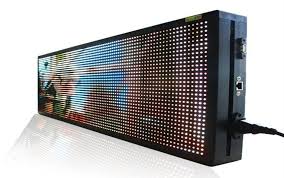
- Refresh Rate: High refresh rates (≥3840 Hz) are critical for flicker-free video display, especially in broadcasting or live event environments.
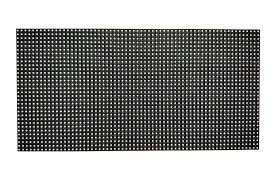
- Brightness and Contrast Ratio: Outdoor LED displays require high brightness (≥5500 nits) to ensure visibility under direct sunlight, and a high contrast ratio (≥3000:1) to improve image sharpness and depth.
- Color Accuracy: Advanced calibration methods and use of RGB and sometimes Amber LED chips ensure precise color representation.
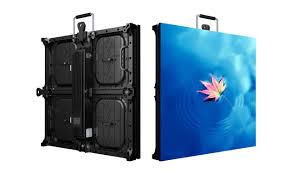
- Power Consumption: Optimization involves selecting energy-efficient LED packages and intelligent power management to reduce operational costs.
Practical Applications
LED display technology is prevalent in diverse fields:
- Outdoor advertising and digital billboards: Robust displays with IP65 or higher protection withstand weather conditions including rain, dust, and temperature fluctuations.
- Sports and entertainment venues: Large-scale modular LED walls enable immersive viewing experiences. Sports arenas employ LED perimeter boards using ultra-high refresh rates to prevent flicker in televised broadcasts.
- Transportation hubs and public information systems: Dynamic screens display real-time information with high visibility and durability.
- Control rooms and command centers: Fine-pitch LEDs provide detailed, multi-source data visualization crucial for monitoring and prompt decision-making.
- Retail and corporate environments: Innovative transparent LED displays and curved LED walls enhance customer engagement and branding initiatives.
Advantages of Modern LED Displays
- Brightness and Visibility: Extreme luminosity ensures visibility under diverse lighting conditions including bright daylight.
- Durability and Longevity: LED displays typically have an operational lifespan exceeding 100,000 hours under proper usage and maintenance.
- Scalability and Design Flexibility: Modular designs allow for custom sizes and shapes, including seamless curved panels and transparent configurations.
- Low Maintenance: Advanced surface coatings and sealed LED modules reduce maintenance frequency and costs.
- Energy Efficiency: Transitioning from traditional technologies like incandescent and fluorescent lights to LEDs reduces energy consumption by 40-60%.
Common Challenges and Solutions
- Thermal Management: LEDs generate heat that can degrade performance if unmanaged. Engineering efficient heat sinks, forced air cooling, or active cooling systems is critical. According to IPC standards, maintaining junction temperatures under 85°C extends LED lifespan significantly.
- Color Uniformity and Aging: Over time, color shifting can occur due to differential LED aging. Employing automated calibration systems based on color sensors helps maintain calibration and uniformity.
- Environmental Resistance: Particularly for outdoor installations, moisture ingress and UV exposure can impair LED modules. Conformal coatings meeting IP65 and higher, plus UV-resistant encapsulants, mitigate these risks.
- Electromagnetic Interference (EMI): High-density LED systems require compliant design to meet FCC and CISPR limits, ensuring interference with sensitive equipment does not occur.
- Pixel Failure and Repairability: Modular design with hot-swappable LED modules enables rapid repair and minimizes downtime.
Emerging Trends in LED Display Manufacturing
- Mini-LED and Micro-LED: Miniature LED technologies push pixel pitch below 0.5 mm, offering unprecedented image resolutions for close-view indoor applications like virtual reality and medical imaging. Micro-LED delivers even finer pixel control employing wafer-level transfer techniques, promising displays with superior brightness, response time, and efficiency compared to OLED and LCD counterparts.
- Flexible and Transparent Displays: Flexible substrates permit curved, foldable, or wearable LED displays, opening new design paradigms. Transparent LED screens are increasingly adopted in retail and architectural glass integration.
- AI-driven Calibration and Diagnostics: Embedded intelligent systems enable real-time self-calibration, predictive maintenance alerts, and enhanced performance consistency.
- Eco-friendly Manufacturing: Industry-wide initiatives target reduced hazardous materials usage and recycling of LED components to align with global sustainability goals.
- Integration with IoT and 5G: LED displays integrated with IoT platforms enable dynamic content updates, remote diagnostics, and interactive user experiences enhanced by 5G's low latency and high bandwidth.
In summary, LED display manufacturing continues to evolve through sophisticated materials science, process engineering, and system integration, empowering a wide spectrum of applications from outdoor advertising to mission-critical control environments. Professionals in this domain must stay abreast of international standards such as IEC 61174 (Marine Navigation displays), IEC 62368 (Safety requirements), and LED-specific optical characterization protocols to ensure top-tier quality, reliability, and safety in deployed solutions.
With continued innovations in miniaturization, energy efficiency, and intelligent capabilities, the future of LED display technology promises to redefine visual communication and interaction on a global scale.













