

LED LCD Display Technology: Applications, Advantages, Challenges, and Emerging Trends
LED LCD displays have become a cornerstone of modern digital visualization, merging the benefits of Liquid Crystal Display (LCD) technology with Light Emitting Diode (LED) backlighting. As a professional LED display engineer with extensive industry experience, this article aims to provide a comprehensive, authoritative overview of LED LCD display technology, focusing on practical applications, advantages, common challenges, and cutting-edge trends shaping the future of the sector.
Technical Foundation and Parameters
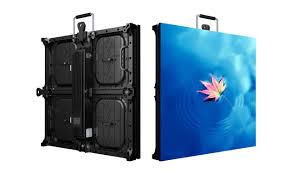
An LED LCD display essentially consists of an LCD panel that modulates light, with LED backlights providing uniform illumination. The backlighting layer uses arrays of LEDs, which can be edge-lit or direct-lit, that illuminate the liquid crystals to produce vibrant images. Key technical parameters defining LED LCD performance include:
- Resolution: Ranging from standard HD (1920x1080) to 8K (7680x4320), impacting image clarity.
- Refresh Rate: Typically from 60Hz to 240Hz, critical for smooth motion rendering in video and gaming.
- Brightness: Measured in nits; professional displays range from 300 nits for indoor use up to 1000+ nits for outdoor or HDR content.
- Contrast Ratio: Dynamic contrast ratios can reach 1,000,000:1 with local dimming LED backlights.
- Color Gamut: Coverage of sRGB, AdobeRGB, or DCI-P3 color spaces enhancing color fidelity.
- Response Time: Usually 1ms to 8ms, affecting ghosting in fast-moving images.
Practical Applications
LED LCD displays are ubiquitous across diverse domains due to their versatility:
- Consumer Electronics: Televisions and monitors benefit from LED backlighting for higher brightness and energy efficiency. Gaming monitors utilize higher refresh rates and faster response times.
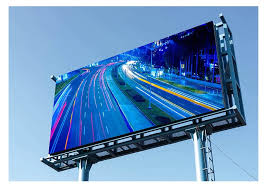
- Digital Signage: Large format LED LCD displays dominate retail, transportation hubs, and public venues, providing bright, vivid images capable of outdoors visibility, thanks to high-nit backlighting.
- Medical Imaging: High-end LED LCD screens offer precise color reproduction and contrast vital for diagnostic accuracy.
- Industrial and Automotive Displays: LED LCD panels provide durable, bright interfaces in vehicles and machinery control systems, supporting reliability in variable lighting conditions.
- Broadcast and Professional Visualization: Studio monitors employ LED backlit LCDs for consistent and accurate color reproduction as per standards like Rec. 709 and Rec. 2020.
Advantages of LED LCD Displays
Compared to traditional CCFL (Cold Cathode Fluorescent Lamp) backlit LCDs, LED backlighting introduces several benefits:
- Energy Efficiency: LEDs consume less power, contributing to reduced operational costs.
- Slimmer Profiles: LED arrays enable thinner displays, essential in mobile and space-constrained applications.
- Improved Brightness and Contrast: Local dimming of LEDs enables enhanced contrast ratios and HDR support.
- Longer Lifespan and Reliability: LEDs have longer operational lifetimes and better durability.
- Environmental Impact: LEDs contain no mercury and have a smaller ecological footprint than CCFLs.
Common Challenges and Solutions
Despite these advantages, LED LCD technology faces several challenges:
- Backlight Uniformity: Edge-lit LED designs may suffer from uneven brightness, creating hotspots. This is mitigated by diffusion layers and advanced optical films.
- Color Accuracy Drift: Over time, LED brightness and color temperature can shift. Calibration hardware/software and improved LED binning processes counteract this.
- Heat Dissipation: LEDs generate heat that can affect panel lifespan; thermal management designs using heat sinks are critical.
- Viewing Angles and Response Times: IPS LCD panels improve viewing angles but at higher costs. Response time improvement continues to be an engineering focus.
Latest Trends in LED LCD Displays
Innovation in LED LCD display technology continues to accelerate, driven by consumer demand and technological progress:
- Mini-LED and Micro-LED Integration: The miniaturization of LEDs enables more precise local dimming zones and improved contrast ratios. Mini-LED backlighting shows HDR performance closer to OLED but with traditional LCD durability.
- Quantum Dot Enhancement: Quantum Dot (QD) layers integrated into displays significantly enhance color saturation and brightness while improving energy efficiency.
- 8K Resolution Adoption: As content production moves towards ultra-high definition, 8K LED LCDs are gaining traction in professional and consumer segments.
- Flexible and Transparent LED LCDs: Emerging designs incorporate flexible substrates and transparent capabilities for unique form factors and applications in augmented reality.
- AI-Driven Display Calibration: Artificial Intelligence algorithms optimize brightness, contrast, and color balance dynamically according to ambient lighting and content type.
Industry Standards and Quality Measures
Standards organizations, including the International Electrotechnical Commission (IEC) and Society for Information Display (SID), define test protocols and benchmarks for LED LCD displays. Adhering to standards such as IEC 62087 (methods of measurement for power consumption) and TCO Certified Display specifications ensures reliability, sustainability, and user health considerations.
Conclusion
LED LCD displays represent an intersection of mature technology and innovative engineering, delivering superior brightness, color accuracy, energy efficiency, and form factor flexibility. Their widespread applicability, from entertainment to critical industrial applications, underscores their importance in the global display market. Ongoing advancements like mini-LEDs and quantum dots promise to push the boundaries of performance, addressing previous limitations and enabling future-ready solutions.
For engineers, manufacturers, and end-users, understanding these facets equips informed decisions to leverage LED LCD technologies optimally in varied applications and environments.
References:
- Society for Information Display (SID). “Display Industry Yearbook,” 2023.
- International Electrotechnical Commission (IEC). IEC 62087 Standard, “Methods of Measurement for Power Consumption of Audio, Video and Related Equipment.”
- Quantum Dot Consortium Technical Reports, 2022.
- Avago Technologies, “Understanding LED Backlighting in LCDs,” White Paper, 2021.













