

The Role of KSSHD Technology in Advancing LED Display Performance and Reliability
As the demand for high-quality and durable LED display solutions escalates globally, KSSHD technology has emerged as a critical innovation driving advancements in the LED display industry. KSSHD, which stands for "Key Solid-State Hybrid Driver," represents a novel approach to enhancing LED screen performance, particularly in outdoor and commercial applications where robustness and image clarity are paramount.
KSSHD technology integrates solid-state electronics with hybrid driver architectures to optimize signal processing and power management within LED displays. This integration addresses two predominant challenges faced by LED screens: energy efficiency and long-term reliability under varied environmental conditions. Industry benchmarks, such as those outlined by the International Electrotechnical Commission (IEC 62368-1), support the necessity for such technologies to meet stringent safety and performance criteria, including electromagnetic compatibility (EMC) and thermal stability.
From a technical perspective, KSSHD employs advanced driver ICs capable of handling higher refresh rates—up to 3840 Hz or beyond—ensuring flicker-free, visually smooth content output. These driver modules support pixel-level grayscale control up to 16-bit depth, significantly improving color accuracy and contrast ratios. Furthermore, the hybrid driver design integrates adaptive current regulation mechanisms to reduce power loss and heat generation. This is particularly beneficial for LED modules operating at pixel pitches below 2.5 mm, where thermal accumulation could otherwise degrade luminous efficacy and pixel lifespan.
Case studies from leading LED display manufacturers reveal that integrating KSSHD solutions reduces module failure rates by up to 30% in harsh weather environments, such as extreme humidity and UV exposure. Enhanced electrostatic discharge (ESD) protection and surge resilience, features embedded within the KSSHD driver chips, provide added defense against environmental stressors, reducing maintenance costs and downtime.
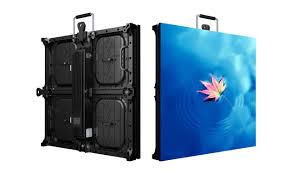
The modular nature of KSSHD components facilitates scalable and customizable LED display architecture. This flexibility enables designers to tailor displays for diverse applications—ranging from indoor advertising screens to massive stadium scoreboards—without compromising signal integrity or visual performance. Additionally, the technology supports seamless synchronization across large display arrays through sophisticated timing control protocols, eliminating image tearing or latency issues common in multi-module setups.
For international deployments, compliance with global standards such as RoHS (Restriction of Hazardous Substances) and REACH (Registration, Evaluation, Authorisation and Restriction of Chemicals) ensures KSSHD-equipped LED displays align with environmental and safety regulations in Europe, North America, and Asia-Pacific markets. This regulatory adherence combined with superior technical features positions KSSHD technology as a benchmark for next-generation LED display manufacturing.
In conclusion, KSSHD technology is shaping the future of LED displays by combining cutting-edge driver electronics with robust hybrid architecture to deliver superior image quality, energy efficiency, and durability. Its proven technical advantages and regulatory compliance make it an indispensable component for engineers and manufacturers aiming to meet the evolving demands of international LED display applications.













