

Advanced LED Display Manufacturing: Technical Insights and Industry Best Practices
The global LED display industry has witnessed remarkable growth, driven by rapid advancements in display technologies and expanding applications across advertising, sports arenas, retail, and transportation hubs. As a professional LED display engineer with extensive expertise in LED LCD screen manufacturing, this article delves into the critical technical parameters, manufacturing standards, and practical considerations that define high-quality LED display production. Understanding these elements is key to delivering durable, high-performance products to meet diverse client requirements.
Key Technical Parameters in LED Display Manufacturing
1. Pixel Pitch and Resolution
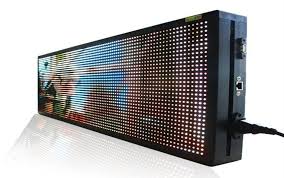
Pixel pitch—the distance between the centers of two adjacent LED pixels—is a fundamental specification influencing display clarity and viewing distance. Standard outdoor LED displays typically range from 10mm to 20mm pixel pitch, while indoor and fine-pitch LED screens may have pixel pitches as low as 0.9mm. Finer pixel pitches enable higher resolutions, essential for close-range viewing scenarios in control rooms, conference halls, or broadcast studios. Industry standard IEC 62717 outlines criteria for pixel pitch tolerances, ensuring consistent image quality across panels.
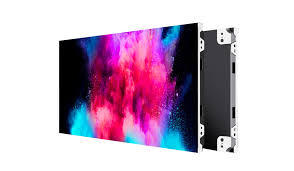
2. Brightness and Contrast Ratio
Brightness is measured in nits (cd/m²) and is critical to outdoor legibility under varying lighting conditions. High-performance outdoor screens often achieve 5000-7000 nits to remain visible in direct sunlight. Conversely, indoor LED screens typically operate at 800-1500 nits to reduce eye strain. Contrast ratio, the difference between the brightest white and darkest black a display can produce, impacts image depth and vibrancy. Achieving high contrast ratios requires precise LED binning and calibration during assembly.
3. Refresh Rate and Gray Scale
A refresh rate of at least 1920 Hz is recommended for smooth motion rendering without flicker, essential for dynamic content and broadcast compatibility. Gray scale depth, representing the number of luminance levels per pixel, influences color accuracy and gradient rendering. Modern displays support 14-bit or higher gray scale, adhering to standards outlined by the Society for Information Display (SID) for realistic image reproduction.
4. Durability and Lifetime
Longevity is a significant factor; high-grade LEDs typically boast lifespans exceeding 100,000 hours at 50% brightness. IP65 or higher ingress protection ensures resistance to dust and water for outdoor installations. Rigorous environmental testing per UL 8750 and IEC 60529 standards validates durability, critical for installations in harsh climates or heavy-duty commercial environments.
5. Thermal Management
Effective heat dissipation systems, including aluminum backplanes and optimized ventilation, prevent thermal degradation that can lead to color shift or premature LED failure. Monitoring junction temperature during manufacturing and operation prolongs device reliability.
Manufacturing Best Practices and Quality Control
The manufacturing process begins with careful LED bin selection, grouping LEDs with uniform forward voltage and chromaticity to maintain consistent brightness and color temperature. Automated pick-and-place machines precisely position LEDs on printed circuit boards (PCBs), followed by soldering and encapsulation steps that protect components.
Comprehensive quality control includes:
- Optical Calibration: Utilizing spectroradiometers and colorimeters to achieve uniform brightness and color balance across the display surface.
- Electrical Testing: Verifying driver circuits and power supply stability per IPC standards.
- Environmental Stress Screening: Simulating temperature, humidity, and vibration to identify potential manufacturing defects.
Case Study: Deploying an Ultra-Fine Pitch LED Display for a Financial Trading Floor
An international financial institution required a 0.9mm pixel pitch LED display covering 50 square meters for real-time data visualization. Adhering to IEC 61000 electromagnetic compatibility standards ensured minimal interference with sensitive equipment. The installation incorporated a brightness level of 1000 nits for indoor lighting, a 3840Hz refresh rate for flicker-free visuals, and an IP30 rated enclosure suitable for controlled indoor environments. Post-installation, the display demonstrated exceptional uniformity and color precision, enhancing traders' decision-making efficiency.
Future Trends in LED Display Manufacturing
The industry is gravitating towards micro-LED technology, promising higher brightness, improved efficiency, and even finer pixel pitches. Integration with AI-based calibration systems allows real-time adjustments to optimize visual performance dynamically. Sustainability efforts focus on recyclable materials and energy-efficient drivers aligned with international environmental standards like RoHS and WEEE directives.
In conclusion, mastery of technical parameters and adherence to stringent manufacturing standards underpin the production of cutting-edge LED displays. Engineers and manufacturers must stay abreast of evolving industry benchmarks and technological innovations to deliver solutions that combine performance, reliability, and sustainability, meeting the global demand for superior visual experiences.













