

Advanced Technical Insights into LED LCD Screen Manufacturing: Enhancing Quality and Performance
In the rapidly evolving field of display technology, LED LCD screens have become indispensable across various industries due to their superior brightness, energy efficiency, and color accuracy. As a professional LED display engineer with extensive experience in the design, manufacturing, and quality control of LED LCD panels, this article provides an authoritative overview of advanced technical considerations critical to optimizing the performance and longevity of these displays.
1. Understanding LED LCD Architecture
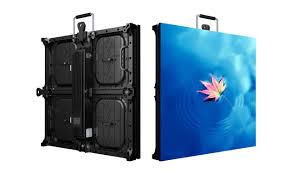
At the core of LED LCD screens lies a combination of liquid crystal technology coupled with LED backlighting. Unlike traditional CCFL backlights, LEDs offer a broader color gamut spanning approximately 72-99% of the NTSC color space, depending on the phosphor type and LED configuration. Modern implementations typically utilize RGB LED arrays or white LED backlight units combined with quantum dot films to enhance color volume and efficiency.
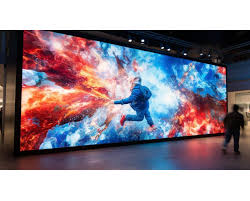
The liquid crystal layer modulates light passage using voltage-controlled birefringence, necessitating precise addressing via thin-film transistor (TFT) arrays. TFT-LCD panels often employ In-Plane Switching (IPS) or Vertical Alignment (VA) technologies, each balancing viewing angles, contrast ratios, and response times for targeted applications.
2. Manufacturing Precision and Quality Control
Achieving high yield rates in LED LCD production requires refined control of several parameters:
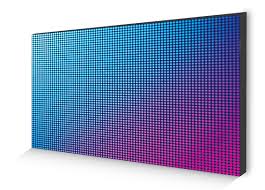
- Substrate Preparation: Ultra-clean glass substrates with surface flatness< 1 µm RMS ensure uniform cell gap formation.
- Thin-Film Deposition: Sputtering or chemical vapor deposition techniques deposit semiconductor layers with thickness uniformity within ±5 nm, critical for consistent electrical performance.
- Pixel Alignment: Advanced photolithography aligns TFT and electrode patterns with sub-micron accuracy, minimizing cross-talk and enhancing grayscale stability.
- Cell Gap Control: Liquid crystal layer thickness is typically maintained between 3-6 µm, optimizing response time and contrast ratio while preventing light leakage.
Quality control processes integrate inline optical inspections employing machine vision to detect particulates larger than 5 µm, and automated electrical tests to validate threshold voltages and leakage currents below industry benchmarks (ISO 9241).
3. LED Backlight Innovations
In recent years, dynamic local dimming has become a vital feature in LED LCD backlights to increase contrast ratios beyond 3000:1, approaching OLED levels. This requires precise LED segment drivers with current regulation accuracy within ±0.5%. Moreover, the adoption of mini-LED and micro-LED arrays, featuring thousands of discrete LEDs with pixel pitch under 200 µm, empowers higher peak luminance (>1000 nits) and HDR capabilities conforming to HDR10 and Dolby Vision standards.
4. Thermal Management and Reliability
Effective thermal dissipation greatly impacts the lifespan and performance stability of LED LCD panels. According to JEDEC standards (JESD51), typical operating junction temperatures for LEDs are capped at 85°C to ensure luminous efficacy retention over 50,000 hours. Implementation of thermally conductive substrates, such as aluminum or copper backplanes paired with heat spreaders, alongside real-time temperature sensing, prevents degradation due to thermal cycling.
5. Calibration and Color Accuracy
Factory calibration utilizing spectroradiometers aligns display output to color standards such as sRGB and AdobeRGB with ΔE< 2. This process compensates for LED spectral variations and liquid crystal polarization anisotropies. Advanced displays feature hardware LUT (Look-Up Table) calibration, supporting 10-bit or higher color depth, resulting in smoother gradients and enhanced visual fidelity.
6. Future Trends and Standards Compliance
The International Electrotechnical Commission (IEC) continues updating standards like IEC 62368-1 to address safety in LED LCD manufacturing processes, including ESD protection and hazardous material control. Meanwhile, the push towards thinner, flexible substrates integrates OLED hybridization with LED backlight enhancement, opening new design paradigms.
In summary, cutting-edge LED LCD manufacturing demands a holistic approach encompassing material science, semiconductor fabrication, backlight engineering, and stringent testing methodologies to deliver displays meeting modern performance and durability expectations. Adherence to industry standards and continuous innovation remains paramount to advancing the field of LED LCD technology.













