

Cutting-Edge Advances in LED Display Technology for Enhanced Visual Performance
In the rapidly evolving landscape of LED display technology, continuous innovation is paramount to meet the diverse demands of modern applications ranging from advertising billboards to high-resolution indoor screens. As a professional with extensive experience in LED LCD screen manufacturing, this article delves into the forefront advancements and technical nuances shaping the industry, emphasizing performance enhancement, reliability, and energy efficiency.
At the core of LED display development lies the intricate balance of several critical parameters—pixel pitch, brightness, color accuracy, refresh rate, and power consumption. Pixel pitch, defined as the distance between the centers of two adjacent LEDs, directly influences display resolution and viewing distance. For instance, indoor LED panels commonly feature pixel pitches from 1.2mm to 3.9mm, allowing for crisp images at close viewing distances, whereas outdoor solutions prioritize larger pitches (10mm to 20mm) to maintain visibility under direct sunlight. The trend toward ultra-fine pitch LED technology, with pixel pitches as low as 0.7mm, exemplifies the drive for seamless visual quality in conference rooms, broadcasting studios, and control centers.
Brightness and luminance consistency are equally critical. According to the Digital Signage Federation and IEC 62471 photobiological safety standards, optimal indoor LED panels maintain brightness between 800 and 1,200 nits, ensuring vivid imagery without causing eye strain. Conversely, outdoor LED displays demand luminance levels exceeding 5,000 nits to combat ambient light interference. State-of-the-art LED cabinets now integrate automatic brightness adjustment sensors, actively modulating luminance based on environmental lighting conditions to conserve energy while maintaining optimal visibility.
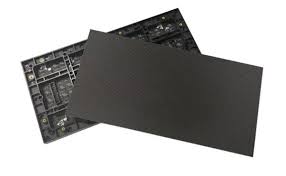
Color accuracy in LED modules hinges on the precision of individual Red, Green, and Blue LEDs and the uniformity of their output. Employing binning processes and advanced calibration techniques, manufacturers achieve high color gamut coverage, often exceeding 90% of Rec. 709 and approaching DCI-P3 standards for professional use. This meticulous approach to color management is indispensable in arenas such as digital cinematography, where faithful color reproduction defines the viewing experience.
Refresh rate is another performance cornerstone, especially in video playback and live broadcasting contexts. LED display units featuring refresh rates of 3,840 Hz or higher deliver flicker-free imagery on camera, a requirement critical for live TV production and virtual advertising. Low latency and response times under 1 ms further contribute to fluid motion rendering and enhanced user interaction, particularly in dynamic environments such as sports venues and interactive exhibitions.
An emerging priority in LED display engineering is energy efficiency and thermal management. Manufacturers integrate innovative materials like high thermal conductivity aluminum substrates and employ intelligent airflow designs within LED cabinets to dissipate heat effectively. This not only prolongs the lifespan of LEDs—commonly exceeding 100,000 hours of operation—but also reduces operational costs and environmental impact. Moreover, compliance with international standards such as RoHS and CE ensures sustainable manufacturing practices alongside product safety.
Reliability extends beyond hardware to encompass software and control systems. Modern LED display controllers support versatile input interfaces (HDMI, DP, DVI), allow real-time diagnostics, and provide remote management capabilities over IP networks. These functionalities aid operators in timely maintenance, minimizing downtime in mission-critical applications such as traffic control centers or command rooms.
Several case studies illustrate the application of these advancements:
- A global retail chain deployed fine-pitch LED video walls with adaptive brightness and high refresh rates across multiple store locations, resulting in a 30% increase in customer engagement metrics while reducing power consumption by 20%.
- In a stadium renovation project, ultra-high brightness and weather-resistant LED boards were installed, complying with IP65 standards, enabling consistent visibility during varying weather conditions and significantly enhancing spectator experience.
- A broadcasting studio implemented a 0.9mm pixel pitch LED backdrop to produce seamless virtual sets, benefiting from precise color calibration and flicker-free performance critical for high-definition broadcasting.
Industry experts such as the International Electrotechnical Commission (IEC) and the Society for Information Display (SID) continue to advocate for standardized testing and certification protocols to ensure quality benchmarks across LED products globally.
In conclusion, the trajectory of LED display technology reveals a strong emphasis on ultra-high resolution, superior color fidelity, adaptive brightness, energy efficiency, and robust reliability. As applications diversify and users demand more immersive visual experiences, manufacturers must integrate multidisciplinary innovations—combining optical engineering, electronics, thermal management, and software control—to deliver products that not only meet but exceed industry standards. Leveraging these technologies ensures that LED displays remain a vital component of visual communication and information dissemination worldwide.













