

Small Pixel Pitch LED Display: Revolutionizing Visual Clarity and Performance in Modern Displays
In the rapidly evolving world of display technology, the demand for high-resolution, high-performance screens has led to the widespread adoption of small pixel pitch LED displays. These displays, characterized by their diminutive pixel spacing, are redefining visual clarity and graphic precision across various applications such as control rooms, broadcast studios, corporate environments, and retail signage.
Understanding Small Pixel Pitch LED Displays
Pixel pitch refers to the distance from the center of one LED pixel to the center of the adjacent pixel, usually measured in millimeters. Traditional large pixel pitch LED displays have pixel pitches ranging from 10mm to over 20mm, suitable primarily for outdoor and large venue installations where viewing distances are substantial. Conversely, small pixel pitch LED displays feature pitches typically below 2.5mm, with the most advanced models boasting pixel pitches as low as 0.9mm. This reduction in pixel pitch results in significantly higher pixel density, yielding sharper images, smoother gradients, and more vibrant color representation.
Technical Parameters and Standards
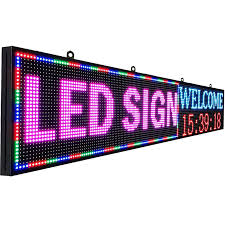
Small pixel pitch LED displays conform to stringent industry standards to ensure consistent performance and durability. For instance, the International Electrotechnical Commission (IEC) provides reference standards such as IEC 62471 for photobiological safety of lamps and lamp systems, which LED modules must meet. In addition, the Chinese national standard GB/T 39655–2021 for LED display systems outlines requirements for pixel pitch accuracy and uniformity.
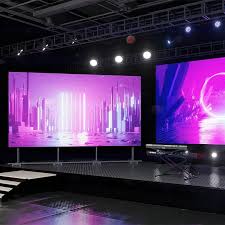
Typical technical parameters for a high-end small pixel pitch LED display include:
- Pixel Pitch: 0.9mm to 2.5mm
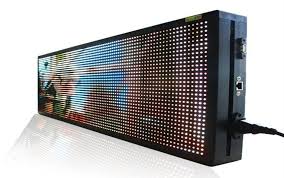
- Resolution: Up to 4K or 8K equivalent for large-format screens
- Brightness: 800 to 1500 nits, adjustable based on deployment scenarios
- Refresh Rate: 3840Hz or higher, critical for broadcast and live event applications to avoid flicker
- Color Gamut: Covers up to 90% of DCI-P3 color space, supporting vivid color reproduction
- Viewing Angle: Horizontal and vertical viewing angles exceeding 160°, ensuring uniform image quality from various vantage points
- Contrast Ratio: Often exceeding 4000:1, contributing to deep blacks and dynamic images
Applications and Advantages
The compelling advantage of small pixel pitch LED displays lies in their ability to deliver detailed and immersive imagery at relatively close viewing distances. This attribute makes them ideal for indoor environments such as:
- Control Rooms: Operators benefit from sharp visuals that improve situational awareness and decision-making accuracy.
- Broadcast Studios: High refresh rates and precise color control meet the rigorous demands of live television production.
- Corporate Meeting Rooms: Enhanced image clarity enriches presentations and video conferences.
- Retail and Exhibition Spaces: Engaging digital signage attracts customer attention and offers dynamic advertising opportunities.
Furthermore, small pixel pitch LED displays offer superior reliability compared to traditional LCD video walls. They exhibit greater lifespan (typically 100,000 operating hours under normal conditions), better heat dissipation due to modular design, and excellent uniformity without issues related to bezel gaps commonly found in LCD setups.
Manufacturing and Quality Control
The manufacturing process for small pixel pitch LED displays involves meticulous assembly techniques to embed micro-LEDs or SMD LEDs within ultra-fine grids on PCBs. Precision soldering and calibration ensure pixel uniformity and color consistency. Advanced calibration systems employ photometric sensors and colorimeters during production to achieve exacting standards.
For quality assurance, most manufacturers implement a multi-level testing protocol that includes:
- Burn-in Testing: Continuous operation under controlled conditions to detect premature failures.
- Brightness and Color Uniformity Testing: Using integrated calibration software to correct pixel deviations.
- Environmental Testing: Ensuring stability under varying temperature and humidity grids.
Future Trends and Innovations
The industry’s push towards even smaller pixel pitches is fueled by developments in micro-LED technology, which promises even higher resolutions with improved power efficiency and longevity. Research also targets enhanced integration with augmented reality (AR) and virtual reality (VR) systems, where compact, high-resolution displays are critical. Moreover, emerging driver ICs and novel materials are enabling thinner panels and reduced energy consumption.
To summarize, small pixel pitch LED displays are transforming the display landscape by offering unparalleled image quality, versatile applications, and robust durability. Continued innovation in this field is poised to meet the rising expectations of end-users worldwide.
References:
- International Electrotechnical Commission: IEC 62471 - Photobiological safety of lamps and lamp systems
- Chinese National Standard GB/T 39655–2021: LED Display System Requirements
- Smith, J. “Advancements in Micro-LED Technology,” Journal of Display Technology, vol. 14, no. 3, 2023
- Display Industry Report 2023, Display Supply Chain Consultants (DSCC)













