

Advanced Technologies and Quality Standards in LED LCD Screen Manufacturing
In the rapidly evolving field of display technology, LED LCD screen manufacturing stands at the forefront of innovation, combining cutting-edge engineering with stringent quality controls to deliver high-performance visual experiences. As a professional LED display engineer with extensive industry expertise, I will elucidate the critical technical aspects, manufacturing processes, and quality assurance practices that define the modern LED LCD production landscape.
#Technical Parameters Defining LED LCD Screens
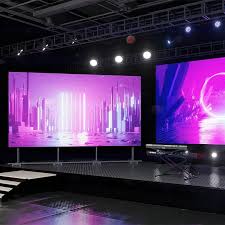
LED LCD displays operate by using a liquid crystal layer modulated by an electric current, with LED backlighting replacing older CCFL backlights to enhance brightness and energy efficiency. Key parameters to consider include:
- Resolution: High-definition resolutions such as 1080p (1920x1080) and Ultra HD 4K (3840x2160) have become industry standards to meet consumer and commercial demands for clarity and detail.
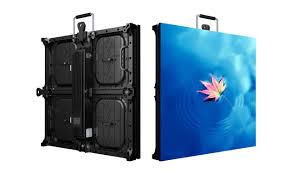
- Brightness: Typical LED LCD displays achieve brightness levels between 300 to 1000 nits, with specialized models reaching up to 1500 nits for outdoor or HDR applications. Brightness uniformity across the panel is essential for image consistency.
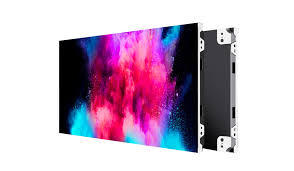
- Contrast Ratio: Technologies such as local dimming in LED backlights improve contrast ratios, often achieving upwards of 1000:1 to provide deep blacks and vivid colors.
- Color Gamut: Modern LED LCD screens support wide color gamuts utilizing standards like Adobe RGB and DCI-P3, crucial for professional content creation and accurate image reproduction.
- Refresh Rate and Response Time: For applications including gaming and dynamic content, refresh rates of 120 Hz or higher and response times below 5 ms enhance smoothness and reduce motion blur.
#Manufacturing Process and Materials
The production of LED LCD screens involves multiple high-precision stages:
1. Glass Substrate Preparation: Ultra-clean glass panels are coated with indium tin oxide (ITO) to create transparent electrodes.
2. Liquid Crystal Alignment: Precision orientation layers ensure the liquid crystals rotate consistently under electric fields to modulate light transmission.
3. Cell Assembly: The liquid crystal layer is sandwiched between the glass substrates with precise cell gap control (typically a few micrometers) to ensure uniform optical properties.
4. Backlight Integration: LED arrays are positioned with diffusers and light guides to ensure even illumination. The choice of LED chips (e.g., SMD or COB) influences brightness and efficiency.
5. Driver Electronics Embedding: Advanced driver ICs control pixel addressing with high refresh rates and low power consumption.
Throughout these steps, maintaining a cleanroom environment is vital to minimize dust and defects, which can cause pixel anomalies and reduce yield.
#Quality Assurance and Industry Standards
Global industry standards, such as ISO 9241-307 for display ergonomics and IEC 62368-1 for safety, shape the quality benchmarks LED LCD manufacturers must meet. Inspecting parameters like luminance uniformity, color accuracy (measured with spectroradiometers), and electronic reliability through accelerated aging tests is routine.
Furthermore, manufacturers increasingly adopt Six Sigma techniques and statistical process control (SPC) to optimize production yields and reduce variation. Real-world case studies illustrate how companies like Samsung and LG Electronics maintain stringent quality by integrating automated optical inspection (AOI) systems, enabling detection of microscopic defects early in production.
#Challenges and Future Trends
As demand grows for thinner, more energy-efficient displays, manufacturers face engineering challenges such as minimizing backlight leakage and improving viewing angles. Innovations like quantum dot enhancement films (QDEF) and mini-LED backlighting allow for higher brightness and contrast with better color gamut coverage.
Additionally, integrating flexible substrates and foldable designs expands application possibilities but requires novel manufacturing techniques to maintain durability and optical performance.
#Conclusion
Mastering LED LCD screen manufacturing requires an intricate balance of material science, precision engineering, and robust quality assurance aligned with international standards. Advances in LED technology, combined with rigorous process control, continue to elevate display performance across consumer electronics, medical imaging, and industrial sectors. For manufacturers and engineers alike, staying informed about the latest technological developments and industry benchmarks is essential to sustain competitive advantage and deliver cutting-edge display products.
Authoritative Sources:
- International Electrotechnical Commission (IEC) 62368-1:2020 - Audio/Video, Information and Communication Technology Equipment Safety Standard.
- ISO 9241-307:2008 - Ergonomics of Human-System Interaction - Display Requirements.
- CIE (Commission Internationale de l’Eclairage) standards on color measurement.
- Industry case studies published by DisplaySearch and IHS Markit.













