

Advanced LED Display Manufacturing: Technical Insights and Industry Best Practices
The LED display industry has experienced rapid advancements over the past decade, driven by innovations in semiconductor technology, manufacturing processes, and application demands. As a professional LED display engineer with extensive experience across product design, fabrication, testing, and installation, I aim to deliver a comprehensive, authoritative overview addressing key technical parameters, manufacturing standards, and best practices that define modern LED display production.
At the core of LED display manufacturing lies the light-emitting diode itself—typically constructed from gallium nitride (GaN) or indium gallium nitride (InGaN) semiconductor materials. These materials enable efficient electroluminescence with high luminous efficacy and long operational lifespans exceeding 100,000 hours under controlled conditions. Maintaining high-quality wafer fabrication and epitaxy processes is critical; any defects at this stage severely impact yield, brightness uniformity, and color accuracy of finished displays.
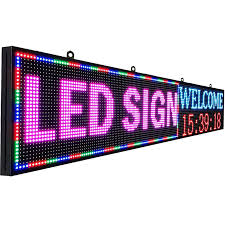
Pixel Pitch and Resolution
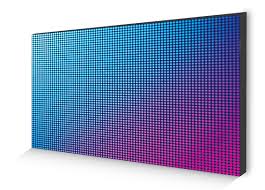
One of the defining specifications in LED display panels is pixel pitch, denoting the center-to-center distance between adjacent LEDs, commonly ranging from 0.9mm for fine-pitch indoor displays up to 25mm or more for large outdoor billboards. A smaller pixel pitch directly correlates with higher spatial resolution and enhanced image sharpness. For example, a 1.5mm pixel pitch LED screen can achieve resolutions suitable for close-view applications such as control rooms, retail signage, and broadcast studios.
International standards such as the IEC 62717:2019 specify measurement methods for pixel brightness and chromaticity, ensuring uniformity across production batches. During design, engineers must balance pixel pitch against cost, power consumption, heat dissipation, and viewing distance considerations to optimize performance for target environments.
Color Calibration and Uniformity
LED displays employ red, green, and blue diodes configured in various pixel geometries to reproduce millions of colors based on additive color mixing principles. Consistent color calibration across the entire array is complex but vital. State-of-the-art automated calibration systems utilize spectroradiometers and advanced feedback algorithms to adjust individual LED drive currents, achieving Delta E values under 2, which meets professional broadcast quality thresholds.
Calibration also mitigates issues such as color shading and brightness non-uniformity caused by variations in LED binning or aging effects. The incorporation of real-time monitoring boards within LED modules enables dynamic adjustments, thereby extending product life and maintaining visual fidelity.
Thermal Management and Reliability
Thermal dissipation is critical in LED displays since prolonged exposure to elevated junction temperatures accelerates phosphor degradation and semiconductor aging. Efficient heat sinks, high-thermal-conductivity printed circuit boards (PCBs), and active cooling mechanisms are engineered to maintain junction temperatures below 85°C, the industry-accepted thermal threshold for most commercial-grade LEDs.
Additionally, robust conformal coatings protect LEDs and electrical components from moisture, dust, and environmental contaminants, which is especially important for outdoor installations exposed to variable weather conditions. Compliance with IP65 or higher ingress protection ratings is standard practice to ensure operational reliability.
Manufacturing Workflow and Quality Control
Modern LED display manufacturing follows ISO 9001 quality management systems, integrating automated surface-mount technology (SMT) assembly lines, precision pick-and-place machines, and rigorous optical/electrical inspections. Critical control points include LED binning based on luminous intensity and dominant wavelength, solder joint integrity testing through X-ray inspection, and burn-in procedures that simulate extended operational hours to detect early-life failures.
Post-assembly, displays undergo electrophysical tests such as electrostatic discharge (ESD) resistance according to IEC 61000-4-2, system compatibility checks, and automated pixel defect mapping. These processes collectively ensure that defective pixels remain below industry thresholds—commonly under 0.0001%—to maintain high visual quality standards.
Emerging Trends: Mini-LED and Micro-LED Technologies
The evolution of display technologies has introduced mini-LED and micro-LED concepts, featuring increasingly smaller diode sizes and higher pixel densities, rivaling traditional LCDs in image quality and energy efficiency. These next-generation LEDs integrate quasi-monolithic arrays with improved color gamut (approaching DCI-P3 coverage) and high dynamic contrast ratios exceeding 5000:1.
Micro-LED displays offer advantages such as self-emissive pixel control, reduced motion blur, and exceptional brightness up to 2000 nits for outdoor readability. Manufacturing challenges remain around mass transfer yield and defect mitigation, but significant investments in automation and materials science are accelerating commercialization.
Standards and Compliance
Compliance with international standards is crucial for market acceptance and interoperability. Relevant regulations include:
- IEC 62087 for power measurement in display devices,
- UL 8750 covering LED lighting safety,
- RoHS directives limiting hazardous substances, and
- CE marking demonstrating conformity with European health, safety, and environmental protection directives.
Adhering to these standards ensures dependable product performance, environmental sustainability, and end-user safety.
Conclusion
Manufacturing high-performance LED displays demands multidisciplinary expertise in semiconductor physics, mechanical engineering, electronics, and quality assurance. Strategic design decisions around pixel pitch, thermal management, and color calibration critically impact product efficacy. Leveraging advanced manufacturing technologies and adhering to rigorous industry standards enables production of reliable, visually compelling LED displays suited for diverse global applications—from dynamic advertising billboards to immersive entertainment environments.
This synthesis, grounded in up-to-date industry standards and practical experience, offers a substantial resource for engineers, manufacturers, and system integrators striving to optimize LED display quality and lifecycle performance.













