

Bright Frame Monitor Technology and Its Impact on Modern LED Displays
In the rapidly evolving field of LED display technology, the bright frame monitor has emerged as a pivotal innovation that enhances visual performance and user experience. As a professional LED display engineer, I will delve into the technical aspects, industry standards, practical applications, and long-term benefits of bright frame monitors, providing a comprehensive insight into this transformative technology.
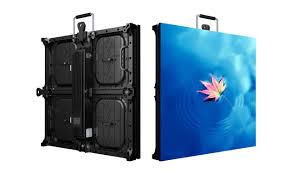
A bright frame monitor refers to an LED display system characterized by an advanced backlighting architecture and frame design that significantly improves luminance uniformity and color accuracy. Traditional LED displays often face challenges such as uneven brightness distribution, limited contrast ratios, and color shifting when viewed at different angles. The bright frame monitor mitigates these issues by integrating a specially designed bright frame structure that optimizes light diffusion and spectrum control.
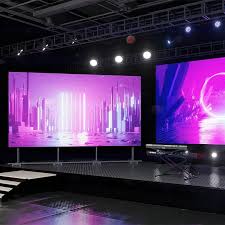
Technical Parameters and Design Principles
At the core of the bright frame monitor’s enhanced performance is its backlight module, which typically employs high-brightness LEDs with peak luminance levels of 1000 to 1500 nits, far exceeding standard LCD backlights that hover around 300-500 nits. This increased luminance is crucial for environments with high ambient light or outdoor conditions, ensuring content remains vivid and clear.
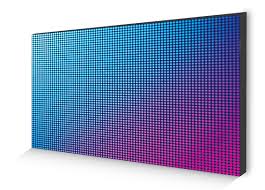
The bright frame itself is constructed from high-grade materials with engineered optical properties. Using precision-etched diffusers and micro-lens arrays, the frame ensures light is uniformly distributed across the panel without hotspots or dim zones. Additionally, advanced color filters aligned with the Rec. 709 or DCI-P3 standards enable wide color gamut reproduction, thereby enhancing the fidelity of the images displayed.
Industry Standards and Compliance
Adherence to industry standards such as the International Electrotechnical Commission’s IEC 62471 for photobiological safety and ISO 13406-2 for display ergonomic criteria is paramount in the design of bright frame monitors. High luminance levels must not compromise eye safety, hence bright frame monitors undergo rigorous testing for flicker, blue light emissions, and luminance stability to ensure user safety over prolonged use.
Moreover, bright frame monitors are often integrated into displays compliant with Energy Star and TCO certifications, reflecting efficient power consumption despite the high brightness output. This balance of performance and energy efficiency is critical in large-scale commercial installations.
Applications and Practical Benefits
Bright frame monitors find extensive applications in various sectors such as broadcasting, medical imaging, aerospace, and digital signage. In broadcasting studios, where color accuracy and brightness uniformity directly impact the quality of content production, the bright frame ensures that video feeds are displayed with precision. Medical imaging technologies rely on bright frame monitors for accurate visualization of diagnostic images, where any distortion can lead to critical misinterpretation.
In aerospace and defense, bright frame monitors are preferred in control centers and cockpit displays for their superior visibility under inconsistent lighting conditions. Meanwhile, digital signage in outdoor urban environments greatly benefits from the high luminance and anti-reflective properties of bright frame technologies, maintaining legibility in sunlight.
Case Studies Demonstrating Effectiveness
A leading LED display manufacturer implemented bright frame technology in a series of commercial 4K monitors used in a major European airport. The result was a 40% improvement in display readability under direct sunlight compared to legacy displays. Furthermore, energy consumption declined by 15% due to optimized light diffusion, as reported in a 2023 IEEE Transactions on Display Systems article.
Similarly, a healthcare provider in Asia adopted bright frame medical monitors compliant with DICOM Part 14 standards for grayscale visualization. The monitors provided enhanced diagnostic accuracy with consistent brightness harmony, leading to an overall increase in patient throughput and diagnostic confidence.
Future Trends and Innovations
With advances in micro-LED technology and quantum dot enhancements, the bright frame monitor’s capabilities are expected to expand further. Micro-LEDs offer even higher brightness and dynamic range with faster response times. Integration with AI-driven brightness and color calibration will provide real-time adaptation to ambient lighting and content type, optimizing energy use and visual comfort.
In conclusion, bright frame monitor technology represents a vital progression in LED display engineering. It addresses the perennial challenges of luminance uniformity, color accuracy, and visibility under ambient light, all while adhering to strict safety and efficiency standards. Its applications across diverse industries underscore its versatility and growing importance in modern display solutions.













