

Advanced Manufacturing Techniques and Quality Assurance in LED Display Production
In today’s rapidly evolving digital signage industry, LED displays have become integral to multiple sectors, ranging from advertising and entertainment to control rooms and sports arenas. As a professional LED display engineer with extensive experience in LED LCD screen manufacturing, I will present an authoritative overview of the advanced manufacturing techniques, critical technical parameters, and rigorous quality assurance processes that elevate LED display products to meet international standards and market demands.
The foundation of high-quality LED displays lies in precise component selection and assembly. Critical components such as Light Emitting Diodes (LEDs), driver ICs, and printed circuit boards (PCBs) must comply with stringent industrial standards. For instance, reputable manufacturers source LEDs from certified suppliers, ensuring parameters like luminous intensity, chromaticity coordinates, and forward voltage fall within tolerances specified in the IEC 62717 standard for LED modules for general lighting. LEDs typically used in outdoor displays exhibit brightness levels exceeding 5,000 nits to combat ambient light, while indoor applications range from 800 to 1,200 nits for optimal visual comfort.
The surface-mount technology (SMT) process is pivotal in assembling LEDs onto PCBs, requiring precision placement with tolerances within ±0.1 mm to guarantee uniform pixel density and color consistency. Production lines employ automated optical inspection (AOI) systems post-SMT to detect misaligned or defective components at a micron-level, minimizing yield loss at early stages. These strict tolerances are essential as minor physical deviations manifest as color inconsistency or pixel dead zones in the final display.
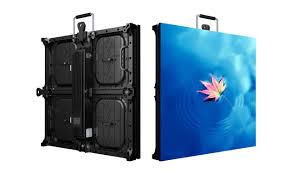
Driving circuitry and screen modules demand robust design to handle continuous operation in diverse environments. The integration of high-performance driver ICs with advanced Pulse Width Modulation (PWM) techniques enables 12-bit to 16-bit grayscale rendering, enhancing color fidelity and reducing image flicker, which aligns with the industry norm defined by the Video Electronics Standards Association (VESA) for display quality. Moreover, modular designs employing die-cast aluminum cabinets ensure superior heat dissipation, extending component life and reliability.
Thermal management merits particular attention given LEDs’ sensitivity to temperature fluctuations. Within enclosed display cabinets, continuous operation generates heat that can deteriorate luminous efficacy and cause chromatic drift. Effective heat dissipation solutions include internal fans, heat sinks with optimized fin structures, and temperature sensors linked to system controllers for dynamic fan speed adjustment. This proactive thermal regulation complies with JEDEC standards for electronic device reliability, mitigating risk of premature failure in harsh conditions.
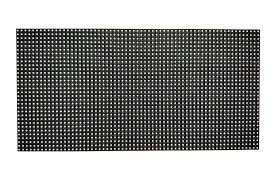
Quality assurance encompasses both pre-production validation and post-production testing stages. Prior to mass production, prototypes undergo comprehensive testing protocols such as Accelerated Life Testing (ALT), which simulates multi-year usage through elevated temperature and humidity cycles per IEC 60068 standards. This identifies latent defects and informs design improvements. Post-production, each LED module must pass electrical tests including insulation resistance, high-voltage withstand, and in-circuit testing to verify circuit integrity.
Visual quality assessment leverages specialized devices such as colorimeters and luminance meters complying with CIE 1931 and CIE 1976 color spaces to objectively evaluate color accuracy and brightness uniformity across the entire panel. Additionally, software-driven diagnostics detect pixel anomalies and dead spots, ensuring the final product meets the acceptable pixel failure rate, usually below 0.01%, as stipulated by industry benchmarks.
The evolution of manufacturing Industry 4.0 concepts has enhanced LED display production through real-time data acquisition and advanced analytics. Modern factories employ Machine Learning algorithms for predictive maintenance of assembly lines, reducing downtime and optimizing throughput. Moreover, traceability systems catalog every component batch and processing step, facilitating swift recalls and quality root-cause analysis when issues arise.
International standards such as ISO 9001 for Quality Management Systems and ISO 14001 for Environmental Management provide frameworks integrating quality and sustainability considerations into the manufacturing lifecycle. Manufacturers adhering to these standards demonstrate a commitment to delivering reliable products while minimizing environmental impact through responsible waste management and energy-efficient processes.
In summary, the manufacturing of high-quality LED displays is underpinned by meticulous component sourcing, precision assembly, advanced driving electronics, robust thermal management, thorough quality assurance, and adherence to international standards. Leveraging modern Industry 4.0 technologies further enhances production efficiency and product reliability. These practices ensure that LED displays consistently deliver superior performance, longevity, and vibrant visuals that satisfy the demands of diverse global industries.













