

Advanced LED LCD Screen Manufacturing: Techniques, Parameters, and Industry Standards
The LED LCD screen manufacturing industry has evolved dramatically over recent decades, driven by advances in technology, materials science, and production techniques. These improvements have enabled the production of displays with higher resolution, improved brightness, better color accuracy, and enhanced durability. Today, LED LCD screens are ubiquitous across a variety of sectors, including automotive displays, consumer electronics, medical imaging, and digital signage. This article offers a comprehensive overview of LED LCD screen manufacturing processes, critical technical parameters, and the industry standards shaping modern production.
1. Overview of LED LCD Technology
LED (Light Emitting Diode) LCD (Liquid Crystal Display) technology combines two primary components: a liquid crystal panel that modulates light and an LED backlight that provides illumination. Unlike older CCFL (Cold Cathode Fluorescent Lamp) backlights, LED backlighting offers lower power consumption, improved uniformity, extended lifespan, and thinner form factors.
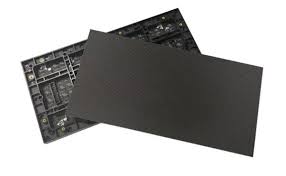
The typical LED LCD structure includes:
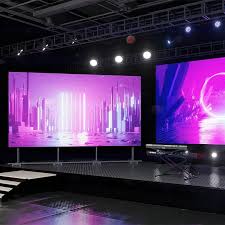
- A TFT (Thin-Film Transistor) array driving the liquid crystals
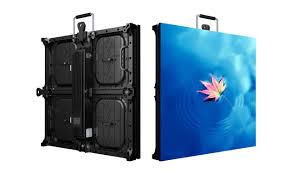
- Multiple layers including polarizers, color filters, and alignment layers
- An LED backlight unit, often arranged as edge-lit or direct-lit configurations
2. Manufacturing Process and Techniques
Manufacturing LED LCD screens involves intricate multi-step procedures combining photolithography, deposition, assembly, and quality control.
- Substrate Preparation: High-quality glass substrates undergo cleaning and coating to serve as the base for TFT arrays. The substrate cleanliness is critical, as sub-micron contaminants can cause pixel defects.
- TFT Deposition and Patterning: Using photolithography, metal oxide or amorphous silicon thin films are deposited and patterned to form the transistor matrix that controls pixel activation.
- Liquid Crystal Cell Assembly: The two glass substrates sandwich a liquid crystal layer, controlled precisely by surface treatments and thickness control spacers typically 3-6 micrometers thick.
- LED Backlight Integration: High brightness LEDs are mounted on printed circuit boards (PCBs) and arranged either along edges or uniformly behind the panel. Light guide plates (LGP) ensure uniform distribution.
- Polarizer and Optical Films Application: Optical films such as brightness enhancement films (BEF), prism sheets, and anti-reflective layers optimize viewing angles and light efficiency.
- Sealing and Packaging: Advanced sealing techniques prevent moisture ingress, crucial for longevity.
- Quality Testing: Automated optical inspection (AOI), color calibration, and burn-in testing ensure performance consistency before shipment.
3. Key Technical Parameters
Several technical specifications define the performance and quality benchmark of LED LCD screens:
- Resolution: Typically measured in pixels per inch (PPI), higher resolution indicates better detail. For example, UHD (3840×2160 pixels) displays have become common in consumer markets.
- Brightness: Measured in nits (cd/m²), typical backlight brightness ranges from 250 to 1000 nits depending on application. Outdoor displays require higher nits to combat ambient light.
- Contrast Ratio: The ratio of brightest white to darkest black. High contrast ratios (>1000:1) provide better image depth and visual fidelity.
- Color Gamut and Accuracy: Standards like sRGB, AdobeRGB, and DCI-P3 define color space coverage. Calibration tools measure delta E values, with values under 2 considered excellent.
- Response Time: The speed at which pixels change state, critical for video and gaming applications. Typical response times range from 5ms to as low as 1ms in advanced models.
- Viewing Angle: Measured through variations in contrast and color at off-center angles, IPS (In-Plane Switching) panels generally have superior viewing angles compared to TN (Twisted Nematic).
- Power Consumption: LED backlighting reduces power usage compared to CCFL, critical for mobile and energy-conscious designs.
4. Industry Standards and Certifications
Compliance with international standards ensures product reliability, compatibility, and safety.
- ISO 9241-307: Defines visual ergonomics for displays, including luminance, contrast, and flicker.
- IEC 60825: Safety standard for LED devices, ensuring eye safety against intense light exposure.
- RoHS and REACH: Regulatory compliance for hazardous substances and environmental safety.
- UL and CE Certification: Confirm electrical safety and electromagnetic compatibility for global markets.
- JEITA Standards: The Japan Electronics and Information Technology Industries Association publishes specific testing protocols for display durability, vibration, and thermal stability.
5. Challenges and Future Trends
Manufacturers face multiple challenges, including handling increasing pixel density without compromising reliability, enhancing energy efficiency, and meeting environmental regulations. Emerging trends aim to address these through:
- Mini and Micro-LED Technology: Smaller LED units providing better local dimming, contrast, and HDR performance.
- Flexible and Transparent Displays: Innovations in substrate flexibility and OLED integration are expanding possible applications.
- Advanced Quantum Dot Enhancement: Quantum dots increase color accuracy and brightness through precise light emission.
- AI-driven Quality Control: Machine learning algorithms improve defect detection and warehousing efficiency.
- Sustainability Initiatives: Recycling, reducing hazardous materials, and energy-saving production processes align with global green targets.
6. Case Study: Implementation in Medical Imaging Displays
Medical imaging demands highly accurate and stable displays to assist in diagnostics. LED LCD panels used in radiology and surgical environments must maintain strict brightness stability (typically around 500 nits), high resolution (often 4K or above), and conformance to DICOM Part 14 grayscale standards to provide consistent contrast perception.
Manufacturers utilize advanced calibration systems and high-grade LED backlighting modules with redundant designs to minimize downtime. The industry-specific quality assurance methodologies include tests for luminance uniformity (non-uniformity below 10%), fail-safe brightness adjustments, and compliance with FDA and IEC medical device directives.
7. Conclusion
The LED LCD manufacturing sector represents a complex interplay of materials science, precision engineering, and quality management governed by stringent industry standards. Continuous R&D efforts oriented toward higher resolution, superior color fidelity, and environmentally sustainable practices have cemented LED LCDs as a pivotal technology in modern display solutions across industries. Manufacturers must navigate evolving technology trends and regulatory landscapes to produce reliable, high-performance displays suited for diverse applications worldwide.
References:
- International Electrotechnical Commission (IEC) 60825-1 Standard for laser and LED safety
- ISO 9241-307 Ergonomics of human-system interaction – Display requirements
- JEITA Display Standards Handbook
- Society for Information Display (SID) Technical Digest on LED and Quantum Dot Display Technologies
- Research articles in Journal of Display Technology and IEEE Transactions on Electron Devices













