

Advanced Technical Insights into LED Display Manufacturing and Quality Optimization
The LED display industry has witnessed remarkable advancements over the past decade, driven by rapid technological evolution and increasing demand for high-resolution, energy-efficient, and durable screens. As a professional LED display engineer with hands-on experience in manufacturing, testing, and product deployment, this article delves into the critical technical parameters, manufacturing processes, and quality assurance methodologies that underpin the development of world-class LED displays.
At the heart of LED display manufacturing lies the precision assembly of light-emitting diodes (LEDs) onto panels, which requires highly controlled environments and exacting processes to ensure uniform brightness, color accuracy, and long-term operational stability. The fundamental materials include semiconductor compounds such as Gallium Nitride (GaN) for blue and green LEDs, while red LEDs use Gallium Arsenide Phosphide (GaAsP), with substrate technologies evolving towards silicon carbide (SiC) to improve heat dissipation and luminous efficacy.
Key Technical Parameters
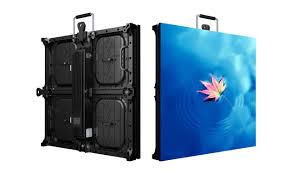
1. Pixel Pitch: Pixel pitch, defined as the distance (in millimeters) between the centers of two adjacent pixels, directly affects resolution and viewing distance. For indoor LED displays, pixel pitches typically range from 0.9mm to 4mm, optimizing clarity for close-range viewing. Outdoor displays, by contrast, often use pitches from 6mm to 20mm to balance cost, visibility, and durability.
2. Brightness and Contrast Ratio: Outdoor displays require brightness levels above 5,000 nits to combat ambient sunlight, per industry standards such as the IEC 62087 (Measurement of High Brightness Displays). Indoor displays usually operate at 800 to 1,200 nits for vivid colors without causing visual discomfort. Contrast ratios exceeding 3,000:1 ensure deep blacks and vibrant images even in variable lighting.
3. Refresh Rate: High refresh rates (≥ 3,840 Hz) are critical to prevent flickering, especially in environments with video capture like TV studios and live events. Refresh rates influence viewer comfort and digital camera compatibility.
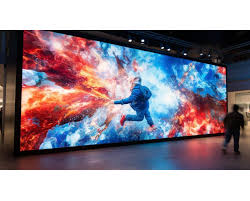
4. Viewing Angle: Typical viewing angles for LED displays exceed 140° horizontally and vertically, guaranteeing visibility from various audience positions without significant color distortion or brightness degradation.
5. Power Consumption and Thermal Management: Efficient thermal dissipation is vital to maintain LED lifespan above 100,000 hours and prevent color shift. Engineering solutions such as heat sinks, thermal interface materials, and airflow designs comply with standards like UL 8750 (Safety Standard for LED Equipment).
Manufacturing Methodology
Modern LED display manufacturing integrates surface mount technology (SMT) for precision placement, automated optical inspection (AOI) systems, and real-time calibration units to align brightness and chromaticity. An intrinsic part of the process is the binning of LEDs according to luminous intensity and wavelength to minimize variance across the display panel, ensuring uniform image quality.
Moreover, modular design principles have become prevalent, enabling easier maintenance, scalability, and customized resolutions to meet diverse client requirements. Panels are rigorously tested in controlled environmental conditions simulating temperature extremes (-20°C to 50°C) and humidity levels (up to 95% RH) in accordance with IEC 60068 standards for environmental testing of electronic devices.
Quality Assurance and Testing
Stringent quality control protocols are implemented throughout the production lifecycle. This includes:
- Spectroradiometric testing adhering to CIE 1931 color space metrics for precise color calibration.
- Electro-Static Discharge (ESD) robustness testing following IEC 61000-4-2 to prevent component damage.
- Ingress Protection (IP) ratings, with outdoor LED modules commonly rated IP65 or higher, ensuring resistance to dust and water ingress.
- Reliability testing such as accelerated aging (burn-in) procedures to evaluate LED longevity and failure rates, ensuring an operational mean time between failures (MTBF) exceeding 50,000 hours.
Industry Case Studies
A notable project involved the installation of a fine-pitch LED display with a 1.5mm pixel pitch for a financial trading floor in New York, where high refresh rates (6,000 Hz) and ultra-low latency were imperative for real-time data visualization. The customized thermal management solution was critical in maintaining stable performance under continuous operation.
In another case, an outdoor stadium display with a 10mm pitch showcased the synergy between high brightness (7,500 nits) and IP67-rated modules, guaranteeing clear visibility under direct sunlight and protection against harsh weather conditions during a major international sporting event.
Future Directions
Emerging developments such as micro-LED technology promise further miniaturization and enhanced performance by integrating LEDs at the micron level. Also, the adoption of advanced AI-based calibration systems is ushering in smarter displays that adjust parameters dynamically based on ambient light, content type, and power consumption profiles.
In conclusion, mastering LED display manufacturing demands comprehensive expertise spanning semiconductor physics, precision engineering, thermal dynamics, and rigorous quality assurance. By embracing industry standards and continuously innovating in materials and processes, manufacturers can deliver LED displays that meet the evolving demands of diverse markets ranging from indoor commercial signage to large-scale outdoor installations.













