

Advancements and Practical Applications of LED Display Technology in Modern Industries
Light Emitting Diode (LED) display technology has evolved remarkably over the past decade, revolutionizing visual communication across diverse industries. With roots tracing to the early developments of semiconductor lighting, contemporary LED displays combine high luminance, energy efficiency, and precision control to deliver superior imaging quality. This article explores the technology’s practical applications, advantages, prevalent challenges, and emerging trends, providing a comprehensive perspective anchored in industry standards and real-world deployments.
Practical Applications of LED Displays
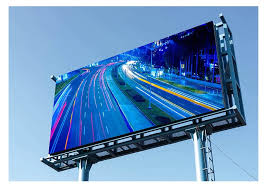
LED displays are pervasive in sectors such as advertising, transportation, sports, retail, and entertainment. Outdoor digital billboards leverage the high brightness capabilities of LED modules, often exceeding 5,000 nits, to maintain visibility even under direct sunlight, complying with standards such as the Illuminating Engineering Society (IES) guidelines. For indoor environments, seamless LED video walls offer pixel pitches as fine as 0.9 mm, enabling ultra-high resolution suitable for control rooms, broadcast studios, and corporate environments.
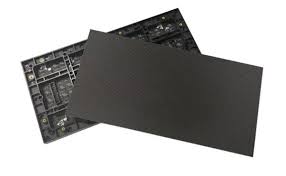
In transportation hubs—airports and train stations—LED displays serve dual roles, providing up-to-date passenger information and enhancing aesthetic appeal. Their modular nature allows customization for unconventional spaces, fitting within architectural constraints while maintaining consistent visual output.
Sports venues utilize large-scale LED screens to deliver live action replays and real-time statistics, often deploying configurations with pixel pitches between 4 mm to 10 mm. The rapid refresh rates (typically 1920 Hz and above) ensure flicker-free imagery critical for high-definition video capture and broadcast.
Advantages of LED Display Technology
LED displays offer several advantages over traditional display technologies:
- Energy Efficiency: According to the Semiconductor Equipment and Materials International (SEMI) standards, LEDs consume approximately 40% less power compared to equivalent LCD panels, leading to reduced operational costs and carbon footprint.
- Durability and Longevity: LEDs boast service lifespans ranging from 50,000 to 100,000 hours, significantly outlasting conventional display counterparts. Their robustness to environmental factors, including moisture and temperature extremes, is verified by standards such as IEC 60529 (IP ratings), with many outdoor modules rated IP65 or higher.
- High Brightness and Contrast: Peak luminance outputs exceeding 7,000 nits and contrast ratios surpassing 3,000:1 enable clear, vibrant displays in varied lighting conditions.
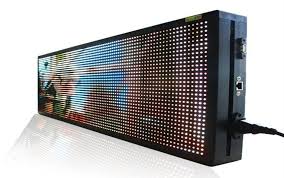
- Scalability and Flexibility: The modular design of LED panels allows facile scaling from small digital signage to colossal screens exceeding 1,000 square meters without loss of image uniformity.
Common Challenges and Troubleshooting
Despite these advantages, LED displays face common technical issues requiring attentive engineering:
- Color Calibration and Uniformity: Variations in LED binning and temperature-dependent color shifts can cause inconsistent color rendition. Utilizing integrated sensors and advanced calibration software, such as those complying with the sRGB and DCI-P3 color spaces, mitigates these effects.
- Dead Pixels and Module Failures: Manufacturing defects or environmental stressors may result in pixel failures. Adherence to quality assurance protocols, including AOI (Automated Optical Inspection) during production, and implementing redundant drive circuits reduce failure probabilities.
- Thermal Management: High-density LED arrays generate substantial heat; insufficient dissipation can degrade performance and lifespan. Employing effective cooling solutions—passive heat sinks, active fans, or liquid cooling—aligned with thermal management standards (e.g., JEDEC JESD51 series) is essential.
- Signal Integrity over Distance: Long video signal transmission can introduce latency or degradation. Using fiber optic extenders and advanced signal processors compliant with HDBaseT or SDVoE standards ensures data fidelity.
Emerging Trends and Innovations
The future of LED display technology is shaped by emerging trends aimed at enhancing user experience and system efficiency:
- MicroLED and MiniLED Displays: These technologies push pixel pitches below 0.5 mm, enabling unprecedented resolution and color accuracy, rivaling OLED in image quality but with higher brightness and longevity.
- AI and IoT Integration: Smart LED displays with embedded AI processors allow dynamic content adaptation based on real-time analytics, user engagement, or environmental cues, improving targeted advertising and operational efficiency.
- Flexible and Transparent LED Displays: Advances in flexible substrates have facilitated curved and bendable LED screens, suitable for unconventional installations. Transparent LED displays enable augmented reality applications in retail and architectural design, blending digital content with physical spaces.
- Sustainability Initiatives: The industry is increasingly adopting eco-friendly materials and manufacturing processes. Recyclable components, reduced use of hazardous substances, and energy-saving drive electronics comply with directives like RoHS and WEEE.
Conclusion
LED display technology continues to be a cornerstone of visual communication, combining technical excellence with adaptability. Its widespread adoption across industries is a testament to its unmatched brightness, efficiency, and versatility. Addressing challenges through rigorous engineering and embracing cutting-edge innovations ensures LED displays will remain integral in delivering immersive and impactful visual experiences.
By aligning with international standards such as IEC, IES, SEMI, and JEDEC, manufacturers and system integrators maintain quality and reliability, fostering trust among end-users worldwide. As trends like MicroLED and smart integration mature, the potential for LED displays to transform environments and elevate digital storytelling will only amplify.













