

Advancements and Best Practices in LED Display Manufacturing for Enhanced Visual Performance
In the rapidly evolving field of LED display technology, understanding the intricate aspects of manufacturing is critical for delivering superior visual performance and reliability. LED displays, commonly used in various applications ranging from digital signage to large-scale video walls, depend heavily on precise manufacturing processes that integrate advanced materials, meticulous assembly, and rigorous quality control standards.
Material Selection and LED Chip Technology
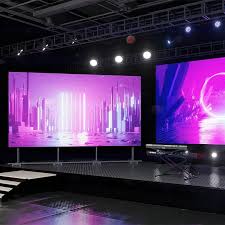
The foundation of any high-quality LED display begins with the selection of LED chips. Modern manufacturing favors InGaN (Indium Gallium Nitride) phosphor-converted LED chips due to their efficiency and color purity. These chips offer a luminous efficacy exceeding 150 lm/W and an average lifespan of more than 100,000 hours under standard operating conditions. Industry-standard binning processes ensure color consistency across the display panel, achieving a color gamut coverage of up to 95% NTSC, essential for vibrant and accurate color reproduction.
Pixel Pitch and Resolution Considerations
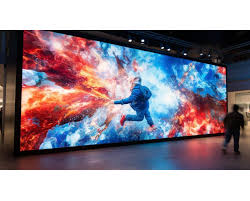
Pixel pitch, defined as the distance between the centers of two adjacent pixels, remains the most critical parameter affecting resolution and viewing distance. Typical outdoor LED displays employ a pixel pitch ranging from 4mm to 20mm, balancing clarity and cost, whereas indoor displays benefit from smaller pixel pitches such as 0.9mm to 2.5mm to support close-range viewing with high-definition content. Advancements in micro-LED technology have enabled pixel pitches below 0.5mm, revolutionizing applications like virtual reality and medical imaging, by delivering ultra-high resolution images with minimal latency.
Thermal Management and Reliability
Effective heat dissipation strategies are imperative in LED display manufacturing. Industry best practices include the use of aluminum PCBs and integrated heat sinks coupled with thermal interface materials (TIMs). Proper thermal management ensures junction temperatures remain below 85°C, preventing LED degradation and color shifting over lifetime. Compliance with IPC-A-610E criteria guarantees the solder joint integrity essential for long-term reliability, particularly in outdoor environments where thermal cycling and humidity pose challenges.
Power Supply and Control Systems
The integration of efficient power supplies is another cornerstone of LED display manufacturing. Constant current drivers conforming to IEC 61347 standards optimize power consumption and maintain stable brightness levels. Furthermore, sophisticated control systems using FPGA or ARM-based processors enable real-time color calibration and dynamic refresh rates exceeding 3840Hz, eliminating flicker artifacts and improving the visual comfort for high-definition video content.
Testing and Quality Assurance Procedures
A comprehensive quality assurance framework follows standards such as ISO 9001:2015, incorporating stages like electroluminescence testing, color uniformity measurement using spectroradiometers, and environmental stress screening (ESS) for humidity and temperature cycles. Automated optical inspection (AOI) systems streamline defect detection, achieving failure rates below 0.01%. Such rigorous testing ensures that every panel adheres to defined tolerance levels in luminance (±5%) and chromaticity (ΔE< 2), critical for professional-grade LED displays.
Case Studies in Industry Application
A notable case is the deployment of a 500-square-meter LED façade in a metropolitan environment, with pixel pitch optimized at 10mm for visibility over long distances. The project utilized a modular design approach, simplifying maintenance and minimizing downtime. Another example includes an indoor sports arena equipped with ultra-fine pitch LED displays (1.2mm), delivering immersive viewing experiences to audiences while meeting strict video broadcast standards like SMPTE RP 168.
Future Trends and Innovations
Looking ahead, innovations such as mini-LED backlighting and quantum dot enhancements are expected to push the boundaries of LED display performance further. Integration of AI-driven calibration and IoT-based remote diagnostics is becoming standard, enhancing operational efficiency and extending product lifespan.
In conclusion, LED display manufacturing demands a holistic approach combining cutting-edge LED technology, robust thermal management, precise control electronics, and stringent quality assurance protocols. Such an approach not only guarantees superior image quality and durability but also ensures compliance with international standards, reinforcing trust in LED display solutions for global markets.













