

Advanced Insights into LED LCD Screen Manufacturing: Applications, Advantages, Challenges, and Emerging Trends
The LED LCD screen manufacturing industry stands at the forefront of display technology innovation, blending light-emitting diode (LED) backlighting with liquid crystal display (LCD) technology to deliver superior viewing experiences. As a professional LED display engineer with extensive experience, I will share in-depth insights into the practical applications, advantages, common problems, and evolving trends shaping LED LCD screen manufacturing.
Fundamentals of LED LCD Screen Technology
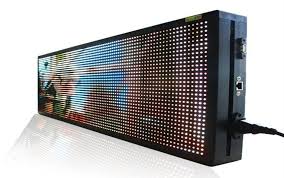
An LED LCD screen incorporates an LCD panel illuminated by an array of LEDs as the backlight source. Unlike traditional cold cathode fluorescent lamps (CCFLs), LEDs offer improved brightness, color accuracy, and energy efficiency. The manufacturing process involves several critical steps, including the integration of thin-film transistors (TFT), precise alignment of liquid crystal molecules, and embedding the LED backlight module, which utilizes either edge-lit or direct-lit configurations depending on desired screen thickness, uniformity, and cost considerations.
Technical Parameters and Quality Standards
Key specifications govern the quality and performance of LED LCD screens. Typical resolution ranges from Full HD (1920x1080 pixels) to 4K UHD (3840x2160 pixels), while refresh rates have advanced from 60Hz to upwards of 120Hz in modern displays to reduce motion blur. Brightness levels commonly reach 300-600 nits for consumer devices and can exceed 1000 nits for HDR-enabled professional displays. Color gamut coverage typically follows industry standards such as sRGB and DCI-P3, with aims to achieve over 90% coverage for vivid and true-to-life visuals.
Compliance with international standards such as IEC 62368-1 for safety, ISO 9241-307 for visual ergonomic requirements, and RoHS (Restriction of Hazardous Substances) directives ensures reliable and environmentally responsible manufacturing.
Practical Applications Across Industries
1. Consumer Electronics: Smartphones, tablets, laptops, and televisions are the most prevalent applications, leveraging slim profiles and rich colors that LED LCD technology enables.
2. Medical Imaging: High-precision displays with enhanced color accuracy and contrast ratios support diagnostic tools, benefiting fields like radiology and telemedicine.
3. Industrial and Automotive Displays: Robust LED LCD screens are integrated into machinery control panels and vehicle dashboards, providing durable performance under varying environmental conditions.
4. Digital Signage and Retail: Large-format LED LCD displays enable vibrant, daylit visibility for advertising, navigation, and interactive kiosks.
5. Aerospace and Defense: Displays with high refresh rates and enhanced durability improve mission-critical visualization and situational awareness.
Advantages of LED LCD Technology
- Energy Efficiency: LEDs consume significantly less power than CCFL backlighting, reducing energy costs and enhancing battery life in portable devices.
- Slim and Lightweight Profiles: Edge-lit LED configurations enable thinner screens, facilitating sleek designs.
- Improved Brightness and Contrast: Advanced local dimming techniques with direct-lit LEDs provide higher contrast ratios exceeding 5000:1 compared to traditional LCDs.
- Enhanced Color Gamut: Modern LED backlights, especially those using quantum dots, expand color reproduction capabilities.
- Longer Lifespan: LEDs exhibit greater longevity with typical lifespans surpassing 50,000 hours of operation.
Common Manufacturing Challenges
Despite substantial advancements, several challenges persist in LED LCD screen manufacturing:
- Backlight Uniformity: Achieving consistent illumination across the entire panel requires precision in LED placement and diffusion layers; uneven lighting results in visual artifacts such as hot spots or halos.
- Thermal Management: High-density LED arrays generate heat that can degrade components, necessitating robust thermal dissipation designs using heat sinks and thermally conductive materials.
- Color Calibration: Maintaining color accuracy over time demands sophisticated calibration methods and compensation circuits to correct drift caused by aging LEDs.
- Pixel Defects: Manufacturing processes must minimize dead pixels, requiring stringent quality controls and inline inspection systems.
- Material Costs: The incorporation of premium components like quantum dots or specialized polarizers impacts production costs, challenging manufacturers to balance performance with affordability.
Emerging Trends in LED LCD Manufacturing
The LED LCD display sector is rapidly evolving with several key trends gaining momentum:
- Quantum Dot Enhancement: Quantum dot technology integrated into LED backlighting significantly enhances color purity and brightness. Samsung’s QLED displays exemplify this innovation, setting new color accuracy benchmarks.
- Mini-LED and Micro-LED Backlights: Mini-LEDs offer finer backlight segments, enabling more precise local dimming with thousands of dimming zones, reducing blooming effects and improving HDR performance. Micro-LEDs, while still emerging, promise self-emissive displays with exceptional brightness and infinite contrast ratios.
- Flexible and Transparent Displays: Advances in flexible substrates and LED integration facilitate foldable devices and see-through screens, opening new user interaction paradigms.
- AI-Driven Manufacturing: Artificial Intelligence is being deployed for defect detection, color tuning, and process optimization, increasing yield rates and manufacturing efficiency.
- Eco-friendly Manufacturing: Industry efforts focus on reducing hazardous substances and adopting recyclable materials to comply with environmental policies and consumer expectations.
Conclusion
LED LCD screen manufacturing combines sophisticated engineering principles with cutting-edge materials and processes to deliver displays that meet diverse requirements ranging from consumer entertainment to professional diagnostics. Its advantages in energy efficiency, brightness, and color fidelity make it indispensable in modern electronics. Addressing manufacturing challenges through technological innovations and embracing emerging trends like quantum dots and mini-LEDs will further elevate performance and application scope.
As the industry progresses, adherence to international standards, continual process refinement, and sustainability considerations will remain paramount. Professionals and manufacturers investing in these advancements will be well-positioned to meet future market demands while delivering superior visual experiences.
References
- International Electrotechnical Commission (IEC), IEC 62368-1 Standard.
- International Organization for Standardization (ISO) ISO 9241-307 Ergonomics of Human-System Interaction.
- Society for Information Display (SID), “Advances in Quantum Dot Displays,” Journal of the SID, 2021.
- Samsung QLED Technology White Papers.
- AU Optronics Technical Reports on Mini-LED Display Technology.













