

Advanced Technologies and Best Practices in LED Display Manufacturing
The global LED display industry has witnessed rapid technological evolution, driven by heightened market demand for high-resolution, energy-efficient, and reliable displays. As a professional LED display engineer with comprehensive experience in LED LCD screen manufacturing, this article delves into the crucial aspects of modern LED display technology, emphasizing manufacturing best practices, technical parameters, and industry standards to ensure superior product quality and performance.
Technical Foundations of LED Displays
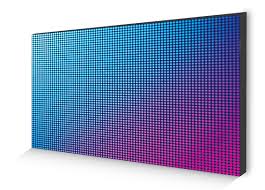
LED displays consist of a matrix of light-emitting diodes arranged to emit vibrant, high-brightness images visible under various lighting conditions. Compared to traditional LCDs, LED displays offer enhanced contrast, superior color rendering, and reduced power consumption. Their architecture comprises:
- Pixel Pitch: Defined as the center-to-center distance between adjacent LED pixels, pixel pitch significantly impacts resolution and viewing distance. Industrial standards recommend a pixel pitch ranging from 0.9mm for ultra-high-definition indoor applications to over 10mm for large outdoor installations.
- Brightness and Contrast Ratio: LED displays typically deliver brightness levels from 800 to 5,000 nits. Outdoor displays require higher luminance to maintain visibility under direct sunlight, whereas indoor panels prioritize color accuracy over extreme brightness. Contrast ratios exceeding 3,000:1 are common, ensuring vivid imagery.
- Color Accuracy and Gamut: Achieving an extensive color gamut, often covering 90% or more of the NTSC color space, is essential. This involves precise calibration during manufacturing and integration of high-quality LED diodes with consistent chromaticity coordinates.
Manufacturing Best Practices
To maintain the highest standards in LED display manufacturing, a series of meticulous procedures must be followed:
- Component Selection and Quality Control: Sourcing LEDs from reputable manufacturers with rigorous binning processes ensures uniform brightness and color uniformity. International certifications like ISO 9001 and compliance with RoHS (Restriction of Hazardous Substances) mark the commitment to quality and environmental safety.
- Module Assembly and Soldering: Automated pick-and-place machines and wave soldering provide precision and repeatability in module assembly, minimizing defects like cold joints or misalignment that can degrade display performance.
- Testing and Calibration: Post-assembly, each module undergoes rigorous aging tests and calibration using spectroradiometers to measure luminance and chromaticity. Industry practices recommend at least a 72-hour burn-in period at 70% maximum brightness to detect early failures.
- Environmental Protection: For outdoor displays, conformal coatings and IP65 or higher-rated enclosures protect against moisture, dust, and UV degradation, extending product lifespan.
Key Industry Standards and Compliance
Adherence to global standards reinforces product credibility and operational safety:
- ANSI/IES RP-27 series for photobiological safety, ensuring LED displays do not expose users to harmful blue light levels.
- IEC 62368-1 for safety requirements in audio, video, and information technology equipment, crucial for reducing electrical hazards.
- UL certifications for electrical certification and reliability assurance.
Case Studies: Successful Implementations
A large-scale project involving a 500 square meter LED façade in a metropolitan city demonstrated the importance of precision pixel pitch selection (3.9mm) to balance resolution and cost. Comprehensive environmental sealing achieved IP67 rating, enabling the display to withstand heavy rainfall and dust ingress.
Another notable example is an indoor stadium installation utilizing 1.2mm pitch LED displays. Through rigorous calibration protocols, the display achieved consistent brightness uniformity across 300 modules, delivering an immersive viewing experience for live events.
Technological Advances Shaping the Future
Innovations such as Mini-LED and Micro-LED technologies are revolutionizing display manufacturing by enabling higher resolutions and improved energy efficiency in smaller form factors. Integration with AI-driven calibration systems further enhances display uniformity and adapts dynamically to environmental changes.
Conclusion
The success of LED display manufacturing hinges on stringent adherence to technical specifications, comprehensive quality control measures, compliance with industry standards, and embracing state-of-the-art technology. Industry professionals must prioritize these aspects to deliver displays that meet demanding performance criteria, longevity, and environmental sustainability. By integrating best practices and technological advancements, LED display solutions continue to set new benchmarks in both commercial and public applications.













