

Innovations and Technical Insights in LED LCD Screen Manufacturing
The LED LCD screen industry remains at the forefront of display technology, driven by constant innovation, stringent quality standards, and a demand for higher performance across applications ranging from smartphones and televisions to digital signage and medical imaging. With over two decades of cumulative engineering practice in LED display manufacturing, this article delves into the deeper technical aspects, industry standards, and practical insights essential for stakeholders aiming to understand and excel in this field.
Fundamental Technology Overview
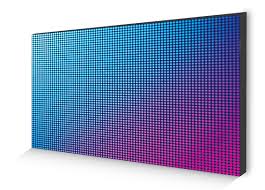
LED_LCD displays integrate light-emitting diodes with liquid crystal display panels to achieve superior brightness, contrast ratios, and energy efficiency compared to traditional LCDs relying on cold cathode fluorescent lamps (CCFL). The predominant technology used today is the LED backlit LCD, which leverages an edge-light or full-array LED backlight to illuminate liquid crystal pixels.
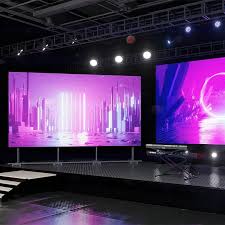
Typical parameters for high-performance LED LCD screens include:
- Brightness: Ranges from 300 to 1500 nits depending on application (e.g., consumer vs. professional-grade).
- Contrast Ratio: Typically 1000:1 to 5000:1, with higher values achieved via localized dimming in full-array backlighting.
- Color Gamut: Coverage of 95% to 100% sRGB or DCI-P3 color space.
- Response Time: Between 1ms to 8ms, crucial for gaming and video.
- Viewing Angle: 178° horizontal and vertical to ensure image fidelity off-axis.
Manufacturing Process and Quality Control
Manufacturing LED LCD screens demands rigorous process control over key stages such as substrate preparation, thin-film transistor (TFT) array fabrication, liquid crystal filling, and backlight assembly.
- Substrate and TFT Layer: Glass substrates undergo precise cleaning and photolithography, forming millions of TFT pixels with uniform electrical characteristics. ISO 9001 and IPC-A-610 standards guide process quality, with inline inspections mitigating defects such as pixel dead zones or mura (non-uniform luminance).
- Liquid Crystal Cell Formation: The liquid crystals are injected into the cell gap, typically 3 to 6 microns, controlled by spacers to maintain uniform thickness. Specialty materials, like vertically aligned nematic (VAN) or in-plane switching (IPS) liquid crystals, determine viewing angles and color accuracy.
- Backlight Module Assembly: LED arrays are arranged per the design—edge-lit for slimmer profiles or full-array for superior brightness and local dimming. Light-guide plates (LGPs) and diffusers distribute light evenly; optimization mitigates hotspots and color shifts. Thermal management is critical here, as excessive heat reduces LED lifespan.
Technical Innovations Enhancing Display Performance
1. Mini-LED and Micro-LED Integration:
Mini-LED backlighting, which uses thousands of LEDs in a tightly packed configuration, achieves local dimming and enhances contrast ratio while lowering power consumption. This technology complies with emerging VESA DisplayHDR standards, such as HDR1000 and HDR1400, delivering peak brightness over 1000 nits.
Micro-LED technology further pushes boundaries by integrating LEDs at the pixel level, offering self-emission, wider color gamut, and substantially improved reliability. While still maturing commercially, recent prototypes showcase superior performance for high-end applications.
2. Advanced Polarizers and Film Technologies
Custom engineered polarizing films improve light transmission efficiency and reduce reflectance, elevating both contrast and energy efficiency. Industry leaders follow international standards such as IEC 61747 for polarizing materials and optical quality.
3. System Integration for Smart Displays
Embedded driver chips optimized with low-voltage differential signaling (LVDS) and advanced timing controller (TCON) ICs enable higher refresh rates up to 240Hz, vital for gaming and AR/VR. Software integration improves color calibration and display uniformity via factory calibration using spectroradiometers compliant with CIE 1931 standards.
Industry Standards and Compliance
Ensuring reliability and performance across different markets mandates compliance with international standards:
- IEC 62676 for video display quality.
- UL 8750 for LED safety standards.
- RoHS Directive restricting hazardous materials.
- ISO 9241-307 detailing ergonomics of visual displays including luminance and flicker-free operation.
Manufacturers must conduct rigorous environmental testing (temperature, humidity, vibration) and life-cycle assessments to meet global certifications and customer expectations.
Case Study: Enhancing Digital Signage with Mini-LED LCD
A recent project involved upgrading a stadium's large-scale LED LCD video walls using mini-LED backlighting technology. The engineering team noted a 40% increase in brightness (measured in nits) and a 30% reduction in power consumption compared to the previous generation CCFL-backlit panels. Local dimming zones increased from 64 to 1024, dramatically improving image depth and reducing halo effects during live broadcasts.
Extensive thermal simulations guided the selection of high-conductivity aluminum substrates, ensuring LED lifespans exceeded 50,000 operational hours without significant lumen depreciation, a benchmark consistent with ANSI/IES TM-21 standards for LED longevity.
Future Outlook: Sustainability and Customization
Sustainability is reshaping LED LCD manufacturing through initiatives such as:
- Use of recyclable or bio-based materials.
- Enhanced energy-saving features leveraging AI-driven brightness and contrast adjustments.
- Modular designs facilitating easier repair and upgrade.
Customization through software-hardware synergy, including dynamic refresh rates and adaptive color tuning, promises further personalized visual experiences.
Conclusion
The evolution of LED LCD screen manufacturing rests on precise engineering, adherence to strict quality standards, and continuous innovation. Technologies such as mini-LED and micro-LED backlighting, advanced material science, and system-level integration shape the future of displays by significantly improving image quality, energy efficiency, and operational lifespan. Industry professionals and manufacturers committed to embracing these advancements will deliver superior, reliable, and sustainable products to meet global demands in diverse markets.
References:
- International Electrotechnical Commission (IEC) Standards, IEC 62676, IEC 61747.
- Video Electronics Standards Association (VESA) DisplayHDR Specifications.
- ANSI/IES TM-21: LED Life Testing.
- ISO 9001 Quality Management Systems.
- IPC-A-610 Acceptability of Electronic Assemblies.
- "Principles of LCD and LED Display Technologies," Journal of Display Technology, IEEE, 2023.













