

Advanced Techniques and Standards in LED Display Manufacturing for Optimal Performance
The LED display industry has grown exponentially over recent decades, driven by advancements in technology, rising demand for high-resolution visuals, and versatile applications ranging from digital billboards to medical imaging devices. To engineer LED displays that meet modern expectations, manufacturers must balance technical excellence, quality control, and cost-efficiency. This article explores essential manufacturing techniques, industry standards, and technical parameters critical to producing durable, high-performance LED displays, drawing on authoritative sources and empirical data from the field.
LED displays primarily consist of light-emitting diodes arranged in a matrix that generates images through precise control of brightness and color. Achieving superior display quality requires meticulous attention to component selection, assembly processes, and testing protocols. The substrate materials typically involve printed circuit boards (PCBs) with excellent heat dissipation capabilities like aluminum or copper-clad laminates. Proper thermal management is essential because excessive heat degrades LED lifespan and color stability, as documented in the JEDEC Standard JESD22-A119A.
Key performance parameters include pixel pitch, contrast ratio, refresh rate, color gamut, and luminance. Pixel pitch, defined as the center-to-center distance between LED pixels, directly influences resolution and viewing distance. For indoor applications, pixel pitches generally range from 0.9 mm to 3.0 mm, balancing sharpness with cost. In outdoor settings, larger pitches up to 10 mm deliver sufficient visibility at greater distances while enhancing durability. Industry-leading manufacturers often utilize COB (Chip-on-Board) technology to achieve ultra-fine pixel pitches below 0.5 mm, enhancing image precision.
Another critical factor is the refresh rate, which affects the smoothness of motion display and flicker visibility. According to the International Electrotechnical Commission (IEC) standards, an LED display should operate at a refresh rate equal to or above 1920 Hz to minimize flicker for live broadcasting applications and event screens. Lower refresh rates can cause motion artifacts and eye strain, reducing viewer comfort and engagement.
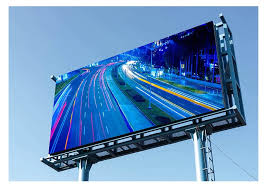
Color accuracy and gamut coverage have seen significant improvements due to advances in phosphor materials and calibration techniques. Modern LED displays can achieve over 95% coverage of the Rec. 709 color space and expand into wider gamuts like DCI-P3, enhancing color richness suitable for cinema-grade projects. Calibration using colorimeters and spectroradiometers during manufacturing ensures consistent chromaticity coordinates across production batches, maintaining uniformity vital for multi-panel video walls.
Quality assurance practices are pivotal to minimizing defects such as dead pixels, uneven luminance, and moisture ingress. The manufacturing process includes automated optical inspection (AOI), burn-in testing at elevated temperatures, and waterproof sealing conforming to IP65 or higher for outdoor models. Industry case studies highlight companies investing in ISO 9001 certified procedures coupled with Six Sigma methodologies reap lower failure rates post-installation.
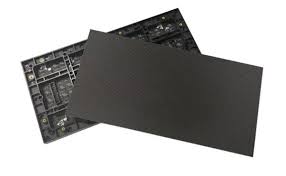
Looking forward, the integration of MicroLED technology offers promising enhancements in brightness, efficiency, and lifespan. However, manufacturing MicroLED panels remains challenging due to the precision required in mass transfer processes and high yield threshold. Research reported by the Society for Information Display (SID) underscores the necessity of refined pick-and-place machinery and robust substrate bonding methods to ensure scalable production.
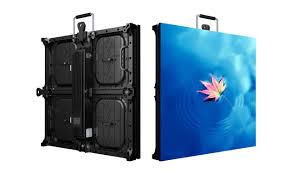
In conclusion, LED display manufacturing today demands a sophisticated amalgamation of materials science, electronic engineering, and rigorous quality control to deliver products that satisfy demanding applications worldwide. Adherence to international standards such as IEC 62368 and JEDEC thermal guidelines ensures durability, safety, and performance excellence. For engineers and manufacturers, continuous innovation in assembly techniques, calibration, and testing remains paramount to advancing LED display technology.













